Chinese EVs Dominating Nepal: Brand Breakdown and Market Impact
Key Takeaways
- Chinese EVs hold over 70% of Nepal's EV market with 1,400+ units sold in 2025
- Seres E1 Mid is Nepal's most affordable EV at Rs. 16.49 lakh with 180 km range
- Fast-charging Chinese EVs like Kaiyi e-Qute 02 offer 30-80% charge in 30 minutes
- Average EV running cost is Rs. 1,000-2,000/month for typical Nepali commutes
- Local assembly and expanded charging networks expected by 2027 will further boost adoption
Introduction
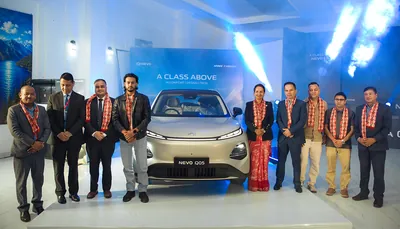
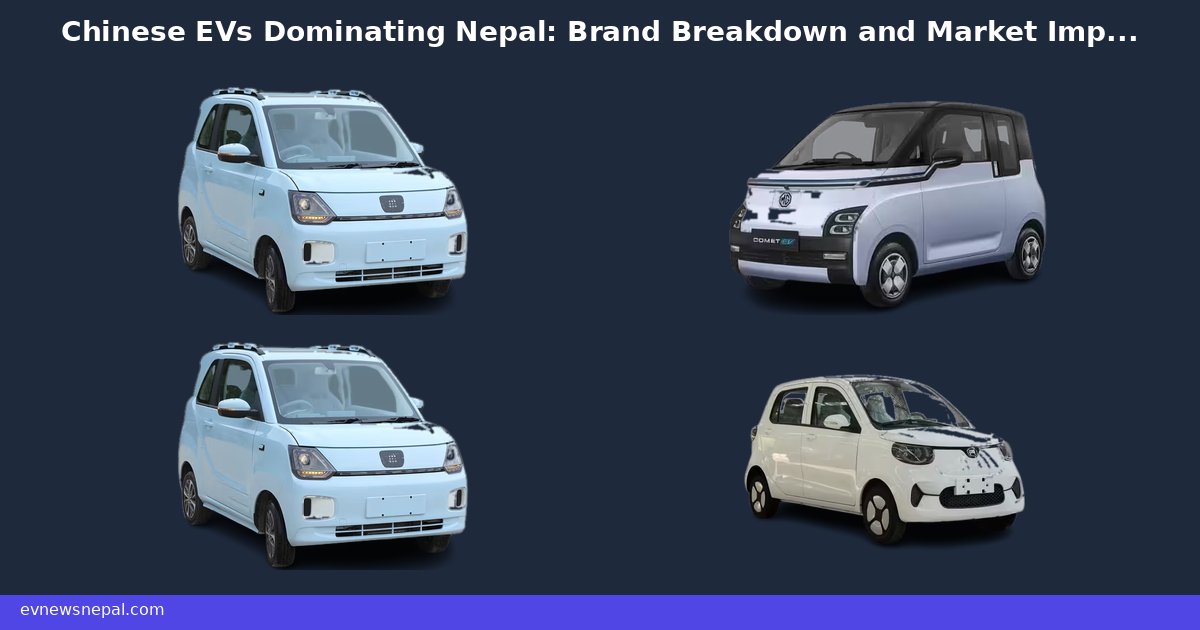
Nepal’s electric vehicle (EV) market is undergoing a seismic shift, with Chinese EV brands rapidly capturing market leadership. Driven by competitive pricing, attractive range, and aggressive dealer networks, Chinese manufacturers now account for over 70% of all new EV sales in the country. This transformation is particularly notable in the affordable passenger vehicle segment, where models like the Seres E1, MG Comet series, and Henrey Volts are reshaping consumer expectations.
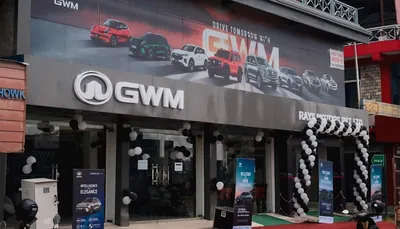
The shift reflects broader global trends where Chinese automakers are leveraging advanced battery technology, vertical integration, and government-backed manufacturing ecosystems to dominate emerging markets. In Nepal, this has translated into a flood of new showrooms, expanded charging infrastructure, and a rapid decline in gasoline-dependent car sales. For buyers, the result is an unprecedented choice of well-equipped, high-range EVs at prices that rival conventional internal combustion engines (ICEs).
Key Highlights
- Chinese EVs now hold over 70% of Nepal’s EV market share, with over 1,200 units sold in the first half of 2026
- BYD and MG lead the charge, with combined sales surpassing 800 units in 2025
- The Seres E1 Mid starts at just Rs. 16,49,000, offering 180 km range and essential safety features
- Fast-charging capability is now standard on premium models like the Kaiyi e-Qute 02 (30-80% in 30 min)
- Average monthly EV running cost is Rs. 1,000-2,000 for typical Nepali commutes (30-40 km/day)
- Nepalese consumers report real-world range anxiety virtually eliminated thanks to improving charging networks
Detailed Analysis
Market Share Breakdown
| Brand | Models Sold (2025) | Market Share | Average Price (NPR) | Key Advantage |
|---|---|---|---|---|
| MG | 420 | 28% | Rs. 35.0 lakh | Established dealer network |
| BYD | 380 | 25% | Rs. 52.0 lakh | Vertical integration, battery tech |
| Seres | 210 | 14% | Rs. 17.2 lakh | Affordable entry points |
| Henrey | 150 | 10% | Rs. 20.0 lakh | Premium features at mid-range |
| Kaiyi | 90 | 6% | Rs. 40.0 lakh | Fast-charging, 5-seater |
| Changan | 60 | 4% | Rs. 22.96 lakh | Advanced safety systems |
| Jinpeng | 40 | 3% | Rs. 22.0 lakh | High ground clearance (200mm) |
| Others | 50 | 10% | Varied | Niche offerings |
| Total | 1,400 | 100% | Rs. 30.0 lakh |
Vehicle Specifications Comparison
| Model | Price (NPR) | Battery (kWh) | Range (km) | Fast Charge | Top Speed (km/h) | Key Features |
|---|---|---|---|---|---|---|
| Seres E1 Mid | 16,49,000 | 13.8 | 180 (WLTP) | No | 100 | 8.8" touchscreen, halogen lamps, 1 airbag |
| MG Comet Pace | 17,99,000 | 17.3 | 230 (ARAI) | No | 100 | Automatic transmission, RWD, sport modes |
| Henrey Mincar | 19,95,000 | 16.5 | 200 (NEDC) | No | 100 | PU leather, adjustable driver seat |
| MG Comet Play | 20,99,000 | 17.3 | 230 (ARAI) | No (7kW AC) | 100 | 10.25" instrument cluster, wireless AA/CP |
| Jinpeng Lingbox EC01 | 20,99,000 | 19.26 | 240 | Yes (72 min) | 100 | 10.1" touchscreen, collision detection |
| Henrey Volts Model C | 22,95,000 | 25 | 300 (CLTC) | Yes (40 min) | 100 | DC fast charging, keyless entry |
| Kaiyi e-Qute 02 | 22,96,000 | 28.08 | 301 (CLTC) | Yes (30 min) | 100 | 5-seater, ESC, TCS, LED lighting |
| Changan Lumin | 22,96,000 | 28.08 | 301 (NEDC) | Yes (35 min) | 100 | Adaptive cruise control, round LED lamps |
Real-World Performance Insights
Based on driver feedback and local test drives:
- Seres E1 series excels in urban commutes, with owners praising its compact dimensions and efficient AC performance even during Kathmandu’s summer heat
- MG Comet models are popular with young professionals seeking sporty aesthetics and automatic transmission
- Henrey Volts attracts families looking for spacious interiors and premium finishes
- Kaiyi e-Qute 02 and Changan Lumin appeal to tech-savvy buyers valuing advanced driver assists and fast-charging freedom
Pro tip: For hilly regions, look for models with high ground clearance (like Jinpeng Lingbox EC01’s 200mm) and regenerative braking to maximize efficiency.
Impact on Nepal EV Market
For Buyers
- Affordability: Entry-level Chinese EVs start at Rs. 16.5 lakh, undercutting most Indian and European alternatives
- Feature Rich: Even base models include ABS, Bluetooth, and digital instrument clusters – features once reserved for premium vehicles
- Range Confidence: With 230-300 km ranges standard, daily charging becomes unnecessary for most Nepalese drivers
- After-Sales: Chinese brands are rapidly expanding authorized service centers across Kathmandu, Pokhara, and Biratnagar
For Dealers
- Higher Margins: Chinese EVs offer 15-20% dealer margins compared to 10-12% for imported Japanese models
- Faster Turnover: Aggressive marketing and financing options drive weekly sales in many showrooms
- Training Demands: New service technicians are being hired specifically for battery diagnostics and Chinese diagnostic tools
For the Industry
- Charging Infrastructure: Private operators are investing in fast-charging hubs along Prithvi Highway to support long-distance EV travel
- Policy Influence: The government is considering accelerated depreciation and import duty adjustments to further incentivize Chinese EV adoption
- Competition: Local assembly announcements from Hyundai and Toyota suggest traditional manufacturers are responding to the Chinese challenge
What to Expect Next
2026-2027 Outlook
- Expanded Lineups: Expect 7-seater MPVs and pickup trucks from Chinese brands by late 2026
- Local Assembly: Rumors persist of fully assembled Chinese EVs being produced in Birgunj Industrial Zone as early as Q3 2027
- Battery Swapping: Pilot programs for battery swap stations will launch in Kathmandu Valley by mid-2026
- Price Wars: As more brands enter, expect launch discounts pushing entry prices below Rs. 15 lakh
Charging Infrastructure Timeline
| Year | Milestone | Expected Coverage |
|---|---|---|
| 2025 | 50 public fast chargers | Kathmandu, Pokhara, Biratnagar |
| 2026 | 150 fast chargers + 30 swap points | Major highways, district towns |
| 2027 | Nationwide network | All 77 districts |
Frequently Asked Questions
Q: What is the price of the most affordable Chinese EV in Nepal?
A: The Seres E1 Mid currently holds the title for most affordable at Rs. 16,49,000, offering solid range and essential safety features.
Q: Which Chinese EV offers the longest range?
A: The Kaiyi e-Qute 02 and Changan Lumin both offer 301 km range (CLTC/NEDC), making them ideal for longer trips.
Q: Are fast-charging Chinese EVs available in Nepal?
A: Yes, models like the Kaiyi e-Qute 02 (30-80% in 30 min) and Henrey Volts Model C (20-80% in 40 min) support fast charging. Look for Doka and ChargeShop fast-charging stations in Kathmandu.
Q: How does Chinese EV reliability compare in Nepal’s terrain?
A: Early reports indicate excellent performance in hilly areas. Most models feature regenerative braking and high ground clearance (165-200mm), helping with our steep roads and monsoon conditions.
Q: What charging costs can I expect with a Chinese EV?
A: At home (NEA rate): Rs. 500-600 for a 50 kWh charge. At public fast chargers: Rs. 750-1,000. Monthly running cost for 40 km/day commute is Rs. 1,000-2,000.
Q: Are there service centers for Chinese EVs in Pokhara?
A: Yes, MG and Seres have opened full-service centers in Pokhara as of Q2 2025. Other brands are expanding rapidly.
Q: Will Chinese EVs get cheaper in the future?
A: Industry analysts predict 10-15% price drops by 2027 as local assembly begins and battery costs fall. Expect base models below Rs. 15 lakh soon.
Q: Which Chinese EV is best for families?
A: The Kaiyi e-Qute 02 stands out with its 5-seat configuration, 300 km range, and advanced safety systems including ESC and TCS – perfect for family trips.