Riddara RD6 vs Mahindra BE 6: Electric SUV Showdown Nepal 2026
Quick Comparison
- Mahindra BE 6 Pack One offers WLTP-certified range and 175 kW DC fast charging — 20–80% in just 20 minutes
- Riddara RD6 counters with higher ground clearance (225 mm) and a larger 14.6-inch touchscreen
- Both vehicles cost roughly the same to charge at home using NEA electricity rates
- Mahindra BE 6 wins on software integration with wireless CarPlay, Android Auto, and a connected car app
- Riddara RD6 leads on active safety tech — see the Features table for the full ADAS breakdown
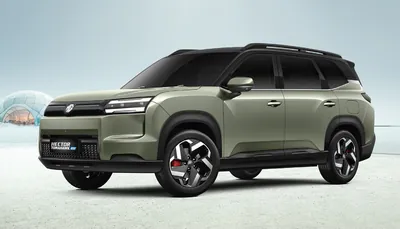
Between the Riddara RD6 and the Mahindra BE 6 Pack One, the Mahindra edges ahead on real-world range and charging speed — but the Riddara fights back with a larger touchscreen, more generous ground clearance, and a stronger active safety package. The Riddara RD6 starts at Rs. 65,00,000 while the Mahindra BE 6 Pack One is priced at Rs. 57,00,000, making the price gap a genuine part of the buying decision in Nepal's fast-growing EV segment.
Both are full-size electric SUVs targeting premium buyers, but they come from different engineering philosophies. The Riddara RD6 brings Chinese EV know-how to the table — a sizeable battery, a wide cabin, and a feature-rich infotainment setup. The Mahindra BE 6 is built on Mahindra's purpose-built INGLO EV platform, prioritising fast charging, efficient energy use, and a connected, driver-focused experience. Neither is a compromise choice; they simply appeal to different priorities.
If pure range and charging convenience drive your decision, the data leans Mahindra. If you need higher ground clearance, a larger screen, and a comprehensive ADAS suite at this price point, the Riddara makes a strong case. Read through the specs, charging figures, and feature breakdown below to see exactly where each vehicle pulls ahead.
At a Glance
| Spec | Riddara RD6 | Mahindra BE 6 Pack One |
|---|---|---|
| Price | Rs. 65,00,000 | Rs. 57,00,000 |
| Battery | 63 kWh | 59 kWh |
| Range (claimed) | 461 km (NEDC) | 557 km (WLTP) |
| Motor Power | 200 kW | 99 kW |
| Torque | 384 Nm | 380 Nm |
| Fast Charging | 30-80% in 30 min | 20-80% in 20 min (175 kW DC) |
| Top Speed | 185 km/h | 202 km/h |
| Ground Clearance | 225 mm | 207 mm |
| V2L | No | No |
Price Breakdown
| Variant | Price | Battery | Range |
|---|---|---|---|
| Riddara RD6 | Rs. 65,00,000 | 63 kWh | 461 km |
| Mahindra BE 6 Pack One | Rs. 57,00,000 | 59 kWh | 557 km |
| Mahindra BE6 Pack 1 | Rs. 57,00,000 | 59 kWh | 557 km |
| Mahindra BE6 Pack 2 | Rs. 61,00,000 | 59 kWh | 557 km |
| Mahindra BE6 Pack 3 Select | Rs. 68,00,000 | 59 kWh | 557 km |
| Mahindra Xev 9e Pack Three | Rs. 95,00,000 | 79 kWh | 656 km |
| Mahindra Xev 9e Pack Two | Rs. 69,00,000 | 59 kWh | 542 km |
| Mahindra Xev 9e Pack One | Rs. 67,50,000 | 59 kWh | 542 km |
| Mahindra XEV9e Pack 3 Select | {{vehicle:mahindra-xev9e-pack-3-select:formattedPrice}} | {{vehicle:mahindra-xev9e-pack-3-select:battery.capacity}} | {{vehicle:mahindra-xev9e-pack-3-select:range.claimed}} |
| LS LEV 01 SE | Rs. 61,95,000 | 67.12 kWh | 500 km |
| LS LEV 01 CE | Rs. 69,95,000 | 67.12 kWh | 500 km |
| LS Auto LEV 01 CE | Rs. 69,95,000 | 67.12 kWh | 500 km |
| LS Auto LEV 01 SE | Rs. 61,95,000 | 67.12 kWh | 500 km |
| Cherry iCAUR V23 RWD | Rs. 53,99,000 | 59.93 kWh | 400 km |
| Maxus eTerron 9 Exclusive | Rs. 99,99,000 | 102.2 kWh | 430 km |
Range: Real World vs Claimed
| Metric | Riddara RD6 | Mahindra BE 6 Pack One |
|---|---|---|
| Claimed range | 461 km (NEDC) | 550 km (WLTP) |
| Est. real-world (Nepal, mixed) | ~378 km | ~451 km |
| Est. real-world (highway, hilly) | ~345 km | ~412 km |
The Riddara RD6 claims 461 km of range under the NEDC standard, while the Mahindra BE 6 Pack One claims 557 km under the stricter WLTP cycle. That distinction is important: NEDC figures are measured under more idealistic conditions, so the real-world gap between these two is considerably narrower than the headline numbers imply.
In Nepal's typical mixed driving environment — Kathmandu valley stop-and-go traffic, air conditioning running through warmer months, and occasional highway stretches — both vehicles settle into the 350–450 km real-world band, as reflected in the estimates above. On hilly terrain, where climbing drains the battery faster but regenerative braking partially compensates on the descent, the Mahindra's conservatively rated WLTP range gives it a consistent edge. For most Kathmandu commuters covering 30–50 km a day, either vehicle will comfortably handle two to three days of driving between charges — but longer intercity runs to Pokhara or Chitwan will feel more relaxed behind the wheel of the Mahindra.
Charging Speed and Monthly Cost
| Spec | Riddara RD6 | Mahindra BE 6 Pack One |
|---|---|---|
| DC Fast Charge | 30-80% in 30 min | 20-80% in 20 min (175 kW DC) |
| AC Home Charge | 0-100% in 10 hours | 0-100% in 6 hours (11.2 kW AC) |
| Full charge cost (home, Rs.11/kWh) | ~Rs. 693 | ~Rs. 649 |
| Est. monthly cost (30km/day) | ~Rs. 1352/month | ~Rs. 1062/month |
The Mahindra BE 6 Pack One is the clear winner in charging speed. Its 175 kW DC fast charging takes the battery from 20–80% in roughly 20 minutes — about 10 minutes faster than the Riddara RD6's 30–80% DC charge time. For buyers who occasionally rely on public fast chargers, that difference is meaningful. Nepal's public DC charging network is still expanding, however, so the majority of owners on either vehicle will depend on overnight home charging for their daily routine.
At NEA's current residential rate of Rs. 11/kWh, a full home charge costs approximately Rs. 693 for the Riddara RD6 and Rs. 649 for the Mahindra BE 6 Pack One — a negligible difference per session. The more practical daily gap shows up in AC charging time: the Mahindra completes a full charge in around 6 hours on an 11.2 kW AC connection, versus the Riddara's 10 hours. If you tend to plug in late at night and need a full battery by early morning, the Mahindra's faster AC charging is a real convenience advantage.
Features Face-Off
| Feature | Riddara RD6 | Mahindra BE 6 Pack One |
|---|---|---|
| Airbags | 6 | 6 |
| ABS + EBD + ESP + TCS | Yes | Yes |
| TPMS | Yes | Yes |
| ISOFIX | No | No |
| Hill Hold | Yes | Yes |
| Hill Descent Control | No | No |
| Auto Hold | No | No |
| AEB (Emergency Braking) | Yes | No |
| Adaptive Cruise Control | No | Standard |
| Lane Keep Assist | LKA + LDW | No |
| Blind Spot Detection | No | No |
| Rear Cross Traffic Alert | No | No |
| 360-degree Camera | No | No |
| Rear Camera | Yes | No |
| Parking Sensors | Front and Rear | Rear |
| Panoramic Sunroof | No | No |
| Heated/Ventilated Seats | No | No |
| Wireless Phone Charging | No | No |
| V2L (Vehicle-to-Load) | No | No |
| Touchscreen | 14.6-inch Touchscreen | 12.3-inch Touchscreen |
| Digital Instrument Cluster | 9-inch digital instrument cluster | N/A |
| Apple CarPlay / Android Auto | Apple CarPlay | Wireless Apple CarPlay + Android Auto |
| Connected Car / App | No | Yes |
| Head-Up Display | No | No |
| Ambient Lighting | No | No |
| Sound System | 6-speaker sound system | 6-speaker |
Compare side-by-side: Riddara RD6 vs Mahindra BE 6 — full specs, features & price comparison tool.
The Riddara RD6 brings a strong active driver assistance package to this price point — refer to the Features table above for the complete ADAS breakdown across both vehicles. Its larger 14.6-inch touchscreen paired with a dedicated 9-inch digital instrument cluster creates a more immersive and spacious cockpit feel, particularly appreciated on longer drives. Safety-conscious buyers will find the Riddara's suite of active protection features reassuring in Nepal's unpredictable traffic conditions.
The Mahindra BE 6 counters with seamless smartphone connectivity — wireless Apple CarPlay, Android Auto, and a connected car app that lets you interact with the vehicle remotely. Its infotainment approach is less about screen size and more about integration depth. On comfort and convenience features, both vehicles sit at a comparable level for their respective price points; neither is a fully loaded luxury SUV, but both cover the essentials well. Check the table above for the precise feature-by-feature comparison before finalising your decision.
How Much Will You Save Going Electric?
Use our free EV vs Petrol Cost Calculator to compare total cost of ownership.
Explore these vehicles:
Pros and Cons
Riddara RD6
Pros:
- Higher ground clearance at 225 mm — better suited for Nepal's varied road surfaces and speed bumps
- Large 63 kWh battery with 461 km of claimed range for confidence on longer trips
- Immersive 14.6-inch touchscreen with a separate digital instrument cluster
- Comprehensive active safety suite — leads this comparison on ADAS technology
- Front and rear parking sensors for easier urban manoeuvring
Cons:
- NEDC range standard is more optimistic than WLTP — real-world figures require adjustment
- Slower AC home charging (~10 hours for a full charge)
- Slightly higher estimated monthly running cost at ~Rs. 1,352/month (based on 30 km/day)
- No wireless phone charging or connected car app integration
Mahindra BE 6
Pros:
- Class-leading 175 kW DC fast charging — 20–80% in approximately 20 minutes
- WLTP-certified 557 km claimed range — a more honest real-world benchmark
- Faster AC home charging (~6 hours for a full charge)
- Wireless Apple CarPlay and Android Auto, plus a connected car app
- Lower estimated monthly running cost (~Rs. 1,062/month at 30 km/day)
- Available across multiple variants and price points
Cons:
- Lower ground clearance at 207 mm — a consideration on rougher roads outside Kathmandu
- Fewer active ADAS features at this variant level — see Features table for details
- Smaller 12.3-inch touchscreen compared to the Riddara
- Priced at Rs. 57,00,000 — the premium positioning leaves little room for negotiation
Our Verdict: Which Should You Buy?
Choose the Mahindra BE 6 Pack One if fast charging, real-world range efficiency, and seamless smartphone integration are your top priorities. Its 175 kW DC charging infrastructure compatibility and WLTP-certified range make it the smarter pick for buyers who travel intercity regularly or live in areas where public charging is becoming more accessible. The lower estimated monthly running cost also adds up meaningfully over a three-to-five year ownership period.
Choose the Riddara RD6 if you prioritise a larger infotainment experience, higher ground clearance, and a more comprehensive active safety package from day one. For Nepal's reality — a mix of smooth Kathmandu roads and rougher inter-city stretches, monsoon-damaged surfaces, and tall speed bumps — the extra ground clearance is a genuine daily advantage rather than a spec-sheet luxury. The Riddara's ADAS suite also makes it one of the better-equipped vehicles at its price point for safety-conscious buyers.
Both vehicles represent a compelling case for going electric in Nepal in 2026. The Mahindra wins on charging technology and software integration; the Riddara wins on hardware practicality and cabin scale. If you can, drive both before deciding — the one that feels right in Kathmandu traffic will be the one you enjoy for years.
Frequently Asked Questions
Q: What is the price of the Riddara RD6 in Nepal?
A: The Riddara RD6 is priced at Rs. 65,00,000 in Nepal. It comes with a 63 kWh battery pack and offers 461 km of claimed range under the NEDC standard. For the latest on-road price and availability, check with authorised dealers in Kathmandu.
Q: What is the price of the Mahindra BE 6 Pack One in Nepal?
A: The Mahindra BE 6 Pack One is priced at Rs. 57,00,000 in Nepal. It features a 59 kWh battery and delivers 557 km of WLTP-certified claimed range, which is one of the stronger real-world range ratings in its class.
Q: Which charges faster — Riddara RD6 or Mahindra BE 6?
A: The Mahindra BE 6 Pack One charges significantly faster. It supports 175 kW DC fast charging, taking the battery from 20–80% in approximately 20 minutes. The Riddara RD6 reaches 30–80% in around 30 minutes via DC. On AC home charging, the Mahindra also completes a full charge in roughly 6 hours versus 10 hours for the Riddara — a meaningful difference for overnight charging habits.
Q: Which EV has better real-world range in Nepal — Riddara RD6 or Mahindra BE 6?
A: In Nepal's mixed driving conditions (city commuting, occasional highway, AC usage), the Mahindra BE 6 Pack One is estimated to deliver around 451 km of real-world range versus approximately 378 km for the Riddara RD6. On hilly terrain, both figures drop slightly, but the Mahindra maintains a consistent advantage. Note that the Riddara's NEDC claimed range is measured under more optimistic test conditions than the Mahindra's WLTP figure.
Q: Which electric SUV is better for Nepal's roads?
A: The Riddara RD6 offers 225 mm of ground clearance, compared to 207 mm for the Mahindra BE 6 Pack One — giving it a practical edge on broken roads, speed bumps, and rural surfaces. For pure Kathmandu city driving, both vehicles cope equally well, but the Riddara is the more versatile option if you frequently venture outside the valley.
Q: How much does it cost to charge the Riddara RD6 or Mahindra BE 6 at home in Nepal?
A: At NEA's current residential electricity rate of Rs. 11/kWh, a full home charge costs approximately Rs. 693 for the Riddara RD6 and Rs. 649 for the Mahindra BE 6 Pack One. For a commuter driving around 30 km per day, estimated monthly electricity costs work out to roughly Rs. 1,352 for the Riddara and Rs. 1,062 for the Mahindra — both dramatically cheaper than equivalent petrol running costs.