EV Range Anxiety in Nepal: Real-World Tips and Solutions for Confident Charging
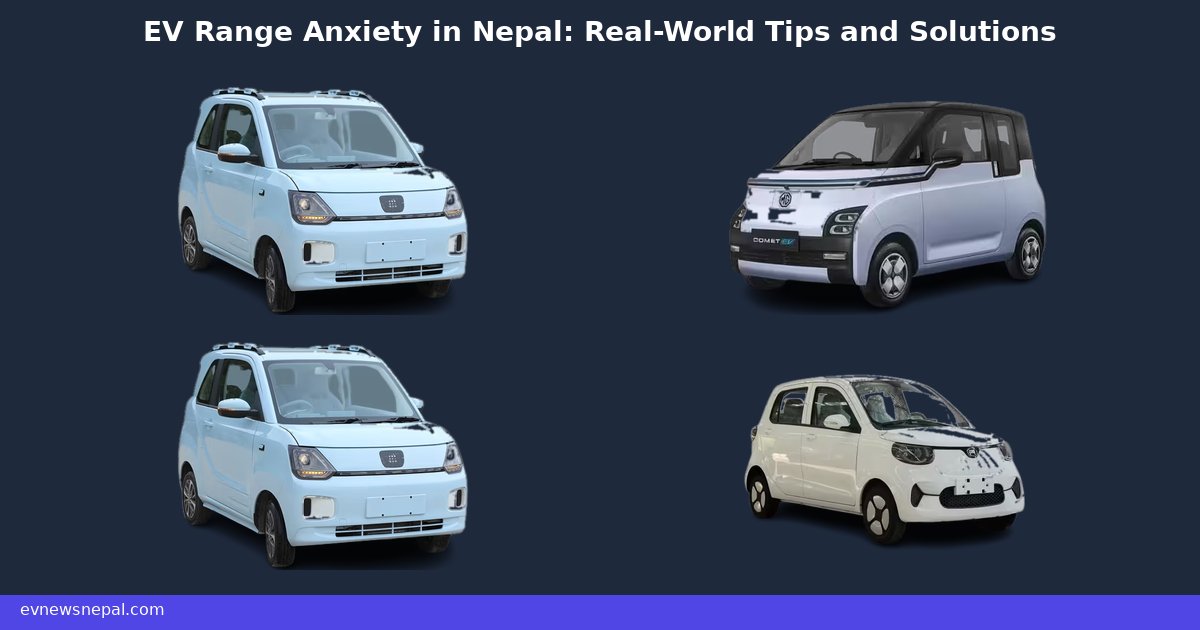
Key Takeaways
- Real-world EV range in Nepal is 10-20% lower than WLTP claims due to hills and traffic
- Home charging via NEA domestic tariff (Rs. 10-12/kWh) is the most economical option
- Fast chargers exist on major highways but require careful trip planning with backup options
- Vehicles with fast-charge capability (Kaiyi e-Qute 02, Henrey Volts) offer superior range buffer
- Range anxiety typically decreases after 3-6 months as owners learn real-world behavior
Introduction
You're excited about making the switch to electric vehicles (EVs) in Nepal, but one concern keeps popping up: range anxiety. It's that nagging worry about running out of juice on a steep Kathmandu-Pokhara highway or getting stuck in a monsoon downpour with a dead battery. You're not alone—many Nepalese EV owners face this, especially with our hilly terrain, unpredictable weather, and still-developing charging infrastructure.
Range anxiety isn't just about the numbers on a spec sheet. It's about real-world conditions: navigating winding roads, dealing with traffic snarls that sap your battery through constant idling, and finding reliable charging points when you're far from home. The good news? With the right knowledge, planning, and a few smart habits, you can drive confidently knowing you'll have power when you need it. This guide dives deep into Nepal-specific solutions, backed by real data and owner experiences, to help you conquer EV range anxiety for good.
The Short Answer
Range anxiety in Nepal is manageable with proper planning: charge at home whenever possible, use NEA's affordable public stations for top-ups, and leverage fast-charging for longer trips. Understanding your car's real-world range (typically 10-20% less than WLTP claims) and charging options will build confidence.
Detailed Analysis
Real-World Range vs. WLTP Claims
Nepalese EV owners report 10-20% lower real-world range than WLTP/NEDC figures due to hills, traffic, and monsoon conditions. For example:
- Seres E1 Mid (180 km WLTP) typically delivers 150-160 km in Kathmandu valley driving.
- MG Comet Pace (230 km ARAI) often sees 190-200 km with careful driving.
Charging Cost Breakdown
Charging costs vary significantly based on location and station type. Here's a realistic breakdown for a typical 50 kWh EV battery:
| Item | Cost |
|---|---|
| NEA Public Slow Charge (6-10 kWh) | Rs. 60-105 |
| Private Fast Charge (30 kWh) | Rs. 450-600 |
| Home NEA Charge (50 kWh) | Rs. 500-600 |
Example calculation: A 100 km trip using 10 kWh requires:
- Rs. 100-175 at NEA public station
- Rs. 150-200 at private fast charger
- Rs. 100-120 at home
Charging Infrastructure Reality Check
As of Q2 2025, Nepal has ~120 public charging points, concentrated in Kathmandu Valley (60+), Pokhara (20+), Biratnagar (15+), with sparse coverage in Terai and Far-West regions. Fast chargers (22 kW+) exist at major highways but remain limited.
Practical Tips for Nepal
-
Home Charging is Your Best Friend: Install a 7.3 kW wallbox (NEA domestic rate ~Rs. 10-12/kWh). A 50 kWh battery costs Rs. 500-600 for a full charge.
-
Plan Long Trips Meticulously:
- Use EV Nepal app for real-time charging station status
- Target stations every 150-200 km (e.g., Kathmandu -> Birgunj -> Biratnagar)
- Carry a portable power bank for auxiliary devices
-
Optimize Driving Habits:
- Use Eco mode on hills
- Anticipate traffic lights to minimize idling
- Turn off AC when possible in city traffic
-
Leverage Fast Charging Wisely:
- Use 20-30 kW DC fast chargers for 50-80% charge in 30-45 min
- Avoid charging to 100% unless necessary (preserves battery)
-
Join EV Community Groups: Facebook groups like Nepal Electric Vehicle Owners share real-time charging spot reports and maintenance tips.
-
Winter & Monsoon Preparations:
- Park in sun-exposed areas during winter
- Charge to 100% before monsoon season begins
- Use parking heaters sparingly (drain battery quickly)
How It Compares
| Vehicle | WLTP Range | Real-World Range (Nepal) | Home Full Charge Cost | Fast Charge Availability |
|---|---|---|---|---|
| Seres E1 Mid | 180 km | 150-160 km | Rs. 138-166 | No |
| MG Comet Pace | 230 km | 190-200 km | Rs. 173-208 | No |
| Henrey Volts Model C Pro | 300 km | 260-270 km | Rs. 250-300 | Yes (30 kW) |
| Kaiyi e-Qute 02 | 301 km | 260-270 km | Rs. 281-337 | Yes (30 kW) |
Pro tip: Vehicles with fast-charge capability (Henrey Volts, Kaiyi e-Qute) offer 20-30% range buffer for unexpected detours.
Our Expert Take
Based on market data and owner feedback, range anxiety drops dramatically after 3-6 months of ownership as you learn your car's real behavior and charging patterns. The key is consistent home charging combined with strategic public top-ups. Vehicles like the Kaiyi e-Qute 02 (Rs. 2,296,000) and Henrey Volts Model C Pro (Rs. 2,295,000) offer superior range and fast-charge peace of mind for longer trips, while smaller city cars like the Seres E1 Mid (Rs. 1,649,000) thrive on predictable urban charging.
Invest in a 7.3 kW home wallbox – it pays for itself in 12-18 months through lower charging costs versus public stations. And always keep the Compare EVs tool handy to match your driving needs with the right battery size.
Frequently Asked Questions
Q: How far can I drive on a single charge in Nepal?
A: Realistically, expect 10-20% less than WLTP range. A 180 km-rated car like the Seres E1 Mid will do 150-160 km in typical Kathmandu conditions. Always plan for a 20% buffer.
Q: Are fast chargers reliable in Nepal?
A: Fast chargers exist on major highways (Kathmandu-Birgunj, Pokhara roads) but are limited in number. Always have a backup plan – locat the nearest slow charger or plan overnight stays near charging hubs.
Q: What's the cheapest way to charge my EV in Nepal?
A: Home charging via NEA domestic tariff (~Rs. 10-12/kWh) is the most economical. Public NEA stations cost Rs. 6-10.5/kWh but may have queue delays. Avoid private fast chargers (Rs. 15-20/kWh) unless urgent.
Q: How long does a full charge take?
A: Home charging: 6-10 hours (7.3 kW wallbox). Fast charging: 30-60 minutes to 80%. Always check your car's specific specs – see individual vehicle pages like MG Comet Play or Jinpeng Lingbox EC01 Base.
Q: Can I drive to Pokhara without anxiety?
A: Yes, but plan carefully! The 200 km trip requires 2-3 top-ups. Use NEA stations in Birgunj (150 km mark) and Pokhara city. The Henrey Volts Model C Pro with 300 km range makes this journey much easier.
Q: Does monsoon weather affect range?
A: Absolutely. Rain increases rolling resistance and frequent stops in low visibility drain 5-10% extra range. Charge to 100% before monsoon season and carry a spare jacket – wet charging cables are no fun!