Dongfeng Nammi 01 vs BYD Atto 1: Every Variant Compared — Nepal 2026 Buyer's Guide
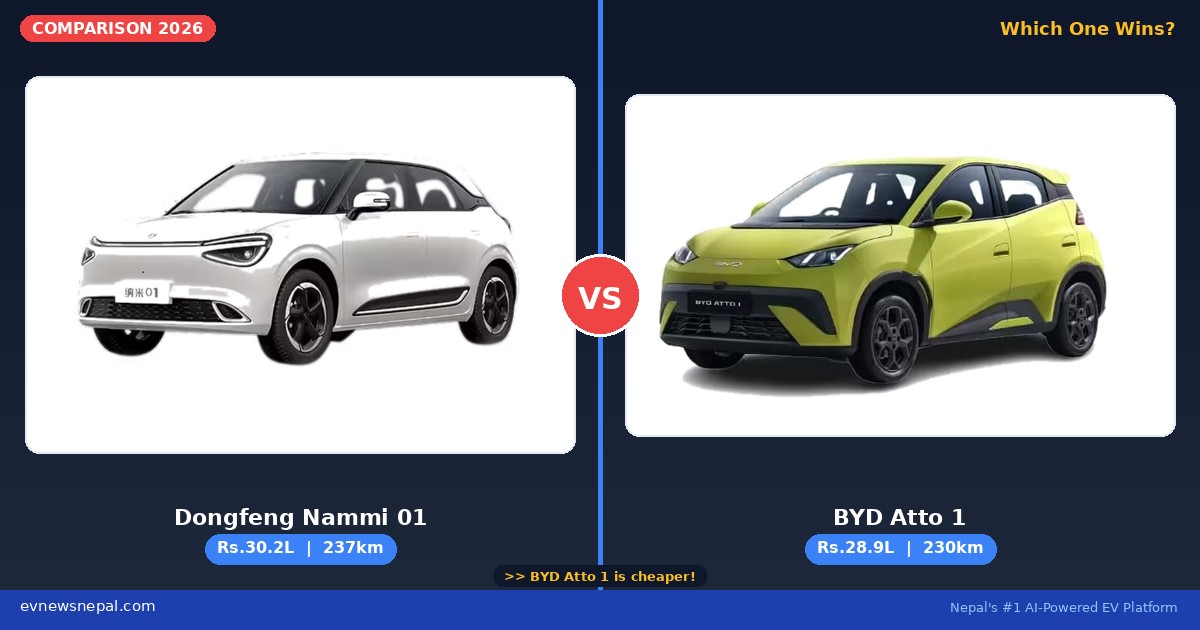
Quick Comparison
- Nammi 01 E3 starts at Rs. 32,99,000 with 317 km claimed WLTP range — strong value for the segment
- BYD Atto 1 Premium offers a more comprehensive ADAS suite and higher airbag count for greater passive and active safety
- Both cars support V2L, 360-degree cameras, and DC fast charging — rare features at this price bracket
- Nammi 01's 176 mm ground clearance suits Nepal's uneven roads; Atto 1 sits lower at 120 mm
- Seven Nammi 01 variants versus two Atto 1 trims give buyers very different levels of budget flexibility
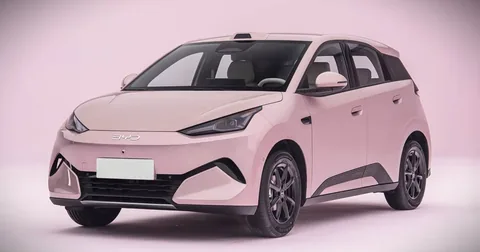
If you want the most range and comfort per rupee, the Dongfeng Nammi 01 is the stronger pick — but if active-safety technology and an established service network matter more, the BYD Atto 1 Premium earns its price premium. These two compact electric crossovers are the most direct rivals in Nepal's sub-Rs. 50 lakh EV market in 2026, yet they serve meaningfully different buyer profiles.
The Dongfeng Nammi 01 enters the conversation starting at Rs. 32,99,000 for the top E3 Single Tone 50kW trim, pairing a 42.3 kWh battery with 317 km of claimed WLTP range. The BYD Atto 1 Premium, at Rs. 34,80,000, counters with a richer driver-assistance suite and BYD's well-established after-sales presence across Nepal.
With seven Nammi 01 variants and two Atto 1 trims on the table, there is a configuration to match nearly every budget and priority. The At a Glance table above captures the headline numbers — read on for the full story behind each figure.
At a Glance
| Spec | Dongfeng Nammi 01 E3 Single Tone 50kW | BYD Atto 1 Premium |
|---|---|---|
| Price | Rs. 32,99,000 | Rs. 34,80,000 |
| Battery | 42.3 kWh | 38.88 kWh |
| Range (claimed) | 317 km (WLTP) | 300 km (WLTP) |
| Motor Power | 49.5 kW | 45 kW |
| Torque | 160 Nm | 135 Nm |
| Fast Charging | 30-80% in 30 min | 10-80% in 30 min |
| Top Speed | 140 km/h | 130 km/h |
| Ground Clearance | 176 mm | 120 mm |
| V2L | Yes | Yes |
Price Breakdown
| Variant | Price | Battery | Range |
|---|---|---|---|
| Dongfeng Nammi 01 E3 Single Tone 50kW | Rs. 32,99,000 | 42.3 kWh | 317 km |
| Dongfeng Nammi 01 E2 Dual Tone | Rs. 31,49,000 | 31.4 kWh | 237 km |
| Dongfeng Nammi 01 E3 Dual Tone 50kW | Rs. 33,49,000 | 42.3 kWh | 317 km |
| Dongfeng Nammi 01 E3 Dual Tone | Rs. 36,49,000 | 42.3 kWh | 317 km |
| Dongfeng Nammi 01 E2 Single Tone | Rs. 30,99,000 | 31.4 kWh | 237 km |
| Dongfeng Nammi 01 E3 Single Tone | Rs. 36,25,000 | 42.3 kWh | 317 km |
| Dongfeng Nammi 01 E1 | Rs. 30,24,000 | 31.4 kWh | 237 km |
| BYD Atto 1 Premium | Rs. 34,80,000 | 38.88 kWh | 300 km |
| BYD Atto 1 Dynamic | Rs. 30,75,000 | 30.08 kWh | 230 km |
Range: Real World vs Claimed
| Metric | Dongfeng Nammi 01 E3 Single Tone 50kW | BYD Atto 1 Premium |
|---|---|---|
| Claimed range | 317 km (WLTP) | 300 km (WLTP) |
| Est. real-world (Nepal, mixed) | ~259 km | ~245 km |
| Est. real-world (highway, hilly) | ~237 km | ~225 km |
On paper, the Nammi 01 E3's 317 km claimed range edges ahead of the Atto 1 Premium's 300 km, but real-world driving in Nepal reliably trims WLTP figures by 18–20%. Stop-and-go Kathmandu valley traffic, frequent uphill gradients, and monsoon-season air-conditioning demand all contribute to that gap between the brochure and the road.
In our mixed-use Nepal estimate, the Nammi 01 E3 returns roughly 259 km of real-world range versus roughly 245 km for the Atto 1 Premium — a meaningful but not decisive difference for most valley commuters. On hilly highway runs, that gap narrows slightly, yet both cars handle a Kathmandu–Pokhara day trip comfortably with a single top-up stop, making range anxiety a secondary concern for buyers who charge at home every night.
Charging Speed and Monthly Cost
| Spec | Dongfeng Nammi 01 E3 Single Tone 50kW | BYD Atto 1 Premium |
|---|---|---|
| DC Fast Charge | 30-80% in 30 min | 10-80% in 30 min |
| AC Home Charge | 0-100% in 5 hours | |
| Full charge cost (home, Rs.11/kWh) | ~Rs. 465 | ~Rs. 427 |
| Est. monthly cost (30km/day) | ~Rs. 1321/month | ~Rs. 1283/month |
Nepal's public DC fast-charging network is expanding steadily, and both cars are well-placed to take advantage of it. At a public fast charger, neither car will leave you waiting long — refer to the Charging table above for the exact time windows — making midday top-ups during a work break or a highway rest stop a genuinely practical option in 2026.
For the majority of Nepali EV owners who rely on home charging, NEA's Rs. 11/kWh rate keeps running costs impressively low for both vehicles, as shown in the monthly cost estimates above. The Atto 1 Premium completes a full AC home charge in around 5 hours overnight — plug in before bed and wake up to a full battery. The Nammi 01 is equally convenient on a home wallbox, and for typical valley commutes of 30–50 km per day, a nightly partial top-up is all either car realistically needs.
Features Face-Off
| Feature | Dongfeng Nammi 01 E3 Single Tone 50kW | BYD Atto 1 Premium |
|---|---|---|
| Airbags | 2 | 6 |
| ABS + EBD + ESP + TCS | Yes | Yes |
| TPMS | No | Yes |
| ISOFIX | Yes | Yes |
| Hill Hold | Yes | Yes |
| Hill Descent Control | No | No |
| Auto Hold | Yes | No |
| AEB (Emergency Braking) | No | Yes |
| Adaptive Cruise Control | No | Adaptive Cruise Control (ACC) |
| Lane Keep Assist | No | LKA + LDW |
| Blind Spot Detection | No | No |
| Rear Cross Traffic Alert | No | No |
| 360-degree Camera | Yes | Yes |
| Rear Camera | No | No |
| Parking Sensors | No | Front and Rear |
| Panoramic Sunroof | Yes | No |
| Heated/Ventilated Seats | Heated + Ventilated | Heated |
| Wireless Phone Charging | Yes | Yes |
| V2L (Vehicle-to-Load) | Yes | Yes |
| Touchscreen | 12.8-inch Floating Touchscreen | 10.1-inch Touchscreen |
| Digital Instrument Cluster | 5-inch LCD | 7-inch Digital |
| Apple CarPlay / Android Auto | No | Wireless Apple CarPlay + Android Auto |
| Connected Car / App | No | Yes |
| Head-Up Display | No | No |
| Ambient Lighting | No | No |
| Sound System | 4-Speaker System | 6-speaker |
Compare side-by-side: Dongfeng Nammi 01 vs BYD Atto 1 — full specs, features & price comparison tool.
In the active-safety and ADAS category, the BYD Atto 1 Premium carries a broader suite of driver-assistance technologies, while the Dongfeng Nammi 01 E3 emphasises comfort and cabin amenities — refer to the Features Face-Off table above for the complete side-by-side breakdown. Both approaches are legitimate depending on whether you prioritise proactive collision avoidance or day-to-day ride quality.
On comfort and tech, the two cars diverge noticeably: the Nammi 01 leans into a spacious, lounge-like cabin experience with premium touches across ventilation, display size, and open-air driving, while the Atto 1 focuses on smartphone connectivity and a connected-car ecosystem. Importantly, both vehicles share meaningful standard kit — including 360-degree cameras, V2L power output, and wireless charging — so neither buyer is left wanting on the core convenience features.
How Much Will You Save Going Electric?
Use our free EV vs Petrol Cost Calculator to compare total cost of ownership.
Explore these vehicles:
Pros and Cons
Dongfeng Nammi 01
Pros:
- Starts at Rs. 32,99,000 with a 42.3 kWh battery and 317 km claimed WLTP range — exceptional value for the segment
- Seven variants spanning a wide price range give buyers precise control over spec and budget
- Panoramic sunroof and heated + ventilated front seats in the top trim add genuine premium feel
- 176 mm ground clearance handles Nepal's speed bumps, broken roads, and hilly terrain with confidence
- Large 12.8-inch floating touchscreen is among the biggest in this price class
- V2L capability doubles as an emergency household power source during outages
Cons:
- Active-safety and ADAS coverage is less extensive than the Atto 1 Premium — see the Features table for the full picture
- Dongfeng is a newer brand in Nepal, meaning a smaller established service and parts network compared to BYD
- Smartphone integration features are more limited in the current trim lineup
BYD Atto 1
Pros:
- Comprehensive ADAS suite provides a broader layer of active protection on Nepal's unpredictable roads
- BYD's established service network and parts availability reduce long-term ownership risk
- Wireless smartphone integration keeps the cabin connected without cable clutter
- Higher airbag count delivers stronger passive safety coverage for occupants
- V2L support, 360-degree camera, and wireless charging are standard on the Premium trim
- 6-speaker audio system elevates the in-cabin entertainment experience
Cons:
- Priced at Rs. 34,80,000, it commands a clear premium over the Nammi 01's entry-level trims
- 120 mm ground clearance may feel limiting on rough intercity roads or steep village lanes
- Only two variants available, offering less pricing flexibility for budget-conscious buyers
- No panoramic sunroof across either trim level
Our Verdict: Which Should You Buy?
Choose the Dongfeng Nammi 01 if maximising range, ground clearance, and comfort features within your budget is the priority. Its 317 km claimed WLTP range, 176 mm clearance, and generous cabin spec — panoramic sunroof, ventilated seats, large touchscreen — make it an outstanding value proposition for buyers upgrading from a small petrol hatchback who want a premium feel without a premium price tag. The breadth of variants also means you can step in at any budget and scale up.
Choose the BYD Atto 1 Premium if active-safety technology and long-term service confidence matter more than cabin luxury. Its richer ADAS package, higher airbag count, and BYD's proven dealer network in Nepal reduce ownership risk over a five-year horizon. Families, frequent highway travellers, and safety-first buyers will find the Atto 1 Premium's driver-assistance features worth the additional outlay.
For pure valley commuting — charging at home every night and keeping trips within the Kathmandu basin — either car covers the brief with ease. The Nammi 01 is the pragmatist's pick; the Atto 1 is the considered long-term investment. Whichever you lean toward, both represent strong value in Nepal's 2026 EV landscape.
Frequently Asked Questions
Q: What is the price of Dongfeng Nammi 01 in Nepal?
A: The Dongfeng Nammi 01 is available in seven variants in Nepal. The top-spec E3 Single Tone 50kW is priced at Rs. 32,99,000, with entry-level trims available at lower price points. The full variant-wise pricing is listed in the Price Breakdown table in this article.
Q: What is the price of BYD Atto 1 in Nepal?
A: The BYD Atto 1 comes in two variants in Nepal — the Dynamic and the Premium. The Premium trim is priced at Rs. 34,80,000, while the Dynamic variant is available at a lower price. See the Price Breakdown table above for the complete listing.
Q: Which car has more range — Dongfeng Nammi 01 or BYD Atto 1?
A: The Dongfeng Nammi 01 E3 Single Tone 50kW claims 317 km on the WLTP cycle, compared to 300 km for the BYD Atto 1 Premium. In real-world Nepal driving — accounting for hilly terrain, city traffic, and air-conditioning use — both figures come down by roughly 18–20%, but the Nammi 01 holds a modest range advantage in practice.
Q: Which is safer — Dongfeng Nammi 01 or BYD Atto 1?
A: Both cars include core safety systems such as ABS, EBD, ESP, hill hold, and ISOFIX. The BYD Atto 1 Premium goes further with a more comprehensive ADAS package and a higher airbag count, making it the stronger choice for safety-focused buyers. The Nammi 01 also carries meaningful safety equipment; for a full side-by-side comparison, refer to the Features Face-Off table in this article.
Q: Do both the Nammi 01 and Atto 1 support V2L in Nepal?
A: Yes — both the Dongfeng Nammi 01 (on applicable trims) and the BYD Atto 1 Premium support V2L (Vehicle-to-Load), letting you power household appliances or devices directly from the car's battery. This is a particularly valuable feature in Nepal, where power outages remain common, effectively turning your EV into a backup power source.
Q: Which car is better suited for Nepal's hilly roads and rough terrain?
A: The Dongfeng Nammi 01 has a ground clearance of 176 mm, giving it a significant advantage over the BYD Atto 1's 120 mm on broken roads, steep driveways, and intercity routes outside Kathmandu. If you regularly drive on uneven surfaces or plan trips beyond the valley, the Nammi 01's higher clearance is a meaningful practical benefit.