Key Takeaways
- Home charging costs Rs. 10-12/kWh in Nepal — cheaper than public fast chargers
- Wallbox installation costs Rs. 15,000-50,000 depending on circuit upgrades and NEA fees
- Smaller EVs like Seres E1 Mid work with standard sockets; larger models need wallboxes
- Monsoon-proof installations require IP65-rated equipment and proper cable management
- NEA approval takes 15-30 days for wallbox installations with dedicated circuit requirements
Introduction
Charging your electric vehicle (EV) at home in Nepal is becoming the new normal as more Nepalese families make the switch to electric mobility. With Kathmandu valley traffic congestion worsening and NEA electricity rates becoming more favourable for overnight charging, home charging offers convenience, cost savings, and peace of mind. Unlike public charging stations that can be scarce in hilly areas and often charge premium rates, your garage or balcony can become your personal charging hub.
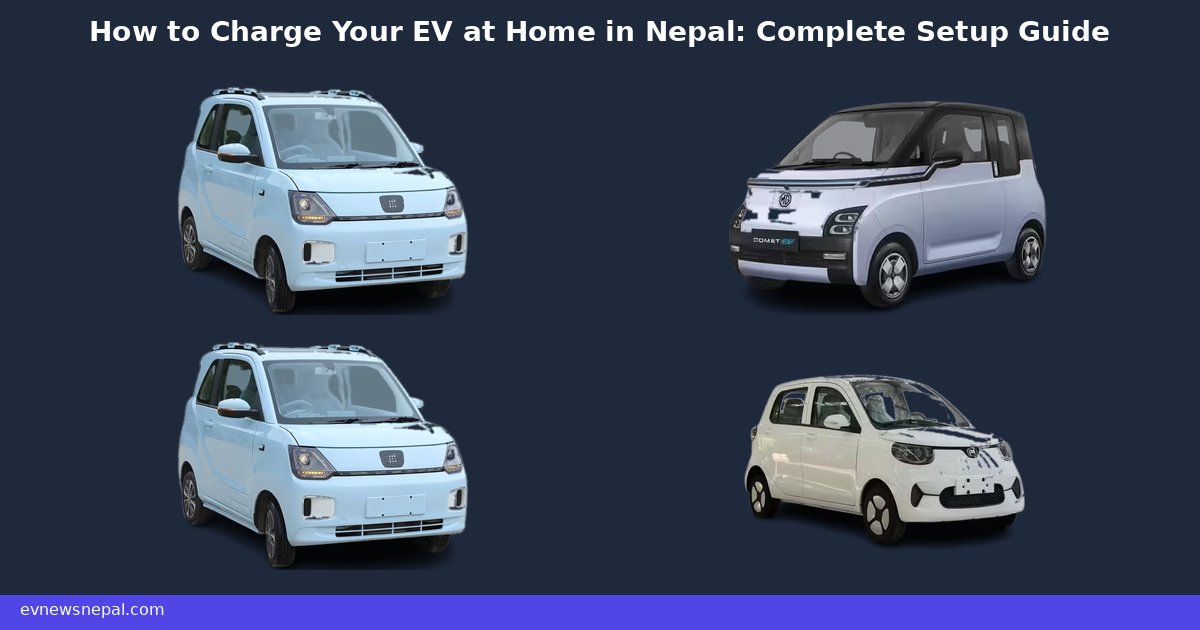
But setting up home charging isn't as simple as plugging in a cable. Nepal's unique terrain, electricity infrastructure, and monsoon weather patterns all influence your setup choices. This comprehensive guide covers everything you need to know: from understanding your EV's charging needs to navigating NEA regulations, selecting the right hardware, and calculating actual costs. Whether you drive a Seres E1 Mid or a Kaiyi e-Qute 02, we'll help you create a safe, efficient home charging solution tailored to Nepal's conditions.
The Short Answer
You can safely charge most EVs at home in Nepal using a standard 15A domestic socket (Type C/D plug) with a wallbox or charging cable. For faster charging, install a dedicated wallbox (7.3kW AC) with NEA approval. Always verify circuit capacity and use surge protection.
Detailed Analysis
Charging Options Explained
1. Standard Socket Charging (AC)
- Power: 2.3kW - 3.7kW (15A socket)
- Time: 4-10 hours depending on battery size
- Cost: Rs. 10-12/kWh × battery kWh
- Best for: Night-time charging, smaller batteries (13-17kWh)
2. Dedicated Wallbox (AC)
- Power: Up to 7.3kW (32A socket)
- Time: 2-4 hours for most models
- Cost: Rs. 15,000-25,000 installation + Rs. 10-12/kWh
- Best for: Faster charging, larger batteries (25+kWh)
Nepal-Specific Cost Breakdown
| Item | Cost |
|---|---|
| 15A Socket (existing) | Rs. 0 (if available) |
| 32A Wallbox Installation | Rs. 15,000-25,000 |
| Wallbox Unit (7.3kW) | Rs. 35,000-45,000 |
| Surge Protector | Rs. 5,000-10,000 |
| NEA Connection Fee (new) | Rs. 5,000-10,000 |
| Annual Maintenance | Rs. 2,000-5,000 |
Example Charging Costs
For a Seres E1 Mid (13.8kWh) charged nightly:
- Standard socket: 13.8kWh × Rs.11/kWh = Rs. 151.8 per night
- Monthly: Rs. 4,554 (assuming 30 days)
For a Kaiyi e-Qute 02 (28.08kWh) with wallbox:
- 7.3kW wallbox: Full charge in ~3.8 hours
- Cost: 28.08kWh × Rs.11/kWh = Rs. 308.88 per night
EV Charging Requirements
| Vehicle | Battery (kWh) | Normal Charge Time | Fast Charge | Recommended Setup |
|---|---|---|---|---|
| Seres E1 Mid | 13.8 | 4.5 hours (2.3kW) | N/A | Standard socket sufficient |
| MG Comet Pace | 17.3 | 7 hours (2.3kW) | N/A | Standard socket or small wallbox |
| Henrey Volts Model C Pro | 25 | 7 hours (3.5kW) | 30 min (40min 20-80%) | Dedicated wallbox recommended |
| Kaiyi e-Qute 02 | 28.08 | 7 hours (3.5kW) | 30 min (30-80%) | Dedicated wallbox recommended |
Practical Tips for Nepal
- Assess Your Circuit: Check your home's main breaker — older Kathmandu homes often have 10-15A circuits. For wallboxes, you'll need a dedicated 32A circuit.
- Monsoon Protection: Use IP65-rated wallboxes and ensure all connections are weatherproof. Water damage is a major risk during Nepal's rainy season.
- NEA Approval: Any wallbox installation requires NEA permission. Apply at your local NEA office with technical specifications.
- Surge Protection: Mandatory in Nepal due to power fluctuations. Install SPD (Surge Protection Device) at main panel and wallbox level.
- Cable Management: Use cable locks and indoor/outdoor-rated cables. Avoid running cables across walkways in Kathmandu's crowded alleys.
- Timing Matters: Charge during off-peak hours (10pm-5am) to access lower NEA domestic rates and avoid evening load shedding.
- Future-Proof: Install a 32A socket even if you start with standard charging — you can upgrade later without rewiring.
Pro tip: For hilly areas like Pokhara or Biratnagar, position your wallbox on the sunniest wall to reduce dependency on grid power during cloudy monsoon days.
How It Compares
| Charging Method | Cost per km | Full Charge Time | Suitability Nepal | Installation Cost |
|---|---|---|---|---|
| Home Standard Socket | Rs. 0.70/km | 4-10 hours | Small EVs, overnight charging | Rs. 0-5,000 |
| Home Wallbox (7.3kW) | Rs. 0.70/km | 2-4 hours | Large EVs, fast charging | Rs. 15,000-50,000 |
| NEA Public Fast Charger | Rs. 1.00-1.30/km | 30-60 min | Emergency use only | N/A |
| Private Fast Chargers | Rs. 1.50-2.00/km | 30-60 min | Expensive, limited coverage | N/A |
Our Expert Take
Based on Nepal's current EV market data and infrastructure limitations, home charging remains the most economical and reliable solution for the majority of Nepalese EV owners. With NEA domestic rates at Rs. 10-12/kWh and average daily commutes of 30-40km, even a 13.8kWh Seres E1 Mid costs less than Rs. 2,000/month for charging — comparable to diesel car fuel costs. The real advantage comes from avoiding Kathmandu's chaotic public charging queues and unpredictable fast-charger pricing.
For larger vehicles like the Kaiyi e-Qute 02, investing in a wallbox makes financial sense within 2-3 years through reduced charging time and avoided tolls from frequent fast-charging. The key barrier remains circuit capacity in older Kathmandu homes — consider micro-inverters or battery buffer systems if upgrading isn't feasible.
How Much Will You Save Going Electric?
Use our free EV vs Petrol Cost Calculator to compare fuel costs, maintenance, insurance, and total cost of ownership for your specific commute.
Frequently Asked Questions
Q: What is the price of a home wallbox in Nepal?
A: Wallbox kits (7.3kW AC, 32A) cost Rs. 35,000-45,000 plus Rs. 15,000-25,000 for professional installation and NEA approval fees.
Q: Can I charge my EV with a normal socket?
A: Yes, all EVs come with standard charging cables for 15A sockets (Type C/D plugs). This works well for smaller batteries like the Seres E1 Mid and MG Comet Pace.
Q: How long does NEA approval take for wallboxes?
A: Typically 15-30 days after submitting technical specifications and payment of connection fees. Expedited processing available for Rs. 5,000-10,000.
Q: What if my house has only 10A circuits?
A: You can still charge at reduced power (1.5kW) but it'll take longer. For faster charging, you'll need to upgrade circuits — a major renovation in older Kathmandu homes.
Q: Are there tax benefits for home charging setups?
A: Currently no specific tax benefits, but reduced electricity bills and import duty savings on EVs indirectly offset costs. Monitor policy developments — Nepal's EV subsidy framework may expand soon.
Q: Which EVs work best with home charging in Nepal?
A: All available EVs support AC home charging. Smaller models like the Seres E1 Mid and MG Comet Pace are ideal for standard sockets, while larger vehicles like the Kaiyi e-Qute 02 benefit from wallboxes. View our Compare EVs page for detailed specs.
Q: Can I use a generator for home charging?
A: Technically possible but not recommended. Generators cost Rs. 50,000-150,000 and have poor efficiency. NEA rates remain cheaper than generator fuel costs for daily charging.
Q: What's the best brand for wallboxes in Nepal?
A: Look for IEC-certified brands with local service centers. Memodo, Memodo Smart, and OpenWB have strong Nepal presence. Avoid uncertified Chinese no-name brands.
Q: How do I maintain my home charging setup?
A: Clean contacts monthly, check for wear every 6 months, and test SPD annually. Most wallboxes come with 5-year warranties.
Q: What safety standards apply?\n
A: Follow NEA guidelines and IEC 61851-1 standards. Ensure proper grounding, use IP65-rated equipment, and install circuit breakers with magnetic trip.
Q: Will home charging work in rural areas?
A: In areas with stable NEA grid connections, yes. For off-grid locations, consider solar+battery systems — but these add Rs. 200,000+ upfront costs.
Q: How does monsoon weather affect home charging?
A: Rain doesn't affect charging, but flooding can damage outdoor equipment. Use weatherproof enclosures and elevated mounting for wallboxes.