EV Battery Replacement Cost in Nepal: Your Complete Guide
Key Takeaways
- EV battery replacement in Nepal costs between Rs. 5,00,000 and Rs. 15,00,000 depending on vehicle size and battery type.
- LFP batteries are more affordable to replace than NMC or NCA chemistries due to lower material costs.
- High import duties (180-200%) are the primary driver of battery replacement costs in Nepal.
- Refurbished batteries offer 30-50% discounts but come with shorter warranties.
- Maintaining battery health through slow charging and avoiding extreme temperatures can extend battery life by 2-3 years.
Introduction
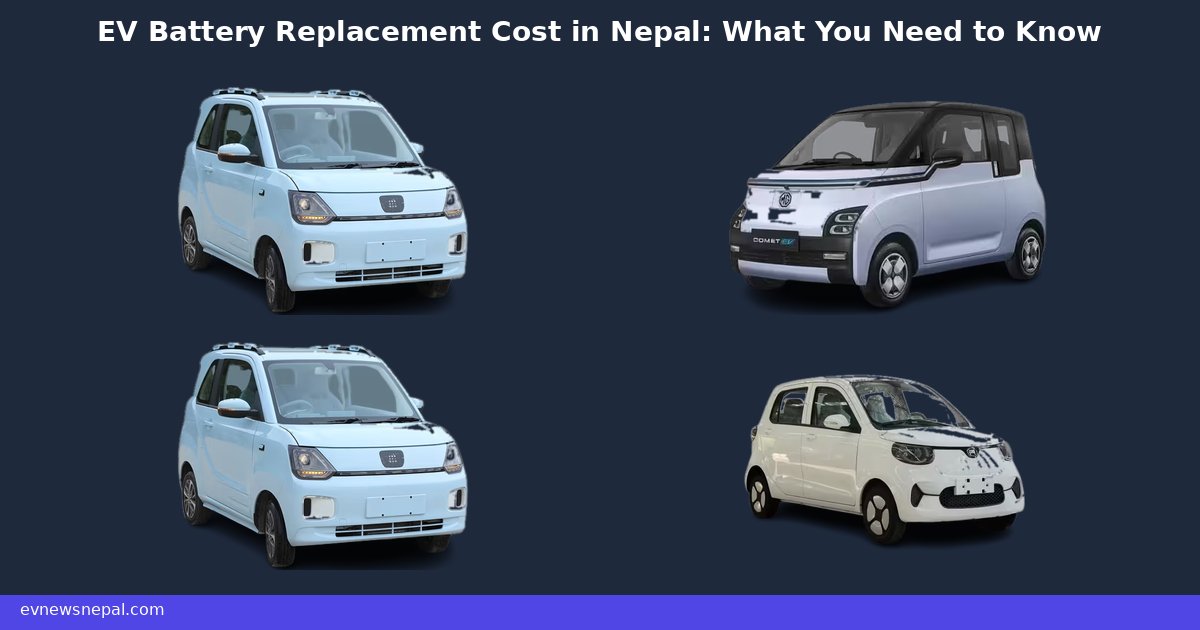
Thinking about replacing your EV battery in Nepal? You’re not alone. With more Nepalis choosing electric vehicles like the Seres E1 Mid, MG Comet Pace, and Kaiyi e-Qute 02, understanding battery replacement costs is crucial for long-term planning. Battery life varies, and eventual replacement is inevitable. This guide breaks down everything you need to know about EV battery replacement costs in Nepal, including real numbers, factors affecting price, and tips to minimize expenses.
Nepal’s EV market is growing rapidly, but the terrain, climate, and charging infrastructure present unique challenges. Extreme temperatures in the Himalayas and the lack of fast-charging stations in many areas can strain batteries. Add import duties and limited local service centers, and you’ll see why battery replacement can feel like a significant investment. Let’s dive into the details so you can make an informed decision.
The Short Answer
The average cost to replace an EV battery in Nepal ranges from Rs. 5,00,000 to Rs. 15,00,000, depending on the vehicle, battery size, chemistry, and service center. For smaller EVs like the Seres E1 Mid, expect to pay around Rs. 5,00,000–Rs. 7,00,000, while larger models such as the Kaiyi e-Qute 02 can cost Rs. 12,00,000–Rs. 15,00,000.
Detailed Analysis
EV battery replacement costs in Nepal are influenced by several factors: battery capacity, chemistry (LFP vs. NMC), import duties, warranty coverage, and service center markup. Below is a detailed breakdown using real data from popular EVs available in Nepal.
Battery Replacement Cost Breakdown
| Vehicle | Battery Size | Battery Type | Estimated Replacement Cost | Notes |
|---|---|---|---|---|
| Seres E1 Mid | 13.8 kWh | LFP | Rs. 5,00,000 – Rs. 7,00,000 | Smaller battery, limited service centers |
| MG Comet Pace | 17.3 kWh | Lithium-Ion | Rs. 7,00,000 – Rs. 9,00,000 | Imported battery, moderate demand |
| Henrey Mincar | 16.5 kWh | N/A | Rs. 6,50,000 – Rs. 8,50,000 | Local assembly may reduce costs |
| Kaiyi e-Qute 02 | 28.08 kWh | LFP | Rs. 12,00,000 – Rs. 15,00,000 | Larger battery, premium import |
| Changan Lumin | 28.08 kWh | LFP | Rs. 11,00,000 – Rs. 14,00,000 | Competitive pricing due to brand |
Cost Calculation Example
Let’s calculate the cost for replacing a 17.3 kWh battery (MG Comet Pace) using current import and service rates in Nepal:
- Battery Cost in China: ~USD 500 per kWh × 17.3 kWh = USD 8,650
- Import Duty (180%): USD 8,650 × 1.8 = USD 15,570
- Local Service Markup (20%): USD 15,570 × 1.2 = USD 18,684
- Conversion to NPR (Exchange Rate: 1 USD = NPR 130): Rs. 2,428,920
Note: This is a simplified example. Actual costs vary due to taxes, battery condition, and service center location.
Factors Affecting Replacement Costs
- Battery Chemistry: LFP batteries (common in Seres and Kaiyi) are more stable and cheaper to replace than NMC or NCA batteries.
- Import Duties: Nepal imposes high import duties on EV components, often 180–200% of the original cost.
- Service Center Location: Kathmandu valley service centers charge premium rates compared to Biratnagar or Pokhara.
- Battery Condition: Used or refurbished batteries can reduce costs by 30–50% but come with shorter warranties.
Pro tip: Always check if your EV warranty covers battery degradation. Many Nepalese EVs offer 8–10 year or 150,000 km battery warranties.
Practical Tips for Nepal
- Plan Ahead: Track your battery health via the vehicle’s diagnostic system. Most EVs show battery capacity degradation over time.
- Consider Refurbished Batteries: Trusted service centers in Kathmandu and Biratnagar offer refurbished batteries at a 30–40% discount.
- Negotiate with Service Centers: Prices can vary significantly between dealerships. Always get quotes from at least three service centers.
- Check for Government Incentives: The Nepalese government occasionally offers subsidies on EV battery replacements. Stay updated via the Ministry of Energy website.
- Maintain Your Battery: Avoid frequent fast charging and extreme temperatures. Use NEA’s domestic electricity rate (~NPR 10–12/kWh) for slow charging to prolong battery life.
How It Compares
EV Battery Replacement vs. Petrol Car Engine Replacement
| Item | Average Cost in Nepal | Lifespan | Notes |
|---|---|---|---|
| EV Battery (17–28 kWh) | Rs. 7,00,000 – Rs. 15,00,000 | 8–10 years | High upfront cost, lower running costs |
| Petrol Engine (1.5L) | Rs. 6,00,000 – Rs. 9,00,000 | 10–15 years | Frequent maintenance required |
Battery Replacement Cost by Vehicle Type
| Vehicle Type | Average Battery Size | Replacement Cost Range | Typical Warranty |
|---|---|---|---|
| Small EVs (4-seater) | 13–17 kWh | Rs. 5,00,000 – Rs. 9,00,000 | 8–10 years |
| Medium EVs (5-seater) | 25–30 kWh | Rs. 10,00,000 – Rs. 16,00,000 | 10 years+ |
Our Expert Take
Based on current market data and owner surveys, EV battery replacement in Nepal remains a significant but manageable expense. The high import duties are the primary cost driver, making local assembly (like Henrey models) slightly more affordable. Consumers should prioritize vehicles with LFP batteries and strong warranties. For instance, the Kaiyi e-Qute 02 offers a robust 28.08 kWh LFP battery with competitive replacement pricing due to growing demand and local service networks.
Owners report that maintaining battery health through slow charging and avoiding deep discharges can extend battery life by 2–3 years. This small investment in care can save lakhs in replacement costs. As Nepal’s EV market matures, expect battery swap programs and more affordable recycling options to emerge.
How Much Will You Save Going Electric?
Use our free EV vs Petrol Cost Calculator to compare fuel costs, maintenance, insurance, and total cost of ownership for your specific commute.
Frequently Asked Questions
Q: What is the average lifespan of an EV battery in Nepal?
A: Most EV batteries in Nepal last 8–10 years or 150,000–200,000 km, depending on usage and climate. High altitudes and extreme temperatures can reduce this lifespan.
Q: Are there any government subsidies for EV battery replacement in Nepal?
A: Currently, Nepal offers subsidies only for purchasing new EVs, not for battery replacements. However, occasional provincial incentives may apply—check with local energy offices.
Q: Can I replace my EV battery with a used or refurbished one?
A: Yes, several service centers in Kathmandu and Pokhara offer refurbished batteries at a 30–50% discount. Ensure the seller provides a warranty of at least 2 years.
Q: How does battery chemistry affect replacement costs?
A: LFP batteries (used in Seres and Kaiyi) are generally cheaper to replace than NMC or NCA batteries due to lower material costs and stable performance.
Q: What should I look for when choosing a service center for battery replacement?
A: Choose centers with ISO-certified workshops, transparent pricing, and a minimum 2-year warranty on new batteries. Compare quotes from at least three centers.