Key Takeaways
- Pre-orders opened October 9 with a refundable 2,000 yuan deposit, and the car launched October 20.
- China pricing runs from RMB 65,900 to RMB 99,900 across five variants.
- The new Seagull seats five, uses rear-wheel drive and makes 95 kW.
- Battery options are 30 kWh and 39.2 kWh, with CLTC range of 320 km and 420 km.
- No Nepal launch or price is confirmed, and import duty will decide the landed price.
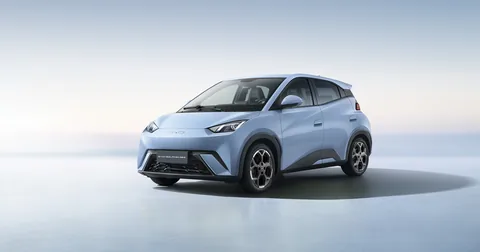
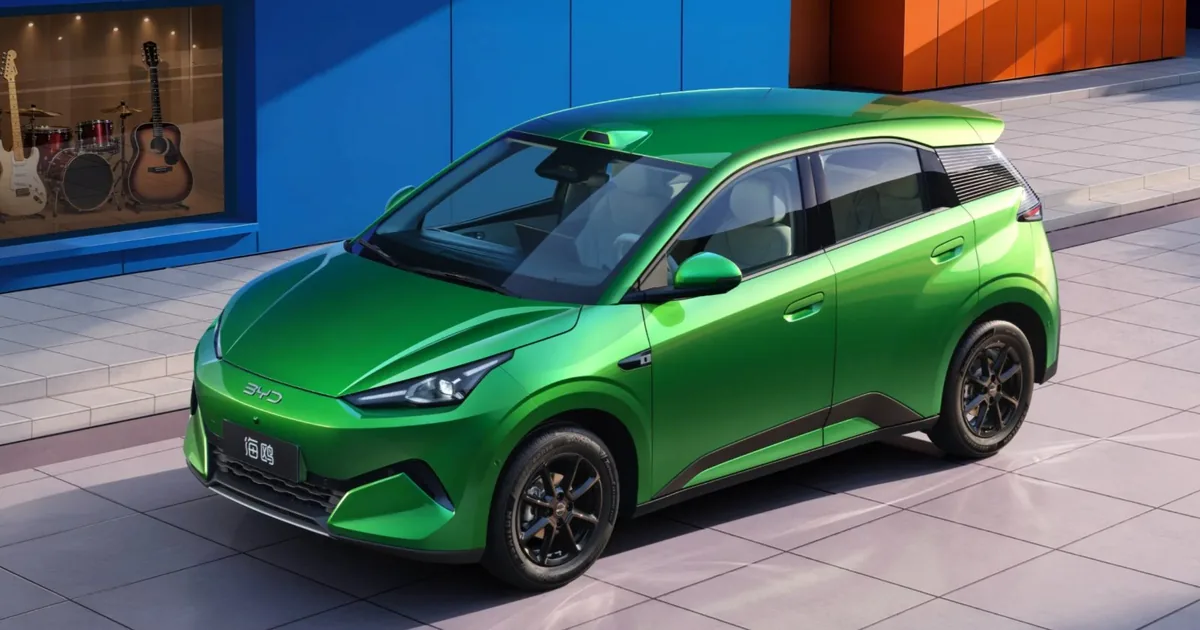
BYD has opened pre-orders for the second-generation Seagull, sold abroad as the BYD Dolphin Mini, and the new car is bigger, more powerful and more expensive than the one it replaces. Reservations started on October 9 through the BYD app for a refundable 2,000 yuan deposit, and BYD followed with the official China launch on October 20.
The first-generation Seagull became one of the best-known cheap EVs in the world because it was small and cost around 10,000 USD. The second generation changes the formula. It grows to a proper five-seater, moves to rear-wheel drive and adds optional flash charging and advanced driver assistance on the higher trims.
No Nepal launch or Nepal price has been announced. BYD tends to export its small cars under different names, though, and the Seagull sits right where Nepali buyers are looking for value. If you are shopping in the sub-Rs. 20 lakh microcar class today, this is the car to keep an eye on.
Key Highlights
- Pre-orders opened on October 9 with a refundable 2,000 yuan deposit, and the car launched on October 20.
- Five variants are priced from RMB 65,900 to RMB 99,900 in China.
- Length grows to 4,205 mm with a 2,650 mm wheelbase.
- Seating goes from 4 to 5, and the layout changes from front-wheel drive to rear-wheel drive.
- Motor output rises to 95 kW.
- Two battery options: 30 kWh and 39.2 kWh, with CLTC ranges of 320 km and 420 km.
- Higher trims add flash charging (BYD claims 10-70% in about 5 minutes at compatible stations) and the DiPilot 300 driver assistance system with optional lidar.
- Nepal availability and pricing: not confirmed.
Detailed Analysis
A bigger car with a different personality
The old Seagull was a city runabout. The new one is a small hatchback that can carry a family. The wheelbase is now 2,650 mm, the same as the Geely EX2. At 4,205 mm long it is also longer than the EX2's 4,135 mm. That matters for rear legroom, which was the biggest complaint about the original car.
The move to rear-wheel drive is a notable engineering change at this price. Rear drive usually gives better traction on steep climbs, because weight shifts to the back wheels when you accelerate uphill. For Nepal's hill roads, that is a genuine advantage over a front-driven small car. It also improves the steering feel.
Powertrain and range
The 95 kW motor is a big step up from the first generation. Two batteries are offered, and the range figures below are CLTC numbers. CLTC is the most optimistic standard in common use. Plan on real-world range of roughly 75-85% of the claimed figure, and less in winter or on long uphill stretches.
| Variant | Battery | CLTC range | Motor |
|---|---|---|---|
| Seagull Gen 2, smaller pack | 30 kWh | 320 km | 95 kW |
| Seagull Gen 2, larger pack | 39.2 kWh | 420 km | 95 kW |
The top variant's 420 km CLTC claim is slightly higher than the Geely EX2 at 410 km CLTC from a 40.16 kWh battery, despite a smaller pack. That suggests good efficiency, though real-world testing is still needed.
Charging and technology
Charging claims have been reported inconsistently. The most recent launch coverage says higher trims support flash charging, with a claimed 10-70% top-up in about 5 minutes on compatible chargers. Earlier pre-launch reports talked about 10-97% in about 9 minutes. Treat both as best-case figures that need BYD's own flash-charging network, which does not exist in Nepal.
For comparison, BYD's larger BYD Sealion 08 lists 10-80% in 32 minutes on standard fast charging, and the Geely EX2 takes about 25 minutes for 30-80% at 70 kW DC. In Nepal you should plan around ordinary DC fast charging and home AC charging, not flash charging.
About driver assistance: the higher trims carry the DiPilot 300 system, and lidar is available on top specifications. Those are great features, but they depend on map data, software support and service that may not be available in Nepal.
China pricing in context
The entry Vitality Edition costs RMB 65,900 and the Smart Edition at the top costs RMB 99,900. That is a wide spread, and the difference mostly buys the bigger battery, flash charging and driver-assistance hardware. Compare equivalent trims when you look at prices: the cheapest Seagull is not the same car as the lidar-equipped one.
How it lines up against Nepal's small EVs
The new Seagull is a size class above the four-seat microcars sold in Nepal today. The table pulls the live specs for those cars.
| Model | Price in Nepal | Battery | Range | Motor |
|---|---|---|---|---|
| Seres E1 Mid | Rs. 16,49,000 | 13.8 kWh | 180 km | 25 kW |
| Seres E1 Top | Rs. 17,99,000 | 16.8 kWh | 220 km | 30 kW |
| MG Comet Pace | Rs. 18,75,000 | 17.3 kWh | 230 km | 31.3 kW |
| Henrey Mincar | Rs. 19,95,000 | 16.5 kWh | 205 km | 35 kW |
| Geely EX2 | {{vehicle:geely-ex2:formattedPrice}} | 40.16 kWh | 410 km | 85 kW |
The base-versus-top split matters here. The Seres E1 Mid and Top are the same car with different packs and options, so compare Mid against Mid-level rivals and Top against Top. The new Seagull's 30 kWh variant is the fair match for the smaller-pack cars, and the 39.2 kWh variant for the larger ones.
The microcars all share a few traits: four seats, roughly 100 km/h top speed and ranges between 180 and 230 km. The new Seagull more than doubles the power of any of them, with 95 kW against 25-35 kW, and its 320-420 km CLTC range is far above the 180-230 km they offer.
Pro tip: If you only drive inside Kathmandu valley, a 180-230 km microcar is enough. Rear-seat space, highway stability and hill performance are where a Seagull-sized car would justify a higher price.
Impact on Nepal EV Market
What buyers should know
The EV market in Nepal is under pressure. Imports fell by about 20% in the 2025/26 fiscal year, with northern border disruptions and higher duties cited as the main reasons. EVs still made up most of the cars, jeeps and vans imported, and buyers who once looked at Rs. 40-50 lakh vehicles are moving to cheaper models. A compact five-seater with strong range could land right in that shift.
There is a visible price gap in Nepal's market. The four-seat microcars cost between Rs. 16,49,000 and Rs. 19,95,000, and the next step up in practical hatchbacks and compact SUVs costs a lot more. A car like the new Seagull would be aimed at that gap. A Geely EX2 or Deepal S03 buyer would be a natural cross-shopper, since the S03 offers a 40 kWh battery and 405 km CLTC range and the EX2 offers 40.16 kWh and 410 km CLTC.
Duty is the unknown
Nepal charges customs and excise duty by motor power. Reports say EVs up to 50 kW fall into the lowest tier, and the Seagull's 95 kW motor is well above that, so it would probably sit in a higher bracket than the Seres and MG microcars. Policy reports also conflict on the current rates, so any landed price is guesswork until an importer publishes one. Do not trust a converted China price: shipping, duty, VAT, dealer margin and warranty support all add to it.
Running cost
Charging at home at about Rs. 10-12 per kWh, a full 39.2 kWh pack would cost roughly Rs. 390-470. At a public NEA charger (Rs. 6-10.5 per kWh) it falls to about Rs. 235-410, and at a private fast charger (Rs. 15-20 per kWh) it is around Rs. 590-785. Over a typical 30-40 km daily commute that works out to Rs. 1,000-2,000 a month, a small fraction of petrol costs.
Monsoon and hills
A small rear-driven EV with 95 kW should climb well. Check ground clearance before you buy, though. The microcars here have 135-165 mm, and the Geely EX2 has 175 mm. For monsoon roads with flooded patches in places like the Kathmandu ring road, that number matters more than top speed.
What to Expect Next
- Now through year-end: deliveries start in China, and first real-world range tests and owner feedback will show how the 420 km claim holds up.
- Early 2027: BYD usually rolls compact models out to export markets under names like Dolphin Mini or Dolphin Surf. A Nepal announcement is possible, but nothing is confirmed. Some features, including flash charging and the advanced driver-assistance system, may not be available in markets without the supporting infrastructure.
- Prices: expect Nepal pricing to depend on the duty bracket, which turns on motor power. Watch the next Finance Act for any change.
- Used market: first-generation Seagull imports through the grey channel could get cheaper once the new model arrives. Check our Used EVs section before buying, and always check battery health and warranty status.
Until BYD confirms a Nepal plan, use our Compare EVs tool to see what is on sale right now.
Explore All EVs Available in Nepal
Compare 200+ electric vehicles with real-time prices, specs, and features.
Frequently Asked Questions
Q: What is the second-generation BYD Seagull?
A: It is the redesigned version of BYD's small hatchback, sold overseas as the Dolphin Mini or Dolphin Surf. It grows to 4,205 mm long, seats five, uses rear-wheel drive and has a 95 kW motor. Battery options are 30 kWh and 39.2 kWh, giving CLTC ranges of 320 km and 420 km.
Q: How much does the new BYD Seagull cost?
A: In China it costs between RMB 65,900 and RMB 99,900 across five variants. There is no official Nepal price, because BYD has not announced a Nepal launch. Any Nepal price would depend on import duty, shipping, VAT and dealer margin.
Q: Will the BYD Seagull come to Nepal?
A: Not confirmed. BYD often exports its small cars under different names, so a Nepal launch is plausible, but there is no announcement yet. Features such as flash charging may not be offered because Nepal lacks the supporting chargers.
Q: How does the Seagull compare with small EVs already sold in Nepal?
A: It is larger and much more powerful. Current Nepal microcars like the Seres E1, MG Comet Pace and Henrey Mincar seat four, make 25-35 kW and claim 180-230 km of range. The new Seagull seats five, makes 95 kW and claims up to 420 km CLTC. The nearest comparison among cars sold here today is the Geely EX2, which has 410 km CLTC range and a 40.16 kWh battery.
Q: How much would it cost to charge a Seagull in Nepal?
A: A full charge of the 39.2 kWh pack costs roughly Rs. 390-470 at home (about Rs. 10-12 per kWh) and about Rs. 590-785 at a private fast charger (Rs. 15-20 per kWh). NEA public stations at Rs. 6-10.5 per kWh are cheapest, at roughly Rs. 235-410 per full charge.