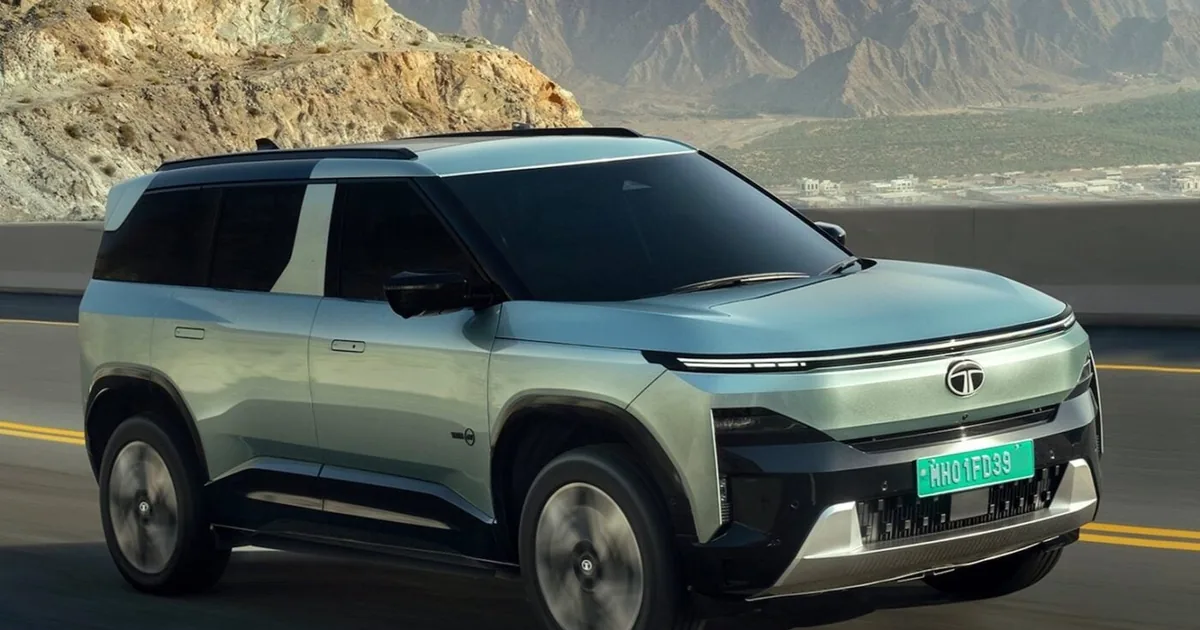
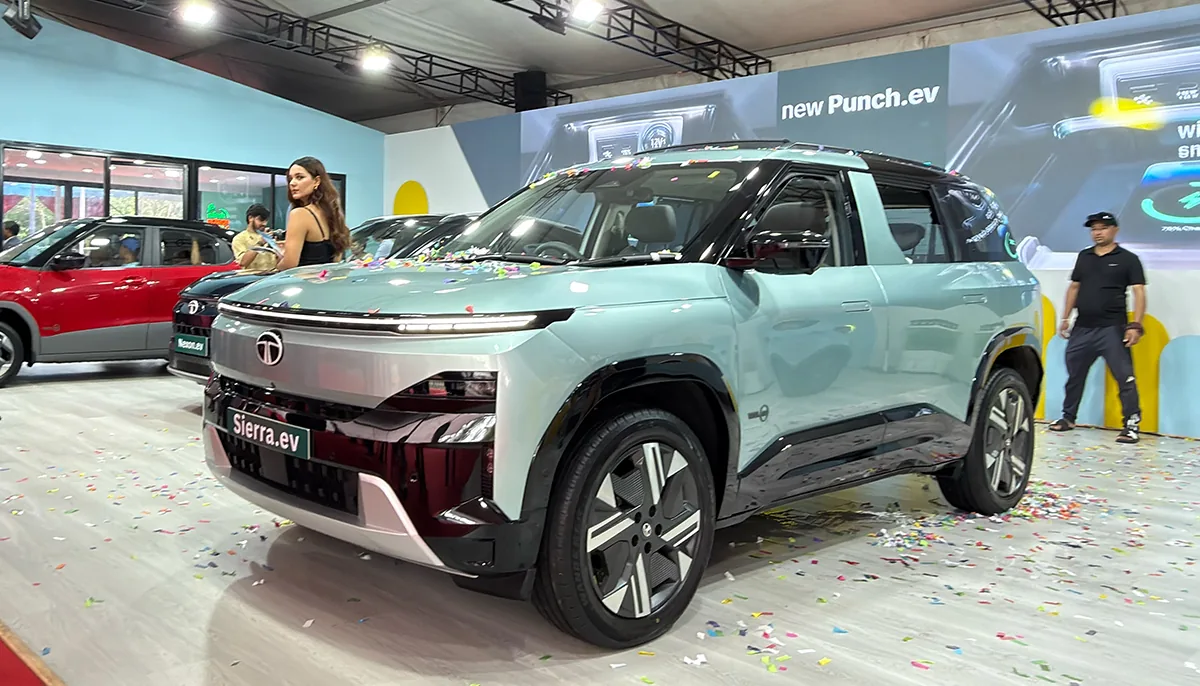
Coming soon to Nepal
Tata Sierra EV
Key Takeaways
- Tata Sierra EV claims 665 km from its 75 kWh battery, with a 510-530 km real-world rating from Tata.
- Plan on about 400-460 km on Nepal's hilly routes and steady highway runs, and 480-520 km in mixed driving.
- Claimed fast charging adds 263 km of range in 15 minutes, subject to charger availability.
- A full 75 kWh charge costs roughly Rs. 750-900 at home or Rs. 450-788 at NEA public stations.
- Nepal price and variants are unconfirmed; pre-bookings are open, with deliveries expected around Dashain.
The Tata Sierra EV carries a brand-claimed range of 665 km on its 75 kWh battery, but the figure that matters for buyers is the real-world one. Tata's own C75 rating puts it at 510-530 km, and a controlled in-house run reportedly stretched to 702 km at about 107 Wh/km. The Tata Sierra EV debuted at the NADA Auto Show 2026 in Nepal, pre-bookings are open, and deliveries were expected around Dashain.
That gap between 665 km on paper and roughly 500 km on the road is normal for any EV. What changes the answer for Nepal is the terrain. Long climbs out of the Kathmandu valley, cold mornings, monsoon rain and slow city traffic all affect how far a battery goes. This guide explains the numbers, what to expect on Nepali roads, and what a full charge costs.
One caveat first. Tata and its Nepal distributor have not published a final Nepal price or confirmed the variant mix, so we do not quote a price here. The specs below are the 75 kWh version listed in our database.
Key Highlights
- Claimed range: 665 km (brand-claimed) from the 75 kWh battery.
- Real-world range: Tata's C75 figure is 510-530 km. Treat roughly 500 km as a sensible planning number for mixed driving.
- In-house test: One run reportedly covered 702 km at 107 Wh/km, but under controlled marketing-test conditions, so it is not a typical result.
- Motor: 228 kW of power, which is plenty for highway overtakes and steep climbs.
- Fast charging: Claimed 263 km of range in 15 minutes on a suitable DC fast charger.
- Practical specs: 5 seats and 205 mm ground clearance, useful on broken roads and monsoon-damaged routes.
- Nepal status: Debuted at NADA Auto Show 2026, pre-bookings open, deliveries expected around Dashain. Final price and variants are still to be confirmed.
Detailed Analysis
Claimed vs real-world range
The headline 665 km comes from a standardised test cycle with gentle speeds and no hills. Tata's C75 figure is more honest because it assumes a more realistic mix of driving. For the 75 kWh version that is 510-530 km, roughly 77-80% of the claim, and that ratio is typical for a modern EV.
| Measure | Value | What it means |
|---|---|---|
| Battery | 75 kWh | Usable energy store |
| Claimed range | 665 km | Best-case cycle figure |
| Motor power | 228 kW | Strong output for hills |
The 702 km run is worth putting in context. At 107 Wh/km the car is sipping energy, which is only possible with steady speeds, mild weather and careful driving. It shows the battery and efficiency can deliver, but it is not a number to plan a trip around.
Pro tip: Plan trips on 450-500 km, not 665 km. If the car delivers more, that is a bonus, and you will never be stranded by an optimistic claim.
What changes range in Nepal
The published tests were done on Indian roads and cycles, so we have adjusted them for Nepali conditions. The figures below are our own planning estimates, not measured results.
| Driving condition | Estimated usable range | Why |
|---|---|---|
| Kathmandu city traffic | 500-550 km | Regenerative braking recovers energy at low speed |
| Mixed city and highway | 480-520 km | Close to Tata's C75 figure |
| Steady highway at 80-100 km/h | 400-450 km | Aerodynamic drag rises quickly with speed |
| Hilly routes (Kathmandu to Pokhara, Mugling climbs) | 400-460 km | Climbs drain the battery, descents give some back |
| Cold morning or heavy rain with AC and wipers | 5-15% lower | Cabin heating, lights and cold cells add load |
Hills deserve a special mention. A 228 kW motor has no trouble with gradients, but climbing uses far more energy than flat cruising. On the way down, regenerative braking returns a good share of it, so a round trip loses less than the climb alone suggests.
Charging speed and what it means on the road
Tata claims 263 km of range in 15 minutes on fast charging. That works out to about 17.5 km of range per minute, which turns a highway stop into a coffee break. Charging speed tapers once the battery passes roughly 80%, so quick top-ups from 10% to 70% are far better than chasing 100%.
The real constraint in Nepal is the number of reliable high-power chargers, not the car. Many public points are slower than what the Sierra can accept, so on a long trip you will often charge more slowly than the claim suggests. Check charger availability before you leave.
Charging costs in Nepal
Using Nepal's current charging rates and the 107 Wh/km figure from Tata's efficiency run, running costs are low even with generous margins.
| Where you charge | Rate per kWh | Cost of a full 75 kWh charge | Approx. cost per km at 107 Wh/km |
|---|---|---|---|
| Home (NEA domestic) | Rs. 10-12 | Rs. 750-900 | Rs. 1.07-1.28 |
| NEA public station | Rs. 6-10.5 | Rs. 450-788 | Rs. 0.64-1.12 |
| Private fast charger | Rs. 15-20 | Rs. 1,125-1,500 | Rs. 1.61-2.14 |
In everyday use you will not be charging from 0 to 100%. A typical commute of 30-40 km a day uses only a small slice of the battery, so many owners will plug in once or twice a week. Overnight home charging remains the cheapest and easiest option, though a full 75 kWh charge on a home socket can take well over 10 hours. Because of that, a dedicated home charger is a smart add-on.
Owner and reviewer feedback so far
Early reviews from India point in the same direction. Reviewers describe the cabin as premium and the real-world range as comfortably above 500 km in mixed conditions, with highway speeds pulling the number down. Estimates for the smaller 63 kWh version run closer to 440-480 km, but that battery has not been confirmed for Nepal. Independent long-term tests are still limited, so expect more data once cars reach owners.
Impact on Nepal EV Market
For buyers: A realistic 500 km range changes how you can use an electric SUV. Kathmandu to Pokhara and back is possible with planning, and a weekly commute becomes a once-a-week charge. With 205 mm ground clearance, it also handles monsoon-damaged roads and speed breakers better than many low-slung EVs.
For dealers: The Sierra EV adds a premium, long-range option in a segment where buyers compare on range and charging speed. Honest range messaging will matter. Buyers who learn the real figure upfront are less likely to be disappointed later.
For the industry: Strong range figures and fast-charging claims put pressure on charging infrastructure. Fast-charger coverage on the main highways and in secondary cities will decide whether long-range EVs can replace petrol SUVs for intercity use.
Pro tip: Before you buy, ask the dealer in writing about the final price, warranty on the battery, and where the nearest service and fast-charging points are.
What to Expect Next
The Sierra EV was shown at NADA Auto Show 2026 and deliveries were expected around Dashain, so the next milestones are the official price announcement, the confirmed variant lineup and first handovers. We will update this guide once Tata Motors' Nepal distributor confirms them.
Over the next few months, expect:
- Official pricing and variants: These will show whether the 75 kWh battery is the only option and how import duties affect the on-road price.
- First Nepal owner reports: Real feedback from hill routes, monsoon driving and Kathmandu traffic will replace the estimates in this article.
- Charging network growth: Faster public chargers on major highways will unlock the car's fast-charging potential.
- Used market effects: As more long-range EVs arrive, prices for older models will adjust. Check the Used EVs page for current options.
In the meantime, you can line it up against rivals using our Compare EVs tool or visit the Tata Sierra EV page for the latest specs.
Explore All EVs Available in Nepal
Compare 200+ electric vehicles with real-time prices, specs, and features.
Frequently Asked Questions
Q: What is the real-world range of the Tata Sierra EV?
A: Tata's own C75 real-world rating for the 75 kWh version is 510-530 km, against a claimed 665 km. In Nepal, expect roughly 480-520 km in mixed driving, 400-450 km on steady highway runs and 400-460 km on hilly routes. Cold weather and heavy AC use can reduce this by 5-15%.
Q: How fast does the Tata Sierra EV charge?
A: Tata claims 263 km of range in 15 minutes on a DC fast charger. In practice, speed depends on the charger's output and the battery's charge level, and it slows noticeably after about 80%. Home charging is much slower and can take well over 10 hours for a full charge.
Q: How much does it cost to charge the Tata Sierra EV in Nepal?
A: A full 75 kWh charge costs about Rs. 750-900 at home (Rs. 10-12 per kWh) and Rs. 450-788 at an NEA public station (Rs. 6-10.5 per kWh). A private fast charger at Rs. 15-20 per kWh costs about Rs. 1,125-1,500. At about 107 Wh/km, that is roughly Rs. 1-2 per km depending on where you charge.
Q: What is the Tata Sierra EV price in Nepal?
A: Tata has not announced an official Nepal price yet. The car debuted at NADA Auto Show 2026 with pre-bookings open and deliveries expected around Dashain. The final on-road price will depend on import duties and dealer margin, so confirm with the authorised dealer before booking.
Q: Can the Tata Sierra EV handle Nepal's hilly roads?
A: Yes. Its 228 kW motor gives strong climbing power, and 205 mm ground clearance helps on rough or monsoon-damaged roads. Climbs use more energy, so plan for a range of about 400-460 km on hilly routes, with regenerative braking recovering some of it on the way down.