Key Takeaways
- Crossfire is reported to be launching an electric scooter in Nepal with a claimed range of up to 250 km.
- Price, battery size and launch date are not yet officially confirmed.
- The Yatri P2 currently leads our database with a claimed 157 km from a 5.2 kWh battery.
- Home charging at Rs. 10-12 per kWh makes a full scooter charge cost only a few dozen rupees.
- Wait for independent road tests before paying a deposit, as real-world range is usually 15-30% below the claim.
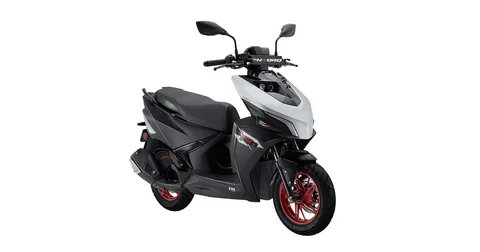
Crossfire, the brand best known in Nepal for its petrol motorcycles, is reported to be preparing an electric scooter with a claimed range of up to 250 km. If it launches, it would be one of the longest-range scooters on sale here. Crossfire has not published a full spec sheet, price or launch date, so every Crossfire figure below is a reported claim and not a confirmed specification.
The timing makes sense. Electric two-wheeler imports into Nepal have grown from a few thousand units a year to well over 26,000 in FY2025/26, and petrol has stayed near Rs. 200 per litre. For commuters in Kathmandu, Pokhara and Butwal, an electric scooter that can cover several days of riding on one charge is a strong pitch.
In this guide we look at what a 250 km claim means in practice, how it compares with scooters already listed on EV News Nepal, and what buyers should check before booking.
Key Highlights
- Crossfire is reported to be entering Nepal's electric scooter segment with a model claiming up to 250 km of range.
- Pricing, battery capacity, motor power and the launch date have not been officially confirmed at the time of writing.
- The longest-range scooter currently in our database is the Yatri P2, with a brand-claimed 157 km on its 5.2 kWh battery.
- Other long-range scooters in the 100-150 km claimed bracket include the Yadea E8S Pro, Gogoro Crossover GX 250 and Yadea GS70.
- Home charging at NEA domestic rates of about Rs. 10-12 per kWh keeps running costs very low.
- Electric vehicles pay far lower customs duty and annual road tax than petrol scooters.
Detailed Analysis
What a 250 km claim really means
A claimed range is measured under controlled conditions, usually at moderate speed on flat ground with a light rider. Real-world numbers are almost always lower. Owners of Nepal's popular scooters commonly report 15-30% less than the brochure figure once they add two riders, hills, rough roads and a faster pace.
With that discount, a 250 km claim would translate to roughly 175-215 km in daily use, still a big step up from most scooters sold here today. To reach a claim that high, the battery would need to be large. Our database shows the Yatri P2 needs a 5.2 kWh pack for 157 km, so a 250 km scooter would probably need either a battery well above that size, a very efficient motor, or a swappable-pack setup. Crossfire has not said which.
Pro tip: When a dealer quotes a range, ask for three numbers: the battery capacity in kWh, the test speed and the rider weight used. Together they tell you far more than the headline km figure.
How the existing long-range scooters compare
Because Crossfire's specs are not yet official, the best way to judge the claim is to compare it with scooters that are already listed. All figures below come from our database and are brand-claimed.
| Scooter | Claimed Range | Battery | Motor Power | Top Speed |
|---|---|---|---|---|
| Yatri P2 | 157 km | 5.2 kWh | 10 kW | 90 km/h |
| Yadea E8S Pro | 150 km | 2.74 kWh | 3 kW | 60 km/h |
| Gogoro Crossover GX 250 | 111 km | 3.2 kWh | 2.5 kW | 60 km/h |
| Yadea GS70 | 105 km | 2.1 kWh | 2.8 kW | 55 km/h |
| Garow DT 13B | 100 km | 2.16 kWh | 1.5 kW | 80 km/h |
A 250 km claim would sit about 90 km above the Yatri P2, the current leader on paper. That is a large gap and a reason to wait for verified numbers.
Prices of the rivals Crossfire will face
Crossfire has not announced pricing. Here is where the established long-range scooters sit, so you can see the bracket a new entrant must fit into.
| Scooter | Price in Nepal | Charging |
|---|---|---|
| Yadea E8S Pro | Rs. 1,99,000 | Standard AC charging |
| Yadea GS70 | Rs. 2,30,000 | Standard AC charging |
| Gogoro Crossover GX 250 | Rs. 2,29,900 | Battery swapping |
| Garow DT 13B | Rs. 1,95,000 | Standard AC charging |
The Yatri P2 is listed in our database without a confirmed price, so we have left it out of this table. It is notable for being made in Nepal with Sipradi Trading and for offering DC fast charging, a first in the segment here.
Features worth watching
Range alone does not decide a purchase. The scooters already on sale show what buyers now expect:
- Yadea GS70: TFT display, cruise control, hill-hold and hill descent control, traction control and smart app connectivity.
- Gogoro Crossover GX 250: keyless entry, connected-car features, riding modes and a removable battery with swapping.
- Yadea E8S Pro: cruise control, reverse mode, three riding modes and a smart digital dash.
- Yatri P2: three battery options (3.0 kWh for 90 km, 3.7 kWh for 112 km and 5.2 kWh for 157 km) plus DC fast charging.
If Crossfire wants to win on more than range, it will need to match this feature level. Hill-hold and hill descent assist matter in Nepal, where steep slopes and wet monsoon roads are routine.
Running cost: the real reason to switch
Using our standard charging reference, a scooter battery of around 3 kWh costs only about Rs. 30-36 to fill at home on an NEA domestic rate of Rs. 10-12 per kWh. Even at a private fast-charging station at Rs. 15-20 per kWh, the same fill-up costs roughly Rs. 45-60.
A long-range scooter helps most for riders who charge infrequently. At 40 km per day, a scooter with a real-world 150 km range needs charging only every three to four days. A short-range scooter in the 40-60 km class needs a plug nearly every day.
Pro tip: Charge overnight at home. Slow AC charging is cheapest and kinder to the battery, and most Nepali households can do it without any extra equipment.
Impact on Nepal EV Market
For buyers
A credible 250 km scooter would change what buyers ask of every other brand. Today a 100 km claim is considered good. If Crossfire delivers anything close to its claim, rivals will face pressure to offer larger batteries or lower prices. Buyers should benefit either way, but only if the numbers hold up on real roads.
The caution is simple: claimed range is not delivered range. Wait for independent road tests in Kathmandu valley traffic and on hill routes before paying a deposit.
For dealers and the industry
Crossfire already has a dealer and service network built around its motorcycles. That is an advantage over new brands that must start from nothing. A buyer who can walk into a showroom that also services petrol bikes may trust the brand more, particularly for after-sales support and spare parts, the two worries we hear most from scooter owners.
For the wider market, another established name entering the segment adds to a trend already visible: petrol-bike brands are moving into electric, and imports of electric two-wheelers are rising year after year. Government policy has helped, with reduced customs duty on EVs and a low annual road tax compared with petrol scooters.
Where the risks sit
- Battery warranty: Ask how many years and how many km the battery is covered for. A big battery is expensive to replace.
- Charger availability: Confirm what charger comes in the box and how long a full charge takes.
- Spare parts: Check that controllers, motors and body panels are stocked locally.
- Resale value: The Used EVs market is still young, so brands with a proven track record tend to hold value better.
What to Expect Next
Crossfire has not given a formal date, so treat any timeline as an estimate. Based on how earlier scooter launches in Nepal have gone, this is the typical sequence:
- Official announcement: full specs, battery size and price published.
- Pre-booking: dealers open bookings, often with an introductory price.
- Media test rides: the first independent range and performance numbers appear.
- Deliveries: first units reach customers, and owner feedback starts to build.
The most important moment is step three. Independent test results will show whether the 250 km claim is realistic and how much it drops with a passenger, on climbs and in rain. We will update our listings as soon as verified specs are available, and you can use the Compare EVs tool to put any new scooter next to the models above.
Explore All EVs Available in Nepal
Compare 200+ electric vehicles with real-time prices, specs, and features.
Frequently Asked Questions
Q: What is the range of the Crossfire electric scooter?
A: Crossfire's electric scooter is reported to have a claimed range of up to 250 km. This is a brand claim and has not been independently tested. Real-world range is usually 15-30% lower, so expect roughly 175-215 km in daily Nepal conditions if the claim is accurate.
Q: What will the Crossfire EV scooter cost in Nepal?
A: Crossfire has not announced an official price yet. For reference, long-range scooters already on sale include the Yadea E8S Pro at Rs. 1,99,000, the Yadea GS70 at Rs. 2,30,000 and the Gogoro Crossover GX 250 at Rs. 2,29,900. A 250 km scooter would likely be priced above these given its larger battery.
Q: Which scooter has the longest range in Nepal right now?
A: In our database, the Yatri P2 has the longest brand-claimed range at 157 km with its 5.2 kWh battery. It is made in Nepal and supports DC fast charging. The Yadea E8S Pro follows with a claimed 150 km.
Q: How much does it cost to charge an electric scooter in Nepal?
A: Charging at home on NEA domestic rates of about Rs. 10-12 per kWh costs roughly Rs. 30-36 for a 3 kWh battery. Private fast chargers at Rs. 15-20 per kWh would cost about Rs. 45-60 for the same battery. Typical monthly running costs for a daily commute are around Rs. 1,000-2,000.
Q: Should I wait for the Crossfire scooter or buy now?
A: If you need a scooter immediately, existing models like the Yadea E8S Pro and Yatri P2 are proven options. If you can wait a few months, independent test results for the Crossfire will help you judge whether its range claim is real before you commit.