Hyundai Verna vs Honda City CVT Real-World Mileage
Key Takeaways
- Hyundai Verna CVT averaged 14.15 kpl versus 13.30 kpl for the Honda City CVT in Autocar India's real-world tests.
- The Verna's 45-litre tank gives about 637 km per fill, roughly 105 km more than the City's estimated 532 km.
- Reported Nepal prices: Verna near Rs. 49,96,000; City petrol from Rs. 48,90,000 to Rs. 61,60,000.
- EVs cost about Rs. 0.70 per km to run in Nepal, roughly Rs. 700 per 1,000 km versus 70 to 75 litres of petrol.
- Small EVs like the MG Comet Pace and Seres E1 suit city use but cannot match these sedans for highway range.
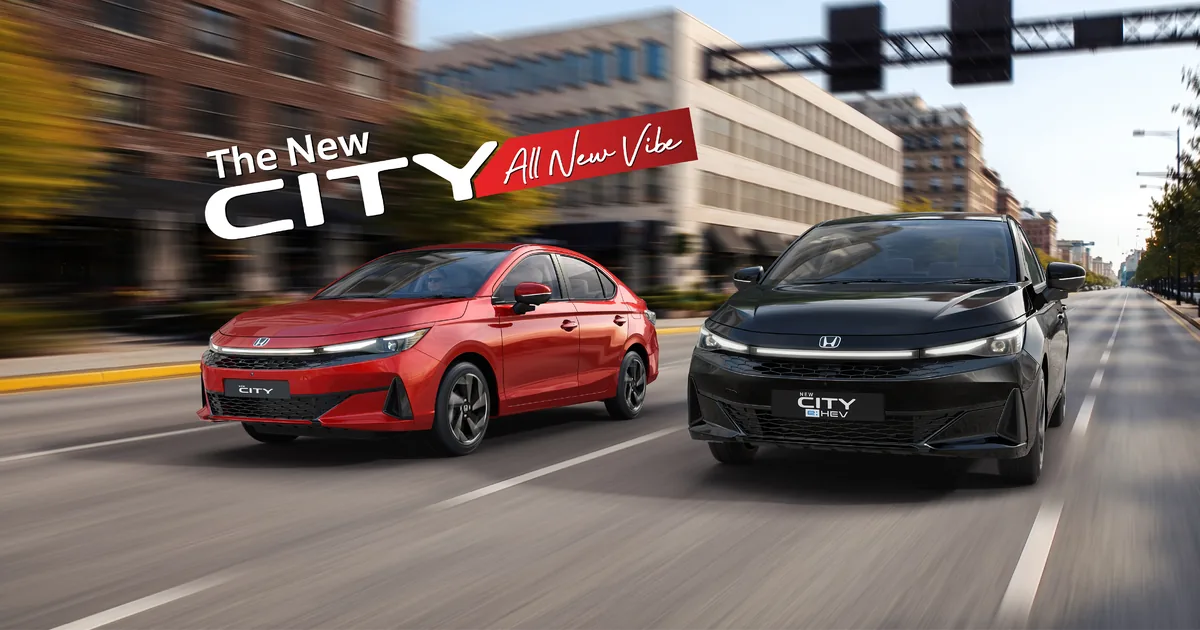
The Hyundai Verna petrol CVT is the more fuel-efficient sedan in independent real-world testing. Autocar India measured 14.15 kpl overall for the Verna against 13.30 kpl for the Honda City CVT, a gap of 0.85 kpl. For Nepali buyers choosing between two popular 1.5-litre petrol automatics, that difference adds up over years of Kathmandu traffic and hill-road driving.
The comparison matters more now because fuel economy is at the centre of the petrol-versus-electric decision. Reported Nepal prices put the Verna at about Rs. 49,96,000 and the City's petrol range at Rs. 48,90,000 to Rs. 61,60,000. Many buyers in that bracket are also weighing a cheaper-to-run EV.
This article compares the Verna and City on tested mileage, tank range and running cost. It then shows how both sit against electric options listed on EV News Nepal. Note that the Verna and City are petrol cars, so their figures come from Indian road tests and Nepal market listings, not our EV database.
Key Highlights
- Verna CVT average: 14.15 kpl versus 13.30 kpl for the City CVT in Autocar India's tests.
- City driving: Verna 10.40 kpl, City 10.10 kpl, a small gap of only 0.30 kpl.
- Highway driving: Verna 17.40 kpl, City 16.49 kpl, a gap of 0.91 kpl.
- Tank range: the Verna's 45-litre tank gives about 637 km per fill, roughly 105 km more than the City's estimated 532 km.
- Engines: both use a 1.5-litre naturally aspirated petrol. The Verna makes about 115 hp and the City about 121 hp.
- Nepal pricing (reported): the Verna starts near Rs. 49,96,000. The City petrol range runs from Rs. 48,90,000 to Rs. 61,60,000.
- EV running cost: about Rs. 0.70 per km for electric cars, according to our Nepal charging reference.
Detailed Analysis
How the mileage was tested
Both cars were tested in their most efficient modes, Eco for the Verna and ECON for the City. The figures are therefore close to the best a careful driver can expect. Drivers who use Sport mode, carry full loads or drive aggressively on Nepal's climbs will see lower numbers.
| Driving condition | Hyundai Verna CVT | Honda City CVT | Verna advantage |
|---|---|---|---|
| City | 10.40 kpl | 10.10 kpl | 0.30 kpl |
| Highway | 17.40 kpl | 16.49 kpl | 0.91 kpl |
| Overall average | 14.15 kpl | 13.30 kpl | 0.85 kpl |
| Approx. full-tank range | 637 km | 532 km | about 105 km |
Source: Autocar India real-world tests. Figures are from Indian conditions and will vary in Nepal.
City versus highway: where the gap appears
In stop-start traffic the two sedans are almost level. Kathmandu Valley commuters, who spend most of their time between Koteshwor, Baneshwor and Thapathali, will see only about 0.3 kpl between them. Both CVTs hold revs low in crawling traffic, but neither escapes the penalty of idling at signals.
The Verna pulls ahead on open roads. On the Prithvi Highway or the East-West Highway, its 17.40 kpl beats the City's 16.49 kpl by almost a full kilometre per litre. The Verna's longer tank also means fewer fuel stops on long runs such as Kathmandu to Pokhara or Butwal.
What the difference costs over a year
Instead of guessing at fuel prices, which change often, it is easier to compare litres used. Over 1,000 km of mixed driving:
| Vehicle | Approx. petrol used per 1,000 km |
|---|---|
| Hyundai Verna CVT | about 70.7 litres |
| Honda City CVT | about 75.2 litres |
| Difference | about 4.5 litres |
A driver covering 15,000 km a year would save roughly 67 litres by choosing the Verna. That is a modest saving. Mileage alone should not decide this purchase, so look at price, features and service support too.
Pro tip: These are lab-style best-case figures. Expect roughly 10 to 15 percent less on steep hill roads with the AC running, which covers most Nepal driving.
Price and positioning in Nepal
On reported Nepal listings, the Verna is priced at about Rs. 49,96,000. The City petrol range runs from Rs. 48,90,000 for the 1.5 SV MT to Rs. 61,60,000 for the 1.5 VX CVT. Prices shift with dealer, import duty changes and exchange rates, so confirm with the authorised dealer before you decide.
In India, the Verna's petrol-CVT range starts about Rs 13,000 below the City's. In Nepal, the like-for-like comparison depends on which City trim you pick. Always compare equivalent CVT variants, not a base City against a top Verna.
The EV running-cost comparison
The real saving comes from switching fuel source. Using our Nepal charging reference, an electric car costs about Rs. 0.70 per km to run. Home charging at the NEA domestic rate is roughly Rs. 10 to 12 per kWh. Public NEA stations charge about Rs. 6 to 10.5 per kWh.
A Verna or City driven 1,000 km burns about 70 to 75 litres of petrol. The same distance in an EV costs about Rs. 700 in electricity.
The EVs below are smaller and cheaper than these sedans. They suit buyers whose driving is mostly urban. They are not direct replacements for a 1.5-litre highway sedan.
| Electric option | Price | Battery | Claimed range |
|---|---|---|---|
| Seres E1 Mid | Rs. 16,49,000 | 13.8 kWh | 180 km |
| Seres E1 Top | Rs. 17,99,000 | 16.8 kWh | 220 km |
| MG Comet Pace | Rs. 18,75,000 | 17.3 kWh | 230 km |
| Henrey Mincar | Rs. 19,95,000 | 16.5 kWh | 205 km |
All four are 4-seat city cars with a top speed of about 100 km/h. They have no fast-charging support in the data we hold, and they use 3.3 kW AC charging. That suits home overnight charging but not spontaneous long trips.
Impact on Nepal EV Market
For buyers: if you drive mostly in the valley, the Verna and City cost far more to run than any EV on the list above. The catch is size. A 4-seater microcar cannot replace a 5-seat sedan that comfortably does Kathmandu to Pokhara. Buyers who need a sedan for family and highway use will probably stay with petrol for now.
The EVs that do compete on space and range sit in a higher price bracket. The Deepal S03, for instance, is listed with a 40 kWh LFP battery and 405 km CLTC range in a 5-seat body. Its Nepal price is not yet published in our database. The Geely EX2 is similar, at 40.16 kWh and 410 km CLTC.
For dealers: the Verna and City both benefit from solid resale value and wide service networks. EV dealers must match that with clear warranty terms and reliable parts supply. Buyers comparing a Rs. 50 lakh petrol sedan with an EV will ask what happens after five years.
For the wider market: petrol sedans in this price band remain popular because of range confidence. As 400 km-plus electric sedans and compact SUVs arrive and public charging grows, more buyers will do the same per-kilometre maths shown above. You can also look at the Used EVs market for cheaper entry points.
What to Expect Next
Petrol sedan prices in Nepal are likely to stay sensitive to import duty and exchange-rate changes through the next fiscal year. Expect the Verna and City to keep their positions as default picks for buyers who want an automatic with low maintenance.
On the EV side, models such as the Tata Sierra EV, with a claimed 665 km range, have opened pre-bookings, and deliveries are expected around Dashain. A 5-seat electric option with real highway range will make the petrol sedan choice harder. Watch for final pricing on the Deepal S03 and Geely EX2 in 2026.
If you are deciding now, test-drive both sedans in your own traffic, then use the Compare EVs tool to check which electric options fit your daily distance.
Explore All EVs Available in Nepal
Compare 200+ electric vehicles with real-time prices, specs, and features.
Frequently Asked Questions
Q: Which is more fuel efficient, the Hyundai Verna or Honda City petrol CVT?
A: The Hyundai Verna CVT is more efficient. Autocar India measured 14.15 kpl overall for the Verna against 13.30 kpl for the Honda City CVT. The Verna led in both city (10.40 vs 10.10 kpl) and highway (17.40 vs 16.49 kpl) driving.
Q: How far can the Verna and City go on a full tank?
A: Based on tested mileage, the Verna's 45-litre tank gives about 637 km. The Honda City's estimated range is about 532 km. Real range will be lower on hilly Nepal roads or with heavy AC use.
Q: How much do the Verna and City cost in Nepal?
A: Reported listings show the Hyundai Verna at about Rs. 49,96,000. The Honda City petrol range runs from Rs. 48,90,000 (1.5 SV MT) to Rs. 61,60,000 (1.5 VX CVT). Prices vary by dealer and trim, so confirm before buying.
Q: Is an EV cheaper to run than a petrol sedan in Nepal?
A: Yes. An electric car costs about Rs. 0.70 per km to run on Nepal's charging rates, which works out to around Rs. 700 per 1,000 km. A Verna or City uses roughly 70 to 75 litres of petrol over the same distance. EVs also cost less to service, though smaller electric city cars have much less range and space.
Q: Can the Seres E1 or MG Comet replace a Verna or City?
A: Only for city use. The MG Comet Pace and Seres E1 are 4-seat microcars with a claimed range of 180 to 230 km and a top speed of about 100 km/h. They work well for daily valley commuting. They are not suited to regular highway trips.
Sources: Autocar India: Verna vs City petrol CVT real-world mileage, Techlekh: Honda City price in Nepal, ev-nepal: Honda car prices in Nepal