Key Takeaways
- TVS Ntorq 150 launched in Nepal on 26 September 2026 at an introductory Rs. 3,69,900 via Jagdamba Motors.
- 149.7cc engine makes 13.2 PS and 14.2 Nm, with a claimed 0-60 km/h in 6.3 seconds and 104 km/h top speed.
- Features include 50+ connected functions, navigation, traction control, single-channel ABS and Street/Race modes.
- Claimed mileage is about 40 km/l, versus roughly Rs. 2.80/km petrol and Rs. 0.50/km electric running costs.
- Ntorq 125 remains the value pick; electric scooters like the iQube cost less to buy and run.
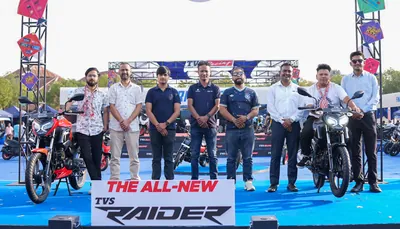
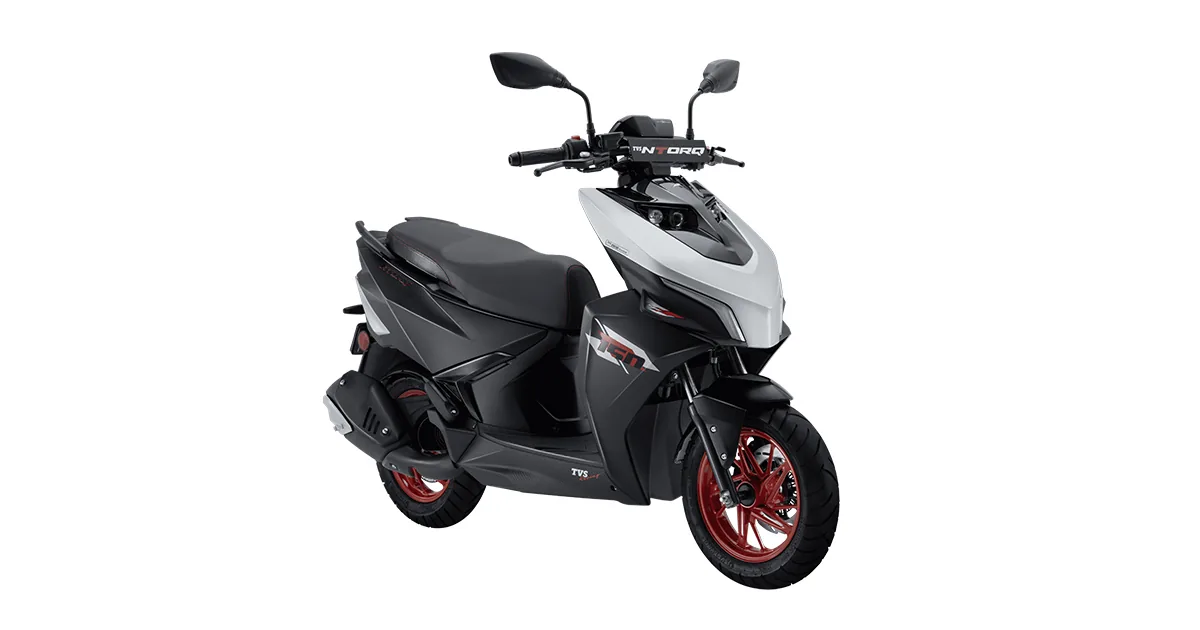
TVS has launched the Ntorq 150 in Nepal at an introductory price of Rs. 3,69,900, making it the country's first 150cc hyper sport scooter. It arrived on 26 September 2026 through Jagdamba Motors, TVS's sole authorised distributor in Nepal, and bookings are open. If you have been eyeing the Ntorq 125 and wondering whether the bigger engine is worth the extra money, this guide covers the price, specs, features and running costs, and how it compares with the electric options on our platform.
The Ntorq name already carries weight here. The 125cc Ntorq passed the 100,000 sales milestone in Nepal, and TVS has been competing hard with Honda in the scooter segment. The 150 is the brand's attempt to move the same sporty formula up a class, with more power, more electronics and a TFT-style connected experience.
The launch also lands at an interesting moment. Nepal imported 26,115 electric two-wheelers in fiscal year 2025/26, up about 131% from 11,320 the year before, and electric two-wheelers now hold close to a 10% share of two-wheeler imports. So the Ntorq 150 is a premium petrol scooter arriving in a market where the electric alternative is getting harder to ignore.
Note on data: Our vehicle database does not yet carry a detailed Ntorq 150 listing, so the figures below come from the launch announcement and published road tests. Confirm the final on-road price with Jagdamba Motors before booking.
Key Highlights
- Introductory price in Nepal: Rs. 3,69,900, launched on 26 September 2026
- Engine: 149.7cc, air-cooled, single-cylinder O3CTech unit
- Output: 13.2 PS at 7,000 rpm and 14.2 Nm at 5,500 rpm
- Performance: claimed 0-60 km/h in 6.3 seconds, top speed 104 km/h
- Connected features: 50+ features including turn-by-turn navigation and ride modes
- Safety and electronics: single-channel ABS, traction control, and Street and Race ride modes
- Colours: Stealth Silver, Racing Red and Turbo Blue
- Claimed mileage: around 40 km/l (ARAI); real-world riders report roughly 35-40 km/l
- Kerb weight: 115 kg
Detailed Analysis
TVS Ntorq 150 Price in Nepal
The Ntorq 150 costs Rs. 3,69,900 at launch. TVS calls this an introductory price, so it is worth asking the dealer how long it will hold. In India the same scooter launched at Rs. 1,19,000 ex-showroom for the base version and Rs. 1,29,000 for the version with the TFT screen. The gap in Nepal reflects import duties, taxes and distributor margin, which is normal for any imported two-wheeler here.
That puts it firmly in premium scooter territory. For many buyers the real question is not whether the scooter is good but whether it is good enough to justify the price against a 125cc scooter and against electric scooters.
Engine and Performance
The new 149.7cc engine is the headline. At 13.2 PS and 14.2 Nm it is the most powerful scooter TVS has built, and the claimed 6.3 seconds to 60 km/h is brisk for the class. The 104 km/h top speed is more than you will use on most Nepali roads, but the useful part is mid-range punch.
For Kathmandu valley traffic, that extra torque helps with quick gaps at junctions and with the long climbs towards places like Nagarkot, Daman or the ring road flyovers. A 125cc scooter can make these climbs, but a two-up rider with luggage feels the difference quickly.
Features and Safety
This is where the Ntorq 150 pulls ahead of most scooters you can buy in Nepal today:
- Bluetooth connectivity with turn-by-turn navigation
- Full-LED lighting with quad-LED headlamp, LED tail lamp and LED indicators
- Crash alert, emergency brake warning and vehicle live location
- Adaptive brightness control on the display
- Single-channel ABS and traction control
- Street and Race ride modes
Traction control is rare in this segment and is a genuine plus on wet monsoon roads and loose gravel on hill routes. Single-channel ABS only acts on the front wheel, so it will not make you invincible, but it is a clear step up from a scooter with no ABS at all.
Ntorq 150 vs Ntorq 125
Both scooters share the sporty styling, so the choice comes down to power, features and price. The table below compares the two in general terms, since the 125 is the scooter most Nepali buyers already know.
| Aspect | TVS Ntorq 125 | TVS Ntorq 150 |
|---|---|---|
| Engine class | 125cc | 149.7cc |
| Positioning | Sporty everyday scooter | Hyper sport scooter |
| Output | Smaller engine, adequate for city use | 13.2 PS and 14.2 Nm |
| Connected features | Available on higher variants | 50+ features, navigation, ride modes |
| Traction control | Not a headline feature | Yes |
| Best for | Daily commuting on a budget | Riders who want power and tech |
| Nepal price | Check with dealer | Rs. 3,69,900 (introductory) |
If your riding is mostly short city hops, the Ntorq 125 remains the sensible value pick. If you regularly carry a pillion, ride on hilly roads or simply want the most feature-rich scooter in the showroom, the 150 earns its premium.
Running Costs
With a claimed 40 km/l and real-world figures of 35-40 km/l, the Ntorq 150 is reasonably efficient for a 150cc scooter, but it is still a petrol machine. Market figures put petrol scooter running costs at roughly Rs. 2.80 per km, while electric scooters run at about Rs. 0.50 per km. At 40 km a day, that gap works out to around Rs. 72,000 a year in favour of electric.
That saving is why electric scooters are gaining ground. It does not make the Ntorq 150 a bad buy, but it does mean you are paying for performance and fun rather than for economy.
Impact on Nepal EV Market
The Ntorq 150 is not an EV, but it matters for the EV market because it raises the bar for what a premium scooter offers. Connected features, ride modes and navigation used to be selling points for electric scooters. Now a petrol scooter has them too, so electric brands will need to compete on running cost, range and after-sales support rather than gadgets alone.
For buyers, the interesting comparison is price. At Rs. 3,69,900, the Ntorq 150 costs more than most electric scooters. TVS's own iQube, for example, sits around Rs. 2,17,000 with a 7-inch TFT touchscreen, navigation and over-the-air updates, with a real-world range near 75 km and a 78 km/h top speed. You give up top speed and long-distance flexibility, but you save on purchase price and fuel. Home charging at about Rs. 10-12 per kWh keeps daily running costs very low.
The other consideration is that the Ntorq 150 price is not far below the cheapest electric cars. If your budget is near Rs. 16-20 lakh and you need four wheels, these small electric cars are worth a look:
| Model | Price | Battery | Claimed range |
|---|---|---|---|
| Seres E1 Mid | Rs. 16,49,000 | 13.8 kWh | 180 km |
| MG Comet Pace | Rs. 18,75,000 | 17.3 kWh | 230 km |
| Henrey Mincar | Rs. 19,95,000 | 16.5 kWh | 205 km |
These are compact city cars aimed at a different buyer, but they show how the premium two-wheeler and entry-level EV budgets now overlap. A buyer at this price point can reasonably cross-shop between a top scooter and a small electric car, especially a family that wants rain protection and seating for four. You can line them up side by side with Compare EVs.
For dealers, the Ntorq 150 gives TVS a halo product that brings younger riders into showrooms. Those riders may then look at the iQube or other electric options.
Pro tip: Before paying Rs. 3.7 lakh for any scooter, estimate your yearly distance. Above 10,000 km a year, an electric scooter's fuel savings add up fast. Below that, the performance and features of the Ntorq 150 may matter more than the saving.
What to Expect Next
Bookings are open now, and early deliveries are expected to be limited as the first batches arrive through Jagdamba Motors. Introductory pricing often changes once the first allocation sells out, so buyers who want the launch price should book early.
On the competitive side, expect rival brands to respond. Honda, Yamaha and Suzuki all have scooters in the 125-160cc range, and the Ntorq 150's feature list will push them to upgrade connectivity and safety equipment. Over the next 12 months, watch for:
- Whether TVS adds a second, TFT-equipped variant in Nepal as it did in India
- Any change to the introductory price as demand becomes clear
- Service network expansion outside Kathmandu, Pokhara and Chitwan
- Further growth in electric scooter imports as petrol prices stay high
If you are undecided, check Used EVs as well. The second-hand electric market is growing and can offer lower-cost entry points.
Explore All EVs Available in Nepal
Compare 200+ electric vehicles with real-time prices, specs, and features.
Frequently Asked Questions
Q: What is the TVS Ntorq 150 price in Nepal?
A: The TVS Ntorq 150 was launched in Nepal at an introductory price of Rs. 3,69,900. It is sold through Jagdamba Motors, TVS's authorised distributor. Confirm the final on-road price and registration costs with the dealer before booking.
Q: What engine does the TVS Ntorq 150 have?
A: It has a 149.7cc, air-cooled, single-cylinder O3CTech engine that makes 13.2 PS at 7,000 rpm and 14.2 Nm at 5,500 rpm. TVS claims 0-60 km/h in 6.3 seconds and a top speed of 104 km/h.
Q: What is the difference between the TVS Ntorq 150 and the Ntorq 125?
A: The Ntorq 150 has a larger 149.7cc engine, more power, traction control, Street and Race ride modes, and over 50 connected features including turn-by-turn navigation. The Ntorq 125 is the cheaper, more familiar option and suits riders who mainly make short city trips.
Q: What mileage does the TVS Ntorq 150 give?
A: The claimed ARAI figure is about 40 km/l. Owners and testers report roughly 35-40 km/l in real conditions, though hilly roads, heavy traffic and two-up riding can lower it.
Q: Is an electric scooter cheaper to run than the Ntorq 150?
A: Yes. Market figures put electric scooter running costs at about Rs. 0.50 per km against roughly Rs. 2.80 per km for a petrol scooter. At 40 km a day, that is a saving of around Rs. 72,000 a year, though the Ntorq 150 offers more power and a higher top speed.