Key Takeaways
- BYD Racco launched in Sri Lanka, its first market outside Japan, at about $34,615, an introductory price valid through November 9.
- Japan pricing is 2,140,000 to 2,497,000 yen (about $13,555 to $15,815), so the Sri Lankan price is more than double.
- Two LFP battery options: 22.4 kWh for up to 210 km and 35.84 kWh for up to 310 km, with a 47 kW motor.
- Nepal has no confirmed Racco launch; the closest small EVs on sale are priced at Rs. 16,49,000 to Rs. 19,95,000.
- Nepal's FY 2026/27 budget taxes EVs by CIF value, leaving cars under Rs 2 million CIF mostly unaffected.
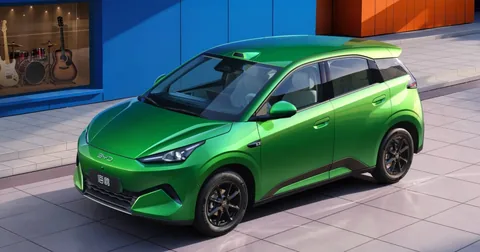
BYD's Racco electric kei car has launched in Sri Lanka, its first market outside Japan, with an introductory price of 11,450,000 Sri Lankan rupees (about $34,615). BYD Sri Lanka says that price is valid through November 9 and will rise after that. Macau is reported to be next.
The number looks odd next to the car's home price. In Japan the Racco costs between 2,140,000 and 2,497,000 yen (roughly $13,555 to $15,815) across three trims. The Sri Lankan sticker is more than double that. It shows how heavily import taxes and local positioning can reshape the price of a small city EV once it leaves the market it was designed for.
For Nepali buyers the Racco is not on sale and there is no confirmed Nepal launch. It is still worth watching. Nepal already has a lively segment of tiny, city-focused EVs, and the Racco shows where that segment may head: bigger batteries, real fast charging and more features. This guide covers what the Racco offers, how it compares with the small EVs you can buy in Nepal today, and how the FY 2026/27 tax changes affect that class.
Key Highlights
- First export market: Sri Lanka, at 11,450,000 LKR (about $34,615), an introductory price valid until November 9.
- Japan pricing: 2,140,000 to 2,497,000 yen (about $13,555 to $15,815) across three trims.
- Two battery options: 22.4 kWh (Racco 200, up to 210 km) and 35.84 kWh (Racco 300 Plus and 300 Premium, up to 310 km).
- Motor: a front-mounted 47 kW motor with 160 Nm of torque.
- Size: 3,395 mm long and 1,475 mm wide, which keeps it inside Japan's kei-car limits.
- Features: a 10.1-inch centre screen, Level 2 driver assistance, vehicle-to-load (V2L) power output, and heated seats and steering wheel.
- Nepal status: no confirmed launch. The closest cars on sale in Nepal are in the Rs. 16,49,000 to Rs. 19,95,000 range.
Detailed Analysis
What the Racco actually is
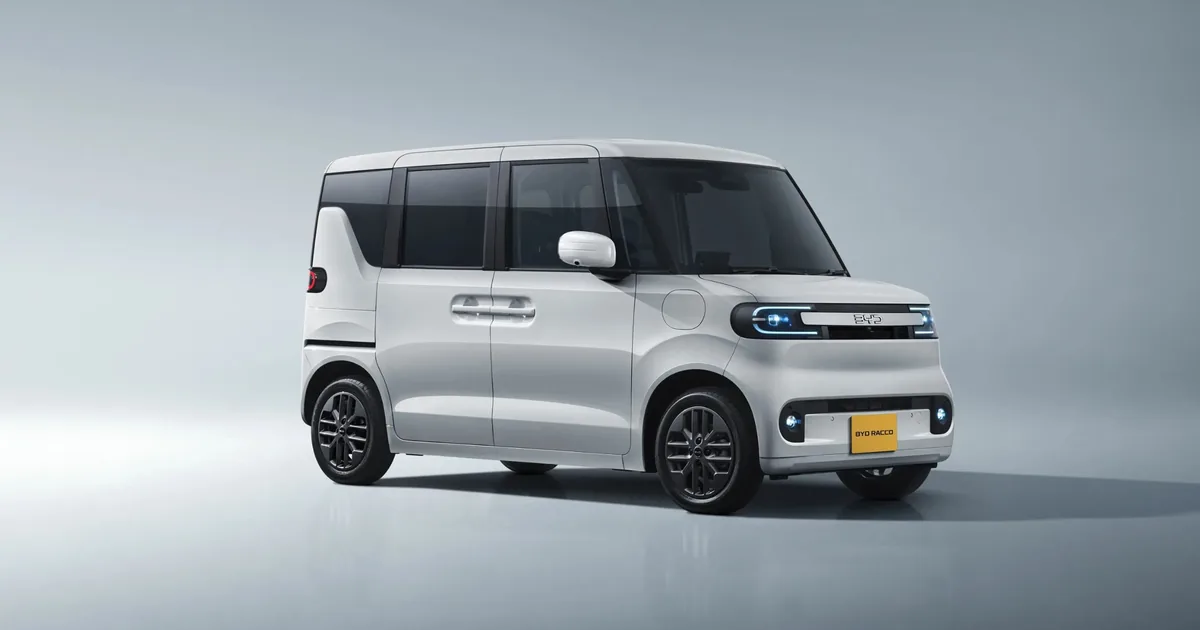
The Racco is BYD's first electric kei car. Kei cars are Japan's smallest road-legal class, with strict limits on length, width and motor output. BYD built the Racco to fit those rules. It stands 1,800 mm tall, which gives an upright, boxy shape and a lot of headroom for such a short body. With the rear seats folded, cargo space reaches up to 1,372 litres.
Before launch, a Tokyo Auto Salon slide suggested a 20 kWh pack for about 200 km and a 30 kWh pack for about 300 km. The production cars landed slightly higher at 22.4 kWh and 35.84 kWh. Both use BYD's Blade LFP chemistry. LFP packs handle frequent full charges well and are less sensitive to heat, which suits daily city use.
Specs and trims
| Spec | Racco 200 | Racco 300 Plus / 300 Premium |
|---|---|---|
| Battery | 22.4 kWh (LFP) | 35.84 kWh (LFP) |
| Claimed range | Up to 210 km (WLTP) | Up to 310 km (WLTP) |
| Motor | 47 kW, 160 Nm | 47 kW, 160 Nm |
| 0-100 km/h | About 14 to 15.2 s | About 14 to 15.2 s |
| Length x width x height | 3,395 x 1,475 x 1,800 mm | 3,395 x 1,475 x 1,800 mm |
Some outlets cite 320 km for the larger pack, because the figure depends on the test cycle. Charging reports also differ. One source says 6 kW AC and 50 kW DC, another says the Racco 200 supports up to 35.8 kW DC. We have not seen an independent full road test, so treat every number as a manufacturer claim until real-world owner data appears.
Why the Sri Lanka price is so high
A $34,615 price for a car that sells for under $16,000 at home needs explaining. Sri Lanka taxes imported vehicles heavily, and BYD has set an introductory price for a premium-feeling launch. The Racco is also a small-volume, right-hand-drive specialty import there, so it does not get the economies of scale that a mainstream model would.
In practice this means the Japanese price tells you what the car costs to build and sell in a subsidised, high-volume home market. The Sri Lankan price tells you what it costs once duties, margins and low volumes are added. The same would apply to Nepal if the car ever arrived. Nepal's own tax structure would decide the final number, not the Japan or Sri Lanka sticker.
How it compares with small EVs sold in Nepal
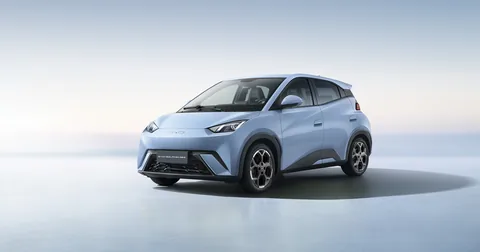
Nepal's micro-EV segment is mostly Chinese-built, low-speed city cars with small batteries. These four-seaters are the most direct comparison for the Racco's size and purpose.
| Model | Price | Battery | Claimed range | Motor power | Top speed |
|---|---|---|---|---|---|
| Seres E1 Mid | Rs. 16,49,000 | 13.8 kWh | 180 km | 25 kW | 100 km/h |
| Seres E1 Top | Rs. 17,99,000 | 16.8 kWh | 220 km | 30 kW | 100 km/h |
| MG Comet Pace | Rs. 18,75,000 | 17.3 kWh | 230 km | 31.3 kW | 100 km/h |
| Henrey Mincar | Rs. 19,95,000 | 16.5 kWh | 205 km | 35 kW | 100 km/h |
| Henrey Volts Model H | Rs. 19,95,000 | 16.5 kWh | 205 km | 34 kW | 100 km/h |
The comparison is not like for like on range. The Seres figures use the CLTC cycle, the MG Comet Pace uses ARAI, the Henrey Mincar uses NEDC and the Racco uses WLTP. CLTC tends to be the most generous, so the gap in real-world range is probably wider than the table suggests.
Compare variants carefully. The Racco 200 (22.4 kWh) is closest to the larger Nepali micro-EVs, such as the MG Comet Pace with its 17.3 kWh battery and 230 km ARAI claim. The Racco 300 (35.84 kWh) has more than two and a half times the battery of the Seres E1 Mid, which carries 13.8 kWh for 180 km CLTC.
Pro tip: Do not compare range figures across test cycles. Check the cycle name (CLTC, WLTP, NEDC or ARAI) first, then budget about 20 to 30 percent below the claim for Kathmandu's hills and traffic.
What the Racco offers that Nepal's micro-EVs do not
The biggest gap is charging. The Seres E1 Top takes about 4 to 4.5 hours for 10-90% on a 3.3 kW AC charger and has no DC fast charging. The MG Comet Pace takes about 7 hours for 0-100%. The Henrey cars also list no fast charging. The Racco is reported to support DC fast charging, plus faster AC. That would make a city micro-EV usable for occasional longer trips.
The Racco also carries features the Nepali micro-EVs lack, including Level 2 driver assistance, a larger 10.1-inch screen and V2L. The Henrey Mincar offers a rear camera, rear sensors and hill hold, which is a sensible list for its price, but nothing like a driver-assistance suite. The Racco's 47 kW motor is also far stronger than the 25 to 35 kW units in Nepal's micro-EVs. That matters on climbs such as the road to Nagarkot and the Prithvi Highway.
Running cost if it were here
Using Nepal's charging rates, a Racco would be cheap to run. A full charge of the 22.4 kWh pack at the home rate of about Rs. 10-12 per kWh costs roughly Rs. 224 to Rs. 270. The 35.84 kWh pack costs roughly Rs. 360 to Rs. 430. At an NEA public charger (Rs. 6 to 10.5 per kWh) the larger pack costs about Rs. 215 to Rs. 375. A 30 to 40 km daily commute should run to about Rs. 1,000 to Rs. 2,000 a month in electricity, in line with other small EVs.
Impact on Nepal EV Market
The tax picture for small EVs
Nepal's FY 2026/27 budget moved EV taxation from motor power to CIF value. EVs with a CIF value up to Rs 2 million now pay 20 percent customs duty, 2.5 percent Clean Infrastructure Investment Fee, 2.5 percent road construction fee and 13 percent VAT, which adds up to about 42.46 percent. Before the change, small EVs under 50 kW paid 15 percent customs duty, 5 percent excise, 5 percent road fee and 13 percent VAT.
The change leaves small, cheap EVs mostly unaffected, while premium models face sharp increases. Reports describe a vehicle valued at Rs 4.1 million now costing about Rs 11.1 million after taxes. A Racco-class car, priced in Japan at roughly $13,500 to $15,800, would sit near the Rs 2 million CIF line in the lower trims. We cannot give a Nepal price. It would depend on the importer's cost, the exchange rate, and whether the final CIF value stays under that threshold.
What it means for buyers
- City commuters get a preview of what the next generation of micro-EVs may offer: more battery, fast charging and active safety features.
- Current micro-EV buyers should not wait for the Racco. There is no Nepal launch date, and the Sri Lankan price shows that a new import can cost far more than the home-market price.
- Value-seekers can look at the Used EVs section. Early micro-EVs lose value quickly, and a second-hand Seres or MG can cover most city needs.
- Dealers will notice the pricing contrast. Customers who see a $13,500 Japanese price online will expect similar numbers, so dealers need to explain taxes and logistics clearly.
Supply risks
Nepal's EV imports have been uneven. Shipment disruptions at the China border have stranded vehicles for weeks, and import volumes fell over the last full fiscal year. A new model that arrives through a third-country route such as Japan, or through a new regional distributor, would face its own delays.
What to Expect Next
- Through November 9: Sri Lanka's introductory price applies. After that it is expected to rise, so the $34,615 figure is a floor for that market, not a settled price.
- Near term: Macau is reported as the next market. Early deliveries there and in Sri Lanka will produce the first owner feedback on real-world range and DC charging speeds.
- Early 2027: Independent road tests should clarify the charging figures and the WLTP claims.
- Nepal: A launch depends on BYD's regional distribution plans, right-hand-drive availability and the CIF value. There is no announcement. Nepal's existing BYD dealers are the most likely route if one comes.
Until then, the practical choice for Nepal buyers is among the micro-EVs already on sale. Use Compare EVs to line them up side by side.
Explore All EVs Available in Nepal
Compare 200+ electric vehicles with real-time prices, specs, and features.
Frequently Asked Questions
Q: How much does the BYD Racco cost in Sri Lanka?
A: BYD Sri Lanka has set an introductory price of 11,450,000 Sri Lankan rupees, about $34,615. The price is valid through November 9 and is expected to rise after that. In Japan the Racco costs about $13,555 to $15,815 depending on the trim.
Q: What is the range of the BYD Racco?
A: The Racco 200 has a 22.4 kWh battery and a claimed range of up to 210 km (WLTP). The Racco 300 Plus and 300 Premium have a 35.84 kWh battery and a claimed range of up to 310 km. Some outlets cite 320 km for the larger pack, because the figure depends on the test cycle. Real-world range will be lower, especially on hills.
Q: Is the BYD Racco available in Nepal?
A: No. BYD has not announced a Racco launch in Nepal, and the car is currently on sale only in Japan and Sri Lanka, with Macau reported as next. The nearest alternatives sold in Nepal are the MG Comet Pace at Rs. 18,75,000 and the Seres E1 Mid at Rs. 16,49,000.
Q: How much would it cost to charge a BYD Racco in Nepal?
A: At the home rate of about Rs. 10-12 per kWh, a full charge costs roughly Rs. 224 to Rs. 270 for the 22.4 kWh pack and Rs. 360 to Rs. 430 for the 35.84 kWh pack. At NEA public stations (Rs. 6 to 10.5 per kWh) the larger pack costs about Rs. 215 to Rs. 375.
Q: Which BYD models are closest to the Racco in Nepal?
A: None are the same size. The Racco is a kei-class city car, while BYD's models sold in Nepal are larger. For a similar-sized city EV, look at the Henrey Mincar at Rs. 19,95,000, which has a 16.5 kWh battery and a claimed 205 km (NEDC).