Key Takeaways
- Hyundai Ioniq V launched in China on 29 September 2026 from 109,900 yuan (about 16,380 USD).
- Four variants are offered with 540 km and 650 km CLTC range, topping out at about 20,850 USD.
- Reported features include a 27-inch 4K display and roughly 20-minute fast charging.
- No Nepal launch, importer or price is confirmed, so current buyers should not wait for it.
- Nearest listed rivals are the Seres E1 Mid, MG Comet Pace and Henrey Mincar, which are smaller and shorter-range.
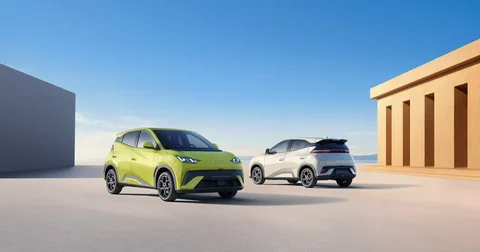
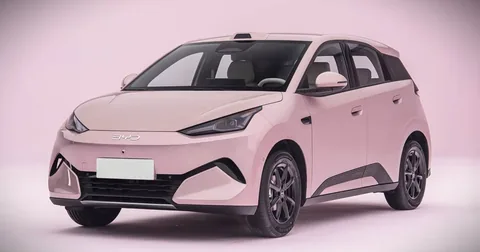
Hyundai has launched the Ioniq V in China at a starting price of 109,900 yuan (about 16,380 USD) for the entry 540 Pro variant, ahead of a wider global rollout. The compact electric sedan went on sale on 29 September 2026. It was developed by the Hyundai China Design Center, and Hyundai has signalled it will leave China for other markets.
The Ioniq V has not been confirmed for Nepal, and our database has no Nepal price for it. Even so, it matters here. A well-equipped sedan with a claimed CLTC range of up to 650 km, priced near 16,000 USD in its home market, sets a new benchmark for affordable EVs in South Asia.
This article covers the China launch, how the variants compare, and what it could mean for buyers who today choose between small city EVs such as the Seres E1 Mid and the MG Comet Pace.
Key Highlights
- Launch price starts at 109,900 yuan (about 16,380 USD) for the Ioniq V 540 Pro.
- The top of the range is 139,900 yuan (about 20,850 USD) before discounts.
- A limited-time promotional price runs from 99,900 to 131,900 yuan (about 14,890 to 19,655 USD).
- Two range tiers are offered: 540 km and 650 km on the CLTC cycle.
- Reported headline features include a 27-inch 4K display and roughly 20-minute fast charging.
- The car is a sedan, not a micro-hatchback. It competes in a larger, more practical class than the MG Comet or Seres E1.
- No Nepal launch, price or import plan has been announced.
Detailed Analysis
The China lineup and pricing
Hyundai is selling the Ioniq V in four variants. The name tells you the claimed CLTC range, and the Pro, Max and Max+ suffixes tell you the equipment level.
| Variant | Price (yuan) | Approx. price (USD) |
|---|---|---|
| Ioniq V 540 Pro | 109,900 | 16,380 |
| Ioniq V 540 Max | 119,900 | 17,870 |
| Ioniq V 540 Max+ | 129,900 | 19,360 |
| Ioniq V 650 Max | 129,900 | 19,360 |
The 650 Max costs the same as the 540 Max+, so buyers pay the same price for either extra equipment or extra range. Chinese buyers have been getting limited-time discounts on top of these prices, and the pre-sale price quoted in August was higher than the final launch price. Hyundai appears to be pricing aggressively against local brands.
Why the range figure needs a reality check
The 650 km figure is on the CLTC cycle, which is the most generous of the major test standards. Real-world range is usually well below it, particularly on highways and in cold weather. As a rough rule, treat CLTC numbers as an upper bound and expect a meaningfully lower figure in everyday driving. The same caution applies to every Chinese EV in our database. The Deepal S03 is listed at 405 km CLTC from a 40 kWh LFP battery, and the Geely EX2 at 410 km CLTC from 40.16 kWh. The Ioniq V's higher figures suggest a larger pack, but Hyundai's battery capacity is not in our database, so we are not quoting one.
Where it sits against EVs already listed in Nepal
None of the cars below is a direct rival in size. They are the closest low-price EVs currently listed on our platform, so they show what an Ioniq V buyer would be giving up or gaining.
| Model | Price in Nepal | Battery | Claimed range | Motor power |
|---|---|---|---|---|
| Seres E1 Mid | Rs. 16,49,000 | 13.8 kWh | 180 km | 25 kW |
| MG Comet Pace | Rs. 18,75,000 | 17.3 kWh | 230 km | 31.3 kW |
| Henrey Mincar | Rs. 19,95,000 | 16.5 kWh | 205 km | 35 kW |
These are four-seat micro-EVs with ranges of roughly 180 to 230 km, 100 km/h top speeds and slow 3.3 kW AC charging. None offers DC fast charging. The Ioniq V is a different proposition: a full-size sedan with a range about three times higher and fast charging. It is also priced in the same bracket as these city cars in China.
Equipment and charging
The feature that gets the most attention is the 27-inch 4K display. That is a big screen, and it shows where Hyundai is aiming this car: young, tech-focused buyers who compare cars by the cabin experience as much as by the drivetrain. The reported 20-minute fast-charging time is also worth noting. Compare it with the Seres E1 Top, which needs 4 to 4.5 hours for a 10 to 90% charge on a 3.3 kW AC charger, and the MG Comet Pace, which takes about 7 hours for a full charge.
Pro tip: When a brand quotes a fast-charging time, check the state-of-charge window it applies to. A 10 to 80% time and a 0 to 100% time are very different numbers.
Impact on Nepal EV Market
Who is affected
Nepal's entry-level EV segment is dominated by small cars priced between roughly Rs. 16,49,000 and Rs. 19,95,000. The Seres E1 Mid, MG Comet Pace and Henrey Mincar all sit in this band. They sell on low price and low running cost, not on range or comfort. A Hyundai sedan at a comparable price in China puts pressure on that value proposition, even though it is not on sale here yet.
The price question
A straight conversion of 16,380 USD gives a figure in the low Rs. 20 lakhs, but that is only the China price. Nepal's landed price depends on import duty, the fees that apply at your vehicle's customs value, VAT and the importer's margin. Reports on the FY 2083/84 budget describe a revised duty structure that ties charges to vehicle value, so a car priced above the lowest brackets would be taxed more heavily. Check the final structure with an authorised dealer before you rely on any estimate. We have no confirmed Nepal price, and we will not guess at one.
What buyers should do now
- If you need a car this year, do not wait for the Ioniq V. There is no Nepal launch date, and Hyundai has not announced a right-hand or left-hand drive plan for the market.
- If you are choosing between micro-EVs, weigh up whether four seats and a roughly 200 km range fit your daily use. For a 30 to 40 km daily commute in Kathmandu, they do. For hill highways or trips beyond the valley, the range and charging limits matter more.
- If you want something larger, look at the longer-range models already announced for Nepal, such as the Tata Sierra EV with a brand-claimed 665 km and 75 kWh battery. Its pre-bookings are open and deliveries are expected around Dashain.
- If budget is the priority, browse the Used EVs listings for a larger or longer-range car at a lower price.
Running costs
Charging costs in Nepal stay low whichever car you choose. At the home NEA rate of about Rs. 10 to 12 per kWh, a 50 kWh pack costs roughly Rs. 500 to 600 to fill. At public fast chargers the same pack costs roughly Rs. 750 to 1,000. Average running costs are about Rs. 0.70 per km for cars. A larger battery costs more per full charge but not more per kilometre, so range does not make a car expensive to run.
What to Expect Next
- Q4 2026: Expect China sales figures and early owner feedback. Real-world range tests will show how far the 650 km CLTC claim holds up.
- Late 2026 to 2027: Hyundai has said the car will go global, but has not named markets or dates. Right-hand-drive markets such as India and Australia are the likeliest next steps if it follows other Chinese-developed models.
- Nepal: An official or parallel import is possible only after the car is sold in nearby markets. Any Nepal listing would follow that and would be priced according to the current duty structure.
We will add the Ioniq V to our database and update this guide once a Nepal price or importer is confirmed. In the meantime, use the Compare EVs tool to put current models side by side.
Explore All EVs Available in Nepal
Compare 200+ electric vehicles with real-time prices, specs, and features.
Frequently Asked Questions
Q: How much does the Hyundai Ioniq V cost in China?
A: The Ioniq V starts at 109,900 yuan (about 16,380 USD) for the 540 Pro variant and goes up to 139,900 yuan (about 20,850 USD) before discounts. A limited-time promotional price of 99,900 to 131,900 yuan (about 14,890 to 19,655 USD) was also available at launch.
Q: Is the Hyundai Ioniq V available in Nepal?
A: No. Hyundai has launched the Ioniq V in China only and says it will reach global markets later. There is no confirmed Nepal launch date, importer or price at this time.
Q: What is the range of the Hyundai Ioniq V?
A: The variants are rated at 540 km and 650 km on the CLTC cycle. CLTC is an optimistic test standard, so real-world range will be lower. Independent road tests will give a better picture once the car is on the road.
Q: Which EVs in Nepal are closest to the Ioniq V in price?
A: The closest listed models by price are the Seres E1 Mid at Rs. 16,49,000, the MG Comet Pace at Rs. 18,75,000 and the Henrey Mincar at Rs. 19,95,000. They are smaller four-seat city cars with much shorter ranges, so they are not like-for-like rivals.
Q: Will the Ioniq V be cheaper than other EVs in Nepal?
A: That is unknown. The China price is before shipping, import duty, fees and VAT, and Nepal's duty structure depends on a vehicle's customs value. A Nepal price will be known only when an importer announces one.