Key Takeaways
- iCaur V27 EREV launched in China at 189,800 to 203,800 yuan, about US$26,300 to US$28,300.
- Long-Range Edition has a 51.2 kWh LFP battery and a 300 km CLTC electric range (about 243 km WLTP).
- A 1.5T engine acts as a generator, with dual motors making 335 kW (about 449 hp) combined.
- No official Nepal launch or price yet, and new import taxes would raise any Nepal price sharply.
- An EREV suits Nepal's hills and sparse chargers, but pure EVs like the BYD Sealion 08 and Tata Sierra EV are the options listed now.
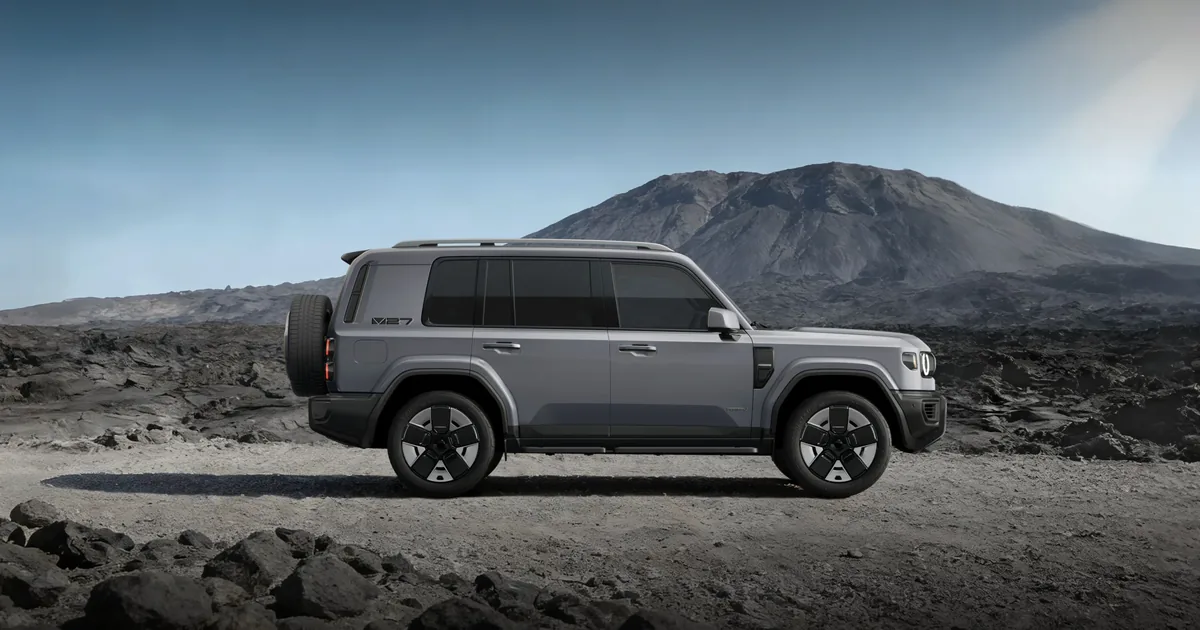
Chery's iCaur V27 range-extender SUV has launched in China with a 300 km (CLTC) pure-electric range, and pricing tops out at about US$28,300 (203,800 yuan) for the higher variant. It is the first EREV and the largest SUV in the iCaur lineup, and it is built around a boxy, off-road-flavoured body that the Chinese press compares to a Land Cruiser or G-Class.
The V27 matters beyond China because it shows where the market is heading. Buyers want an SUV that runs on electricity for daily errands but has a petrol engine as a generator for long trips. That is a real question for Nepali buyers who face steep hills, long highway stretches and patchy fast charging outside the main cities.
The V27 has not been announced for Nepal, and our database has no Nepal price for it. This guide covers what the launch tells us and how it compares with the electric SUVs and cars Nepali buyers can look at today.
Key Highlights
- Launch pricing in China: from 189,800 yuan to 203,800 yuan, roughly US$26,300 to US$28,300.
- Pure-electric range: 300 km (CLTC) on the Long-Range Edition, which is about 243 km on the stricter WLTP cycle.
- Battery: 51.2 kWh LFP pack from CATL on the Long-Range Edition.
- Powertrain: a 1.5-litre turbo engine acting as a generator (115 kW) plus dual electric motors with a combined 335 kW (about 449 hp).
- Total range: the standard-battery version is claimed at over 1,200 km on a full tank plus a full charge.
- Earlier version: the first V27 trims used a 34.3 kWh battery with about 200-210 km of CLTC electric range.
- Body style: a five-seat, boxy off-road-style SUV, offered in rear-wheel-drive and all-wheel-drive layouts.
- Nepal status: no official Nepal launch or price yet.
Detailed Analysis
What is an EREV, and why is it different?
An extended-range EV (EREV) always drives with its electric motors. The petrol engine does not turn the wheels in normal driving. It only spins a generator to recharge the battery or power the motors when the battery runs low.
This behaves very differently from a conventional hybrid. In the city it drives like an EV: silent, smooth and quick off the line. On a long trip it keeps going as long as there is fuel. A 300 km electric range covers most daily driving, and the engine removes range anxiety on longer trips.
V27 numbers at a glance
| Item | iCaur V27 Long-Range Edition |
|---|---|
| Type | Extended-range EV (EREV) |
| Battery | 51.2 kWh LFP (CATL) |
| Electric range (CLTC) | 300 km |
| Electric range (WLTP) | About 243 km |
| Engine (generator) | 1.5T, 115 kW |
| Electric motors | Dual motor, 335 kW combined |
| Seating | 5 |
| China price | 189,800 to 203,800 yuan |
The jump from the earlier 34.3 kWh pack to 51.2 kWh is what lifts the electric range from about 200 km to 300 km. Because the price barely moves, Chery is giving buyers a much bigger battery for little extra money, which is a typical Chinese-market tactic.
Reading the range figure honestly
The CLTC cycle is generous. The same car is rated at about 243 km on WLTP, and real driving in cold weather, with a full load, or on a steep climb will be lower. A heavy, boxy SUV with an off-road stance is not a low-drag shape, so expect highway efficiency well below the lab figure. Think of 200 km or so as the realistic electric range for planning.
That is still useful. It covers a week of Kathmandu commuting on a single charge, and the engine covers the rest.
How it compares with EVs already listed in Nepal
No iCaur is listed in Nepal yet, so the comparison below uses electric vehicles already in our database. Note that these are pure BEVs, and several of them do not yet have a Nepal price. The V27 is a larger, more capable body style with a different powertrain, so treat this as a reference for battery size and claimed range rather than a like-for-like test.
| Vehicle | Battery | Claimed range | Motor power |
|---|---|---|---|
| Deepal S03 | 40 kWh | 405 km | 120 kW |
| Geely EX2 | 40.16 kWh | 410 km | 85 kW |
| BYD Sealion 08 | 82.5 kWh | 900 km | 320 kW |
| Tata Sierra EV | 75 kWh | 665 km | 228 kW |
The Deepal S03 and Geely EX2 both carry roughly 40 kWh batteries and claim over 400 km on the CLTC cycle. They are lighter and smaller, which is why they go further per kWh. The V27's 51.2 kWh pack has to move a much bigger vehicle, which explains the shorter electric range per kWh.
The BYD Sealion 08 is the closest in size and ambition. It is a large six-seat SUV with an 82.5 kWh battery, a claimed 900 km CLTC range, a top speed of 240 km/h and fast charging of 10-80% in 32 minutes. It is a pure EV, so it needs charging infrastructure. The V27 trades some electric range for the freedom of a petrol backup.
The Tata Sierra EV brings a 75 kWh battery and a brand-claimed 665 km range. Our listing notes pre-bookings are open and deliveries are expected around Dashain, so it is the one to watch if you want a rugged-looking SUV from a brand with a local service network.
Pro tip: Compare battery size and the test cycle before comparing range numbers. A CLTC figure and a WLTP figure for the same car can differ by 20% or more.
Why Chery is pricing it this way
China's EREV segment has grown quickly, and Li Auto, Aito and others have shown buyers will pay for the no-anxiety formula. iCaur is aiming at a younger, adventure-minded crowd with the V27's boxy design. Pricing near US$26,000 to US$28,000 for a 449 hp, five-seat SUV with a 300 km electric range is aggressive by global standards.
Impact on Nepal EV Market
The tax structure is the main hurdle
Nepal's 2026/27 budget changed how EV imports are taxed. Reports say the excise duty was removed and replaced with a Clean Infrastructure Investment Fee, with customs duty at 20% and the fee rising with the vehicle's customs value. Higher-value cars face a sharp price increase, while several entry-level EVs stay relatively affordable.
That matters for the V27. A vehicle priced near US$28,000 in China sits in a brackets where tax stacks up quickly. The final Nepal price would be a large multiple of the China price, and we cannot give a figure because no importer has announced one.
An EREV could suit Nepal's geography
Pure EVs have done well in Nepal, and nearly three-quarters of new cars sold are now electric by recent reports. But there are real use cases an EREV would fit:
- Long hill routes: Kathmandu to Pokhara or to the Terai involves long climbs where battery drain is high and chargers are sparse.
- Monsoon travel: landslide delays can leave a battery car stuck. A petrol generator is a safety net.
- Rural and hill buyers: home charging is often limited or unreliable outside the cities.
There is also a downside. An EREV still has an engine, so it is exposed to fuel prices and needs engine servicing. Nepal's policy is built around cutting petrol imports, so how hybrids and range-extenders are classified for tax will matter a lot. Check how any importer's EREV is categorised before you plan around a price.
Running costs
Using our reference numbers, home charging in Nepal costs about Rs. 10-12 per kWh and public NEA charging about Rs. 6-10.5 per kWh. A full 51.2 kWh battery would cost roughly Rs. 510-610 at home. Average SUV running costs are about Rs. 0.80 per km, which puts a daily 30-40 km commute at around Rs. 24-32 a day. An EREV that stays on electricity for those short trips would cost about the same as a BEV, and the engine only adds cost on long trips.
What dealers and buyers should do
- Dealers: watch for Chinese EREVs arriving through the Rasuwagadhi border and gulf-market re-exports. Border disruptions have already slowed supply.
- Buyers: do not pay deposits for an unannounced model. Wait for an official importer, warranty terms and parts support.
- Compare first: use our Compare EVs tool to line up the SUVs that are already available.
What to Expect Next
The V27 is already showing up in other markets. It has been shown in Dubai, and a right-hand-drive version has appeared in Chinese coverage with Malaysia mentioned as a likely destination. Right-hand drive matters here because Nepal is a right-hand-drive-friendly market for many Indian and Japanese models, though most of the Chinese cars we see are left-hand drive.
The realistic timeline looks like this:
- Now: China sales ramp up on the Long-Range Edition.
- Next 6-12 months: export markets such as the Gulf and Southeast Asia get the car.
- Later: a Nepal importer could bring it in if tax treatment and demand make sense. We will update our listings once an official price is announced.
If you want a rugged SUV in the near term, the options in our database are the best guide. The pre-booking-stage Tata Sierra EV and the large BYD Sealion 08 are the two to watch. If you would rather save money, see our Used EVs section.
Explore All EVs Available in Nepal
Compare 200+ electric vehicles with real-time prices, specs, and features.
Frequently Asked Questions
Q: What is the price of the iCaur V27 in China?
A: The launch price in China runs from about 189,800 yuan to 203,800 yuan for the Long-Range Edition, which is roughly US$26,300 to US$28,300. The earlier trims were reported from 169,800 yuan. There is no confirmed price for Nepal.
Q: What is the electric range of the iCaur V27?
A: The Long-Range Edition has a 51.2 kWh LFP battery and a claimed pure-electric range of 300 km on the CLTC cycle, about 243 km on WLTP. Real-world range will be lower, especially on hills or at highway speed. The petrol generator extends the total range beyond 1,200 km on the standard-battery version.
Q: Is the iCaur V27 available in Nepal?
A: No. As of now there is no official launch, importer announcement or Nepal price for the iCaur V27. If it arrives, import taxes will raise the price well above the China figure, so check our listings for updates.
Q: How is an EREV different from a normal hybrid or EV?
A: An EREV is driven by electric motors at all times, and its petrol engine only generates electricity. It drives like an EV around town and avoids range anxiety on long trips. A normal hybrid can send engine power directly to the wheels, and a pure EV has no engine at all.
Q: Which EVs in Nepal are similar to the iCaur V27?
A: For a large rugged SUV, look at the BYD Sealion 08 and the Tata Sierra EV. Both are pure EVs, not range-extenders, so they depend on charging access. For a smaller, cheaper pick, see the Deepal S03.