Key Takeaways
- The Jetour T2 PHEV has arrived in Nepal ahead of its October 11 launch.
- The smaller Jetour T1 PHEV is set to join the lineup, with no confirmed date.
- International T2 i-DM versions claim up to 1,200 km combined range and about 139 km electric-only.
- Reported output is 265 kW and 610 Nm from a 1.5L turbo plus dual electric motors.
- Nepal price and variants are unconfirmed until the official launch.
The Jetour T2 PHEV has arrived in Nepal ahead of its October 11 launch, and the smaller Jetour T1 PHEV is set to join it in the lineup. It is one of the first boxy, off-road-styled plug-in hybrids from a Chinese brand to reach Nepali showrooms, and the first Jetour model to go on sale here as a plug-in.
The pitch is simple. A plug-in hybrid can drive on electricity for daily commutes and switch to its petrol engine on long highway trips. Nepal's EV buyers have been asking for that combination for years. Charging is still patchy outside the main highways, and the Kathmandu-Pokhara, Mugling and Narayangadh stretches can leave a pure EV owner nervous about range.
One caution before the details. At the time of writing, Nepal pricing, variant lists and the dealer's official specification sheet were not yet published. The specs below come from international markets and may differ from the Nepal-market cars. We will update this article once the October 11 launch confirms the numbers.
Key Highlights
- The Jetour T2 PHEV has reached Nepal ahead of its October 11 launch event.
- The Jetour T1 PHEV is expected to follow as a second, more compact model.
- International T2 i-DM versions combine a 1.5-litre turbo petrol engine with two electric motors.
- Reported combined system output for the T2 i-DM is 265 kW (355 hp) and 610 Nm of torque.
- Claimed combined range is up to 1,200 km (NEDC) with an 18.4 kWh battery, with about 139 km of electric-only range. Some markets get a larger 26.7 kWh pack.
- Reported charging figures are 6.6 kW AC, DC fast charging up to 57 kW, and 3.3 kW V2L for powering appliances.
- Nepal pricing is not yet confirmed.
Detailed Analysis
What is the Jetour T2 PHEV?
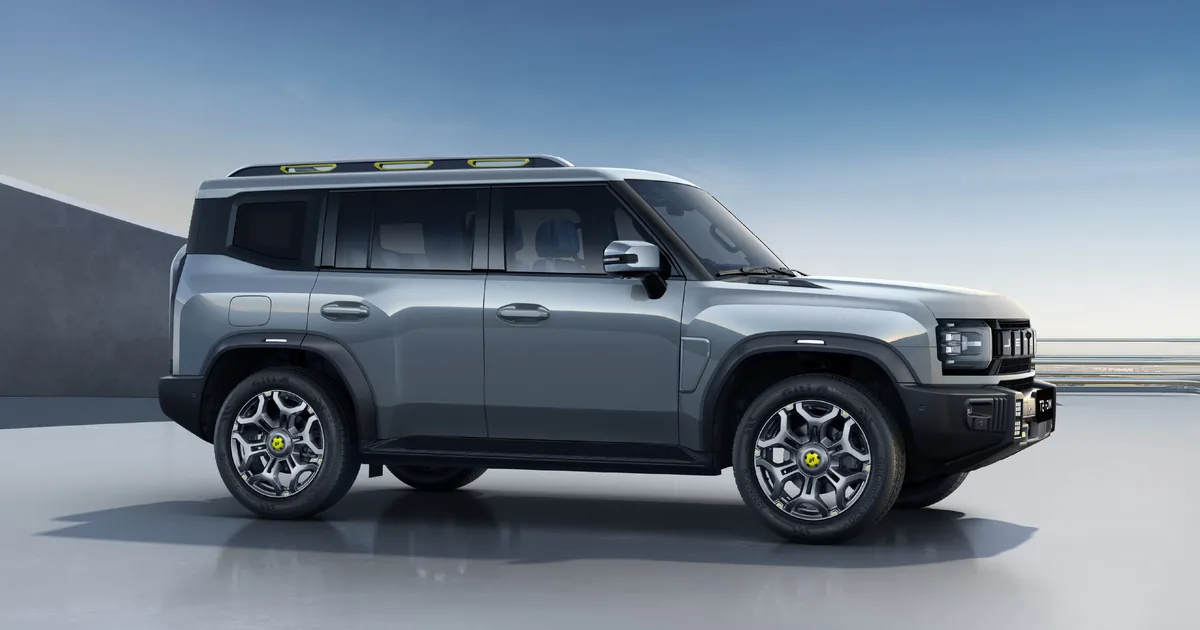
The T2 is a square-shouldered SUV in the Jetour T-series, a sub-line built around an adventure look. The plug-in version is badged i-DM. Reviews from Malaysia, the Philippines and South Africa describe it as a boxy, 4x4-styled SUV that puts hybrid efficiency ahead of outright off-road hardware.
The system pairs a 1.5-litre turbo petrol engine with a dedicated hybrid transmission and two electric motors. Reported figures from international launches are in the table below.
| Specification | Jetour T2 i-DM (international reports) |
|---|---|
| Engine | 1.5L turbo petrol, about 100 kW (134 hp), 220 Nm |
| Electric motors | Combined about 165 kW (221 hp), 390 Nm |
| Combined system output | 265 kW (355 hp), 610 Nm |
| Transmission | 3-speed dedicated hybrid transmission (DHT) |
| Battery | 18.4 kWh LFP (some markets: 26.7 kWh) |
| Electric-only range | About 139 km (claimed) |
| Combined range | Up to 1,200 km (NEDC, claimed) |
| Fuel tank | 70 litres |
| AC charging | 6.6 kW |
| DC fast charging | Up to 57 kW |
| V2L | 3.3 kW |
The international reviews we found put mixed-driving economy at around 17.5 km/L once the battery is depleted. That figure comes from a single review and will vary with Nepal's gradients and traffic.
Pro tip: NEDC range figures are optimistic. Expect real-world electric range to fall well below the claimed 139 km, especially on steep climbs like the Thankot or Daman roads.
How the hybrid system behaves
The system runs on electric power first, until the battery falls to roughly 20%. After that the petrol engine takes over and can also recharge the battery through regeneration. For a Kathmandu commuter who drives 30-40 km a day, that could mean most weekday trips on grid electricity.
The Jetour T1 PHEV
The T1 is the smaller sibling. It uses a 1.5-litre turbo engine with electric motors, and reports put combined output around 250 kW and 530 Nm. Battery and range figures vary by market:
| Specification | Jetour T1 i-DM (international reports) |
|---|---|
| Battery | 18.4 kWh (some markets 26.7 kWh LFP) |
| Electric-only range | About 100 km, up to about 110-150 km with the larger pack (claimed) |
| Combined range | Up to 1,200 km (claimed) |
| Features reported | ADAS, V2L (3.3 kW), DC fast charging |
Which battery pack Nepal gets matters a great deal. The larger pack gives more daily electric driving. The smaller pack keeps the price down. Neither is confirmed for Nepal yet.
What would it cost to run?
Plug-in hybrids are cheapest to run when they are plugged in often. Using typical Nepal charging costs:
| Charging method | Cost per kWh | Cost to fill an 18.4 kWh battery |
|---|---|---|
| Home (NEA domestic) | About Rs. 10-12 | About Rs. 184-221 |
| NEA public station | Rs. 6-10.5 | About Rs. 110-193 |
| Private fast charger | Rs. 15-20 | About Rs. 276-368 |
Those figures are our estimates and ignore charging losses. A full home charge at 6.6 kW AC would take roughly three hours on a suitable wall box. Most Nepali homes have a lower-rated supply, so check your meter capacity before buying.
Impact on Nepal EV Market
For buyers. A PHEV removes range anxiety, which is the top objection among families who drive to Pokhara, Chitwan or Biratnagar. The trade-off is complexity: you maintain both a petrol engine and a battery system. Resale values for PHEVs in Nepal are also untested.
For dealers. The T2 and T1 give Jetour a two-model entry in a segment where few rivals are on sale. Dealers will need technicians trained on hybrid transmissions and high-voltage systems, and buyers should ask about after-sales support and spare parts before signing.
For the wider market. Nepal's policy has favoured fully electric vehicles with lower import duty. How PHEVs are classified under customs rules decides whether they can compete on price. Until the pricing is announced, treat any figure floating around social media as speculation.
The arrival also lands at a busy moment for new models in Nepal. The 2026 NADA Auto Show brought a wave of new launches, including these larger vehicles already in our database:
| Vehicle | Battery | Claimed range |
|---|---|---|
| BYD Sealion 08 | 82.5 kWh | 900 km |
| Tata Sierra EV | 75 kWh | 665 km |
| Dongfeng MHero 1 | 142.7 kWh | 825 km |
| Deepal S03 | 40 kWh | 405 km |
These are fully electric or large-battery vehicles with different price points and use cases. The Jetour twins sit in a different niche: one tank, one plug, and no need to plan around chargers. Note that the range figures above use different test cycles (CLTC, WLTC and brand claims), so they are not directly comparable with the Jetour NEDC figure.
If you would rather skip new models altogether, browse Used EVs, or line up several options with the Compare EVs tool.
What to Expect Next
- October 11: The official Nepal launch of the T2 PHEV. Expect the dealer to confirm variants, battery size, price and warranty terms.
- After launch: Test drives should open. Pay attention to hill-climbing behaviour with a full cabin, and to how the engine behaves once the battery is depleted.
- T1 PHEV: Timing has not been confirmed. It is described as set to join the lineup, so a launch date should follow soon after the T2.
- Charging and service: Ask about a home wall box, warranty cover for the high-voltage battery, and whether hybrid parts are stocked locally.
We will update this article with Nepal prices and verified specifications as soon as they are announced.
Explore All EVs Available in Nepal
Compare 200+ electric vehicles with real-time prices, specs, and features.
Frequently Asked Questions
Q: What is the price of the Jetour T2 PHEV in Nepal?
A: The Nepal price had not been announced when this article was written. The official launch is on October 11, and the dealer is expected to confirm variants and pricing then. We will update this article with the figure.
Q: What is the range of the Jetour T2 PHEV?
A: International reports claim a combined range of up to 1,200 km (NEDC) and about 139 km of electric-only range on the 18.4 kWh battery. Real-world numbers will be lower, and the Nepal-spec battery has not been confirmed.
Q: Is the Jetour T1 PHEV also coming to Nepal?
A: Yes, the T1 PHEV is set to join the lineup alongside the T2. A separate launch date has not been confirmed. International versions pair a 1.5-litre turbo engine with electric motors and claim up to 1,200 km of combined range.
Q: How much will it cost to charge a Jetour T2 PHEV in Nepal?
A: With an 18.4 kWh battery, a full charge costs roughly Rs. 184-221 at home rates of about Rs. 10-12 per kWh. NEA public stations (Rs. 6-10.5 per kWh) are cheaper, and private fast chargers (Rs. 15-20 per kWh) cost more. These are estimates and ignore charging losses.
Q: Can the Jetour T2 PHEV power appliances?
A: International versions list a 3.3 kW vehicle-to-load (V2L) output, which can run appliances during a load-shedding outage or a camping trip. Confirm that the Nepal-spec cars include it.