Key Takeaways
- TVS Ntorq 150 launched in Nepal at an introductory Rs. 3,69,900 via Jagdamba Motors
- 149.7cc engine makes 13.2 PS and 14.2 Nm, with a claimed 104 km/h top speed
- First Ntorq in Nepal with single-channel ABS and traction control
- About Rs. 35,000 more than the Ntorq 125 XP at Rs. 3,34,900
- Petrol costs roughly Rs. 5.4-6.2/km versus Rs. 0.3-0.5/km for electric scooters
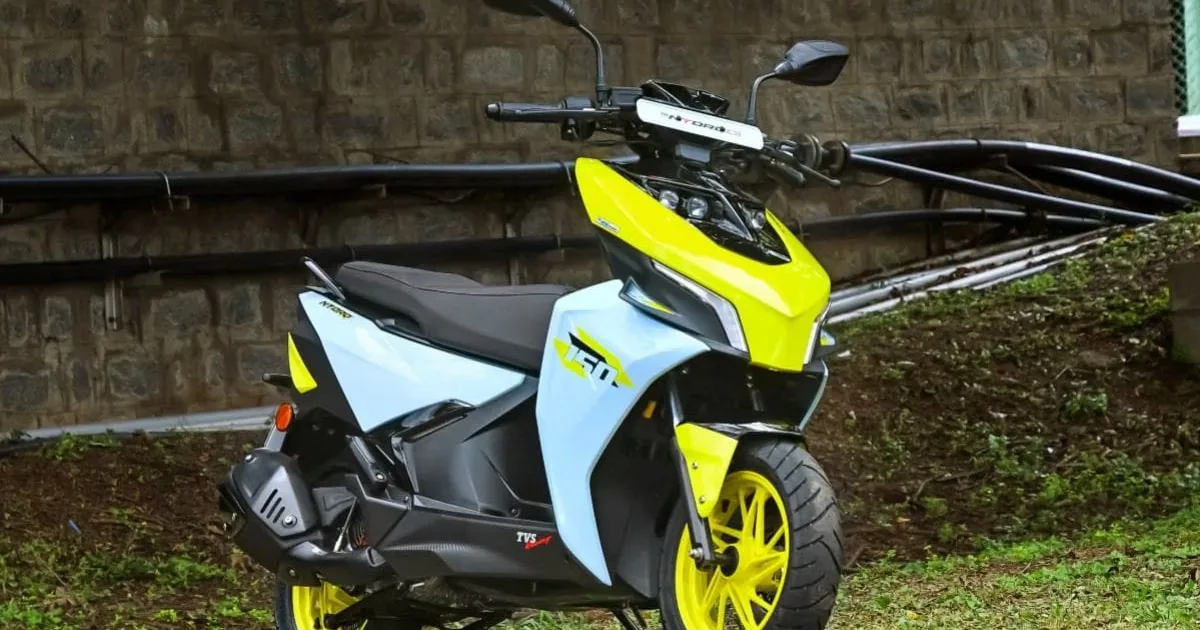
TVS Motor Company has launched the TVS Ntorq 150 in Nepal at an introductory price of Rs. 3,69,900. It is the first time the 150cc hyper sport scooter has been sold outside India. Jagdamba Motors, TVS's sole authorised distributor in Nepal, is handling sales, and the launch took place on September 26, 2026.
The Ntorq 150 is now the most expensive Ntorq on sale in Nepal. The Ntorq 125 range previously topped out at around Rs. 3,34,900 for the XP variant, so the new model sets a ceiling roughly Rs. 35,000 higher. For that money, buyers get a bigger engine, single-channel ABS and traction control. Earlier Ntorq generations sold in Nepal did not have either safety feature.
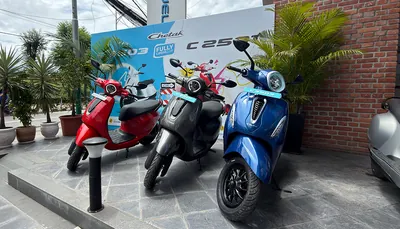
There is also a wider story here. Petrol has climbed sharply in Nepal this year, with reports of around Rs. 217 per litre in May 2026. Electric scooters are looking more attractive at the same time as a petrol performance scooter launches at premium money. This article covers what the Ntorq 150 offers, how it compares with the Ntorq 125 (the other keyword buyers are searching), and where it sits against electric options.
Key Highlights
- Price: introductory Rs. 3,69,900 in Nepal
- Engine: 149.7cc, air-cooled, single-cylinder O3CTech engine
- Output: 13.2 PS at 7,000 rpm and 14.2 Nm at 5,500 rpm
- Performance: claimed 0-60 km/h in 6.3 seconds, top speed of 104 km/h
- Safety: single-channel ABS, traction control, hazard lamps and follow-me headlamps
- Tech: 50+ connected features, including turn-by-turn navigation and ride modes
- Distributor: Jagdamba Motors, TVS's sole authorised distributor in Nepal
- Milestone: the first international market for the Ntorq 150
Detailed Analysis
What You Get for Rs. 3.69 Lakh
The Ntorq 150 uses a 149.7cc air-cooled engine with an automatic CVT. In India, where the scooter has been on sale for a while, it weighs about 115 kg and carries a 5.8-litre fuel tank. Indian reviews quote an ARAI mileage of 40 kmpl, and real-world figures of 35-40 kmpl depending on load and how often the rider uses Race mode. We expect Nepali owners to see similar numbers, though local data is still thin since the scooter has only just arrived.
The connected tech is the other selling point. TVS claims over 50 connected features, including turn-by-turn navigation and selectable ride modes. Follow-me headlamps and hazard lamps round out the package. Indian owner reviews are generally positive, with praise for the styling and the strong feel of the 150cc engine.
Ntorq 150 vs Ntorq 125 in Nepal
Most Nepali buyers will be choosing between the two Ntorqs, so here is how they compare. The 125 figures come from the pricing reported for the range, and I have only listed what the sources confirm.
| Feature | TVS Ntorq 150 | TVS Ntorq 125 (top XP variant) |
|---|---|---|
| Price in Nepal | Rs. 3,69,900 | Rs. 3,34,900 |
| Engine | 149.7cc, air-cooled | 125cc class |
| Power | 13.2 PS | Lower than the 150 |
| Torque | 14.2 Nm | Lower than the 150 |
| ABS | Single-channel ABS | Not offered on earlier Nepal generations |
| Traction control | Yes | Not offered on earlier Nepal generations |
| Top speed | 104 km/h (claimed) | Lower than the 150 |
The price gap is about Rs. 35,000. If you ride on Kathmandu's steep hills and wet roads, ABS and traction control are worth paying for. Monsoon-slick tarmac is exactly where they help. Riders who stay on flat valley roads and mostly commute short distances may find the Ntorq 125 enough.
Pro tip: Ask Jagdamba Motors whether the Rs. 3,69,900 price is limited to the introductory period. Launch prices in Nepal often change once the first batch is sold.
Running Cost: Petrol vs Electric
The ownership maths matters as much as the sticker price. With petrol reported at around Rs. 217 per litre, a scooter returning 35-40 kmpl costs roughly Rs. 5.4-6.2 per km in fuel. That is our own arithmetic from the reported price and mileage, so treat it as an estimate. Industry comparisons put electric scooters at about Rs. 0.3-0.5 per km in electricity, while Nepal's EV charging reference points to roughly Rs. 0.70/km for cars.
Here is a simple monthly comparison for a 30-40 km daily commute, about 1,000 km a month:
| Item | Ntorq 150 (petrol) | Typical electric scooter |
|---|---|---|
| Energy cost per km | About Rs. 5.4-6.2 | About Rs. 0.3-0.5 |
| Approx. monthly energy cost (1,000 km) | About Rs. 5,400-6,200 | About Rs. 300-500 |
| Upfront price range | Rs. 3,69,900 | Roughly Rs. 1,10,000 to Rs. 5,99,900 across 39+ models |
Electric scooters in Nepal span a very wide range. Examples include the NIU UQim at Rs. 1,45,000, the Yadea G5 at Rs. 3,33,000 and the Ather 450 series at Rs. 3,24,999 to Rs. 3,99,999. Several of these cost less than the Ntorq 150 and cost far less to run. What they usually do not match is the Ntorq's 104 km/h top speed and quick-revving feel.
Impact on Nepal EV Market
The Ntorq 150 is not an EV, but it affects the EV conversation in a few ways.
For buyers: Anyone with about Rs. 3.7 lakh to spend on two wheels now has a clear petrol performance option. They also have a strong electric rival: the Ather 450 range sits at a similar price. Buyers should weigh fuel costs seriously. At current petrol prices, the annual fuel bill on a petrol scooter can run into tens of thousands of rupees more than electricity for an EV scooter.
For dealers: TVS is betting that a sporty 150cc scooter with connected tech and rider aids still has a market in Nepal, even as EV adoption grows. Electric scooter dealers will need to lean on running costs, low servicing and charging at home or at NEA stations (about Rs. 6-10.5 per kWh).
For the wider market: Nepal's EV market keeps growing across categories. If you are considering a four-wheeler instead of a scooter, the cheapest electric cars start not far above scooter money. For context, here are three small EVs, with live prices and specs:
| Model | Price | Battery | Claimed range | Motor power |
|---|---|---|---|---|
| Seres E1 Mid | Rs. 16,49,000 | 13.8 kWh | 180 km | 25 kW |
| MG Comet Pace | Rs. 18,75,000 | 17.3 kWh | 230 km | 31.3 kW |
| Henrey Mincar | Rs. 19,95,000 | 16.5 kWh | 205 km | 35 kW |
These cars are a different class from a scooter, but they show how far a household budget can stretch on the electric side. Running costs are around Rs. 0.70/km, and a typical 30-40 km daily commute costs roughly Rs. 1,000-2,000 a month. You can use Compare EVs to line these up against other options. If you want to spend less, used EVs are another route.
What to Expect Next
Expect the following over the coming months:
- Price movement. The Rs. 3,69,900 figure is an introductory price. Watch for changes once initial stock is delivered.
- Real-world data. The first Nepali owner reports on mileage, hill performance and service should appear within a few months. Pay attention to fuel economy on steep climbs and in Kathmandu traffic.
- Competitor responses. Rival scooter brands may respond with their own 150cc launches or rider-aid upgrades. Electric makers may counter with pricing and finance offers, as fuel costs stay high.
- More TVS launches. Since Nepal is the Ntorq 150's first international market, it is a test for TVS. A good response could bring more models to Nepal.
If you are undecided, our advice is simple. If you want the best performance and rider aids in a petrol scooter, the Ntorq 150 is a strong new entry. If your priority is cost per kilometre, test ride an electric scooter before you sign.
Explore All EVs Available in Nepal
Compare 200+ electric vehicles with real-time prices, specs, and features.
Frequently Asked Questions
Q: What is the price of the TVS Ntorq 150 in Nepal?
A: The TVS Ntorq 150 launched in Nepal at an introductory price of Rs. 3,69,900. It is sold through Jagdamba Motors, TVS's sole authorised distributor in the country. Prices can change after the introductory period, so confirm with the dealer before booking.
Q: How is the TVS Ntorq 150 different from the TVS Ntorq 125?
A: The Ntorq 150 has a 149.7cc engine making 13.2 PS and 14.2 Nm, plus single-channel ABS and traction control. Earlier Ntorq generations sold in Nepal did not have these rider aids. It also costs about Rs. 35,000 more than the Ntorq 125's top XP variant at Rs. 3,34,900.
Q: What is the top speed and mileage of the TVS Ntorq 150?
A: TVS claims a top speed of 104 km/h and a 0-60 km/h time of 6.3 seconds. In India, ARAI mileage is 40 kmpl, with real-world figures of 35-40 kmpl. Nepal-specific figures will depend on hills, load and riding style.
Q: Is the TVS Ntorq 150 an electric scooter?
A: No. The Ntorq 150 is a petrol scooter with an air-cooled 149.7cc engine. Electric scooters in Nepal cost roughly Rs. 0.3-0.5 per km to run, against around Rs. 5.4-6.2 per km in petrol for the Ntorq 150 at recent fuel prices.
Q: Should I buy the Ntorq 150 or an electric scooter in Nepal?
A: Choose the Ntorq 150 if you want higher top speed, a sporty feel and connected features, and accept higher fuel costs. Choose an electric scooter if low running cost matters most. Models such as the Ather 450 series are priced from Rs. 3,24,999, close to the Ntorq 150's price.