Maxus Nepal Offers 80 Lakh Rupees Relief Aid to Disaster Hit Communities
Key Takeaways
- Maxus Nepal, supported by SAIC Maxus China and the Himalaya Organization, provided Rs. 80 lakh in disaster relief to communities affected by recent events in Nepal.
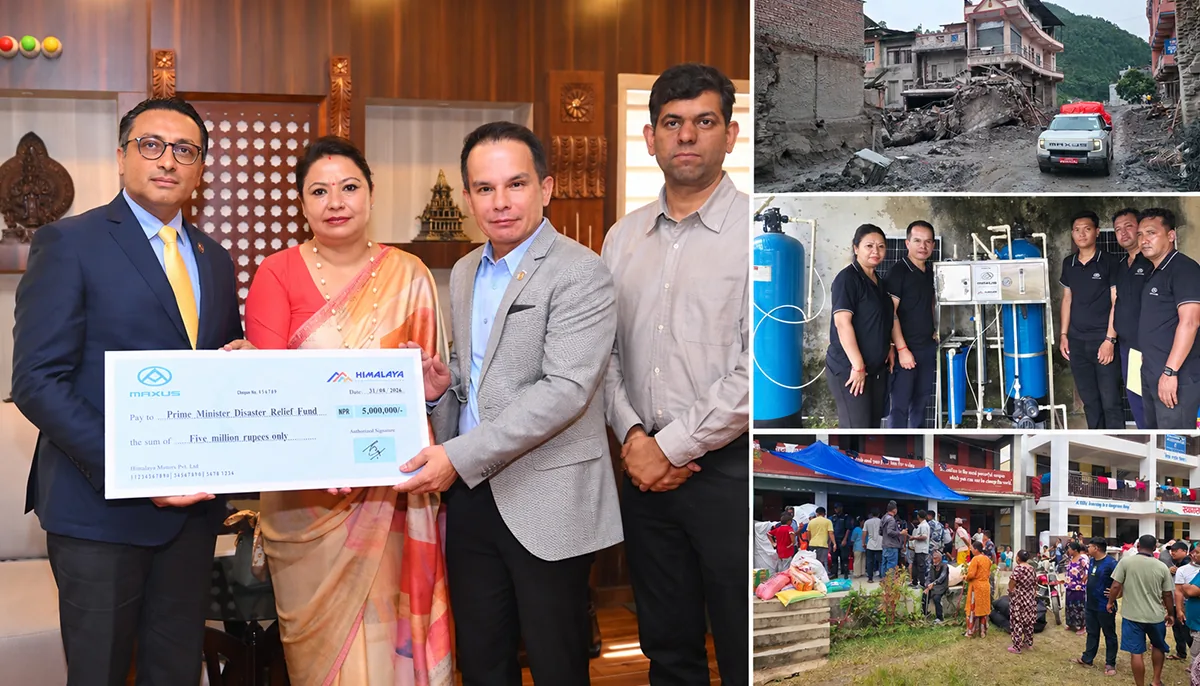
- The relief included a Rs. 50 lakh contribution to the Prime Minister’s Disaster Relief Fund and Rs. 30 lakh worth of essential supplies for around 400 people.
- Solar-powered Ultra-Filtration water treatment systems, capable of purifying 1,000 litres per hour, were installed at two temporary shelters to ensure clean drinking water for affected families.
- The initiative highlights Maxus Nepal's commitment to corporate social responsibility, aiming to offer both immediate relief and long-term infrastructure benefits to the communities.
Maxus Nepal Delivers Rs. 80 Lakh in Disaster Relief to Affected Communities
Maxus Nepal, in collaboration with SAIC Maxus China and the Himalaya Organization, has launched a significant relief initiative valued at approximately Rs. 80 lakh for communities impacted by recent disasters in Nepal. This effort underscores the company's commitment to corporate social responsibility by addressing both immediate needs and long-term infrastructure development.
Financial Contributions and Direct Aid
A major component of the relief effort includes a Rs. 50 lakh donation to the Prime Minister’s Disaster Relief Fund. The cheque was formally handed over to the Finance Minister earlier this week. Additionally, Rs. 30 lakh worth of direct assistance was extended to communities along the Trishuli River. This direct aid provided essential supplies to approximately 400 individuals, ensuring families in temporary shelters have access to vital resources.
Essential Supplies Provided
The relief package covered a wide range of necessities, including mattresses, pillows, bed sheets, medicines, basic healthcare supplies, food items, vegetables, cooking utensils, clothing, and other crucial items. These supplies are designed to support families who have been displaced and are currently residing in temporary shelters.
Solar-Powered Water Treatment Systems
An innovative aspect of this relief initiative is the installation of solar-powered Ultra-Filtration water treatment systems at two temporary holding centres in Nuwakot. One system has been set up at Shree Bhairam Secondary School in Trishuli, where around 300 families are sheltering. The second system is installed at Trishuli Primary School in Bidur Municipality, housing approximately 200 families.
Each water treatment system is capable of purifying around 1,000 litres of water per hour, ensuring a continuous supply of treated drinking water during the shelter period. Importantly, these systems are built to remain functional even after the shelters are cleared, allowing schools and their communities to benefit from clean water once regular academic activities resume.
Collaborative Efforts
The relief distribution and installation of water treatment systems were carried out with the active participation of key stakeholders. Himalaya Organization Chairman Dhruba Thapa, Managing Director Milan Thapa, and employees of the organization played crucial roles. Additionally, Lions International District 325 J Nepal Chief Governor Ram Raja Thapa and other district officials were also involved in the execution of these relief efforts.
Long-Term Impact
Maxus Nepal emphasized that this initiative is part of its broader corporate social responsibility strategy. By combining immediate relief supplies with the installation of sustainable infrastructure, the company aims to provide not just short-term aid but also long-term benefits to the affected communities. This dual approach ensures that while urgent needs are met, the communities also gain resources that will support their recovery and resilience in the future.