Price in Nepal
Ather 450S Base
Rs. 3,64,999
Key Takeaways
- Ather is advertising benefits of up to Rs. 1,00,000 on its electric scooters in Nepal, a ceiling that depends on exchange and financing.
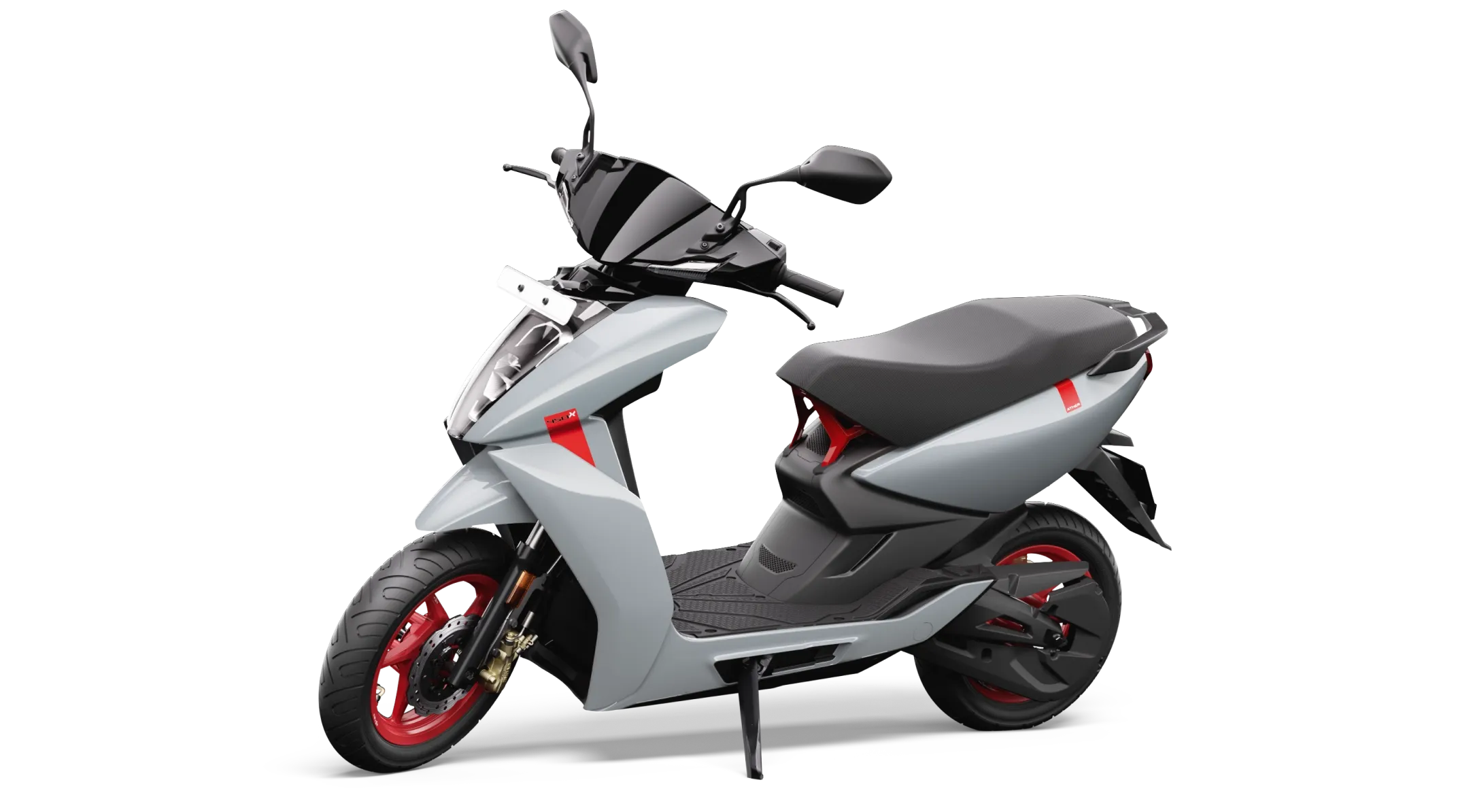
- Ather 450S is listed at Rs. 3,64,999 with a 2.9 kWh battery, 115 km IDC range and 90 km/h top speed.
- Ather Rizta S is listed at Rs. 3,14,900, which is Rs. 50,099 less, with a 123 km IDC range and 34 L under-seat storage.
- Plan on roughly 80-90 km of real-world range in Nepal's hills and traffic, and a home charge costs about Rs. 30-35.
- Get the final invoice price and every benefit in writing, since Ather prices in Nepal changed several times in 2026.
Ather is offering benefits of up to Rs. 1,00,000 on its electric scooters in Nepal, covering the sporty 450S and the family-focused Rizta S. The Rs. 1 lakh figure is a ceiling that combines cash discounts, exchange value and financing perks, so what you actually save depends on the variant, how you pay and whether you trade in an old vehicle.
The timing matters. Ather prices in Nepal have moved several times this year. The Ather 450S went from Rs. 3,25,000 in February to Rs. 3,64,999 by the end of March, while the Ather Rizta S dipped to Rs. 2,94,900 before settling at Rs. 3,14,900 in August. With list prices shifting, the benefit package can change the real cost by far more than the sticker difference between the two scooters.
This guide explains what is on offer, how the two scooters compare on equal terms, and what the numbers mean for a Kathmandu commuter or a rider in the hills.
Key Highlights
- Benefits of up to Rs. 1,00,000 are being advertised on Ather scooters in Nepal. Treat this as the maximum, not the average.
- The Ather 450S is listed at Rs. 3,64,999 with a 2.9 kWh battery and 115 km IDC range.
- The Ather Rizta S is listed at Rs. 3,14,900 with the same 2.9 kWh battery and 123 km IDC range.
- The Rizta S costs Rs. 50,099 less than the 450S, yet claims 8 km more range.
- The 450S is the faster scooter: 90 km/h top speed and 3.9 s for 0-40 km/h, against 80 km/h and 4.7 s for the Rizta S.
- The Rizta S adds 34 L of under-seat storage, which matters for family and shopping use.
- Home charging a full 2.9 kWh pack costs roughly Rs. 29-35 at the NEA domestic rate.
Pro tip: Ask the dealer to put every benefit in writing, with the final on-road price. A headline offer and the invoice price are often different numbers.
Detailed Analysis
How the benefits typically work
A benefit of up to Rs. 1 lakh is rarely a single cash discount. Ather's earlier campaigns in Nepal have mixed several levers: a direct price reduction, an exchange bonus for trading in a petrol scooter or older vehicle, and financing terms such as low or zero-interest EMI. Early-buyer benefits have also been used on new launches. The top figure is reached only when you qualify for most of them at once.
In practice, this means three buyers can pay three different prices for the same scooter:
- A cash buyer with no trade-in, who usually gets the smallest saving.
- A buyer who exchanges an old scooter, who gets the exchange bonus on top.
- A financed buyer, who may save on interest rather than on the invoice price.
Before you compare dealers, decide which of these buyers you are. Then ask each dealer for the number that applies to you.
Ather 450S vs Rizta S: equivalent variants side by side
Both scooters in this article are the entry variants of their lines, so the comparison below is like for like. The figures come from our database and update automatically.
| Spec | Ather 450S | Ather Rizta S |
|---|---|---|
| Price | Rs. 3,64,999 | Rs. 3,14,900 |
| Battery | 2.9 kWh | 2.9 kWh |
| Claimed range (IDC) | 115 km | 123 km |
| Motor power | 5.4 kW | 4.3 kW |
| Top speed | 90 km/h | 80 km/h |
The two scooters share a battery size, so the real difference is in how that energy is used. The 450S has a 5.4 kW motor and a belt drive, tuned for quick acceleration. The Rizta S has a 4.3 kW motor tuned for comfort and efficiency, which is why it squeezes out a higher claimed range from the same pack.
Features and practicality
Both scooters carry a 7-inch DeepView LCD display, turn-by-turn navigation, Bluetooth, 4G LTE connectivity, OTA updates, regenerative braking, AutoHold hill hold, reverse assist, FallSafe and the Emergency Stop Signal. That is a long list for scooters in this price band.
The differences are where your daily use will show them:
| Feature | Ather 450S | Ather Rizta S |
|---|---|---|
| Ride modes | 4 (SmartEco, Eco, Ride, Sport) | 2 (SmartEco, Zip) |
| WiFi | Yes | Not listed |
| Under-seat storage | Not listed | 34 L |
| 4-way joystick control | Not listed | Yes |
| Tow and theft alerts | Not listed | Yes |
| Ground clearance | 170 mm | 165 mm |
| Seating | 2 | 2 |
The 450S gives you the extra ride modes and a sharper character. The Rizta S gives you a big storage compartment and a longer, more upright seat, which suits a pillion rider or a rider carrying shopping.
Real-world range in Nepal
Claimed IDC figures are measured under ideal conditions. Owner reports on the Rizta with the 2.9 kWh pack point to roughly 80-105 km in mixed riding, and one long-term owner reports around 100 km per charge over more than 11,000 km without major issues. Expect the 450S to land in a similar window, with a bit less if you ride in Sport mode often.
Nepal adds its own variables:
- Hills: A climb from the valley rim, such as the road to Nagarkot or Daman, will drain the pack faster. Regenerative braking recovers some of that on the way down.
- Kathmandu traffic: Stop-start riding actually suits electric scooters, because regen helps and there is no idling loss.
- Monsoon: Wet roads and potholes mean you should ride gently. Both scooters have CBS rather than full ABS in our data, so give yourself extra braking distance.
- Cold mornings: Lithium-ion packs lose a little range in winter, so plan for a margin.
A sensible rule is to plan around 80-90 km of real range on either scooter and treat anything above that as a bonus.
Charging and running cost
Both scooters ship with a portable home charger of about 350 W, and a full charge from empty takes around 8.5 hours. That fits overnight charging perfectly.
| Charging option | Rate (NPR per kWh) | Cost for a full 2.9 kWh charge |
|---|---|---|
| NEA public station | Rs. 6-10.5 | About Rs. 17-30 |
| Home (NEA domestic) | About Rs. 10-12 | About Rs. 29-35 |
| Private fast charger | Rs. 15-20 | About Rs. 44-58 |
At home rates, that is roughly Rs. 0.30-0.40 per km on a realistic 90 km range. A petrol scooter typically costs several times that. For a rider covering 30-40 km a day, monthly charging lands well under Rs. 1,000.
Impact on Nepal EV Market
For buyers. The up to Rs. 1 lakh benefit narrows the gap between an Ather and mainstream petrol scooters, and it can erase the premium over cheaper electric rivals. The strongest value case is the Rizta S: at Rs. 3,14,900 it costs about Rs. 50,000 less than the 450S, and any exchange or financing benefit applies on top of that lower base.
For petrol scooter owners. Exchange offers are the most important lever. If you are riding an older petrol scooter, an exchange bonus can cut thousands off the invoice, and the fuel savings start immediately.
For dealers and rivals. Aggressive benefits from a premium brand put pressure on the rest of the scooter segment. Expect other importers to answer with their own festive or exchange schemes. That is good news for buyers who compare quotes.
For the used market. Heavier new-scooter discounts can soften resale prices on earlier Ather models. If you are shopping second-hand, check our Used EVs listings and compare against the new-scooter price after benefits.
What to Expect Next
Price movement on these two models has been frequent in 2026, so do not assume today's list price will hold. A few things are worth watching:
- Offer windows: Benefit packages in Nepal usually follow festival periods and launch campaigns. If you are not in a hurry, a later campaign could be larger or smaller.
- Price changes: The 450S rose by Rs. 39,999 between February and March. Rizta S prices have also swung. Lock in the invoice price when you book.
- Software updates: Both scooters receive OTA updates, and owner reports mention occasional software quirks. Updates should smooth these over time.
- Charging network growth: More NEA public stations would lower the cost of topping up away from home.
If you plan to buy within the next month, book now and get the final price and benefits in writing. If you can wait, track the offer and compare it with similar scooters on our Compare EVs page.
Explore All EVs Available in Nepal
Compare 200+ electric vehicles with real-time prices, specs, and features.
Frequently Asked Questions
Q: How much can I save on an Ather scooter in Nepal?
A: Ather is advertising benefits of up to Rs. 1,00,000 on its electric scooters in Nepal. That is the maximum combined figure from cash discounts, exchange value and financing perks. Your actual saving depends on the model, whether you trade in an old vehicle and how you pay, so ask the dealer for a written final price.
Q: What is the price of the Ather Rizta S in Nepal?
A: The Ather Rizta S is listed at Rs. 3,14,900. It has a 2.9 kWh battery, a 123 km IDC range, a 4.3 kW motor and an 80 km/h top speed. It also offers 34 L of under-seat storage.
Q: What is the price of the Ather 450S in Nepal?
A: The Ather 450S is listed at Rs. 3,64,999. It has a 2.9 kWh battery, a 115 km IDC range, a 5.4 kW motor and a 90 km/h top speed. It accelerates from 0 to 40 km/h in 3.9 seconds.
Q: Which is better for Kathmandu, the 450S or the Rizta S?
A: For most daily riders the Rizta S is the better value. It costs Rs. 50,099 less, claims a longer range of 123 km and has 34 L of storage. Choose the 450S if you want faster acceleration, a 90 km/h top speed and four ride modes.
Q: How much does it cost to charge an Ather scooter at home?
A: A full charge of the 2.9 kWh battery costs roughly Rs. 29-35 at the NEA domestic rate of about Rs. 10-12 per kWh. A full charge on the supplied portable charger takes around 8.5 hours, so overnight charging works well.