Key Takeaways
- Hyundai IONIQ 3 offers 42.2 kWh and 61 kWh batteries, with up to 308 miles (about 496 km) WLTP range on the larger pack.
- UK pricing starts at £22,245 (about $25,000); no confirmed Nepal price or launch yet.
- DC fast charging peaks at 110-119 kW, about 30 minutes for 10-80%.
- A full 61 kWh charge costs roughly Rs. 610-730 at home and Rs. 366-640 at NEA stations in Nepal.
- Nepal buyers can compare today's small EVs like the Geely EX2 and Deepal S03 while waiting for any launch news.
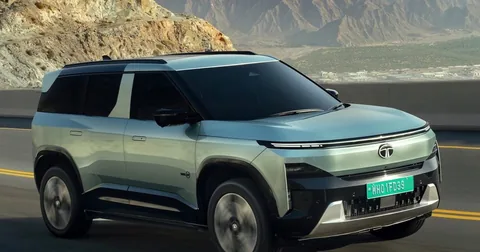
The Hyundai IONIQ 3, a compact electric hatchback, has gone on sale in Europe with up to 308 miles (about 496 km) of range from its larger battery. UK pricing starts at £22,245 for the entry version. It is a small, practical EV aimed at buyers who want a real-world family hatchback rather than a city runabout, and its numbers are strong for the segment.
For Nepali buyers the question is what a car like this means for the choices already on the market. As of this writing we have not confirmed an official Nepal launch, local price or importer for the IONIQ 3, so there is no Nepal price to quote. This guide covers what is known abroad, how it compares with EVs already listed in Nepal, and what to watch for.
Our own listings are built on Nepal-specific data, so the specs below come from international launch coverage. Treat them as provisional, since homologated range figures can still change.
Key Highlights
- Two battery options: a 42.2 kWh pack and a larger 61 kWh pack.
- Range: about 213 miles (343 km) WLTP for the small battery, and up to 308 miles (about 496 km) for the 61 kWh version.
- UK starting price: £22,245 on the road for the entry Advance trim, with 61 kWh trims running up to roughly £31,945. Some outlets quote lower figures that include a UK government grant.
- Motor: a front motor of about 107.8 kW and 250 Nm on the entry version.
- DC fast charging: up to 119 kW on the smaller pack and 110 kW on the larger pack, with about 30 minutes for 10-80%.
- Platform: a 400-volt architecture, not the 800-volt system used on the bigger IONIQ 5.
- Boot space: up to 441 litres, which is generous for the class.
Detailed Analysis
Why the range figure matters
The headline 308 miles is a WLTP figure. WLTP is a more realistic cycle than the CLTC standard used for many Chinese EVs, so a WLTP number of this size is better than it first looks. A 61 kWh battery delivering that range points to an efficient car, roughly in the region of 12 kWh per 100 km on the test cycle.
Real-world range will be lower. Owners of similar compact EVs in Europe typically report highway range 15-25% below the rated figure, and cold weather widens that gap. In Nepal, the same logic applies to long climbs. Going up from Kathmandu valley to Daman or Pokhara's surrounding hills uses a lot of energy, though you recover some of it on the way down through regenerative braking.
Two batteries, two buyers
| Version | Battery | Rated range (WLTP) | Best suited for |
|---|---|---|---|
| Entry | 42.2 kWh | about 213 miles (343 km) | City use, short commutes, second car |
| Long range | 61 kWh | up to 308 miles (496 km) | Highway trips, one-car households |
The small pack already covers a typical Kathmandu commute many times over. The larger pack is the one that makes intercity driving realistic, for example Kathmandu to Pokhara without worrying about the next charger.
Charging speed
A peak of 110-119 kW is respectable but not class-leading. The 400-volt platform means charging speed is competitive rather than record-setting. Hyundai quotes about 30 minutes for 10-80%, which matches what most buyers need at a rest stop. For Nepal, where fast chargers are still unevenly spread along highways, a car that can use whatever DC power is available, even at lower rates, is more useful than one with a high peak that few stations can deliver.
How it compares with EVs already listed in Nepal
The closest like-for-like comparison is with small and compact EVs that Nepali buyers can already look at. Note that these are not the same size or price class, so the table shows battery and range only. Range standards also differ (CLTC, ARAI, WLTP), so do not compare the range rows directly.
| Model | Battery | Claimed range |
|---|---|---|
| Hyundai IONIQ 3 (61 kWh, international data) | 61 kWh | up to 308 miles (about 496 km), WLTP |
| Geely EX2 | 40.16 kWh | 410 km |
| Deepal S03 | 40 kWh | 405 km |
| MG Comet Pace | 17.3 kWh | 230 km |
| Seres E1 Top | 16.8 kWh | 220 km |
The Geely EX2 is a 4,135 mm hatchback with a 40.16 kWh LFP battery and DC fast charging of 30-80% in about 25 minutes. The Deepal S03 is a larger 4,435 mm car with a 40 kWh LFP battery. The MG Comet Pace and Seres E1 Top are tiny city cars with 4 seats, and neither offers DC fast charging. They are a different proposition from the IONIQ 3, which is a roomier compact hatch with a large boot.
Pro tip: When comparing EVs, always compare the same variant and the same range standard. A 400 km CLTC claim and a 400 km WLTP claim are not the same car in real life.
Impact on Nepal EV Market
What it could mean for buyers
Nepal's EV market has grown fast, with electric cars now making up a large share of new passenger car sales. Most of the choice so far has come from Chinese and Indian brands. A Korean compact with a large battery option would add a credible alternative for buyers who want a well-known global brand and strong warranty coverage, if an official importer brings it in.
The unknowns are all about cost. Nepal's import duty structure has been changing. Recent budget changes moved EV taxation towards a system based on import value, and the effect depends on the vehicle's declared value. Because of that, a European price in dollars or pounds cannot be turned into a Nepal price by simple conversion. Wait for an official price from an authorised dealer before budgeting.
Running costs if it arrives
Using our standard Nepal charging figures, a full charge of the 61 kWh battery would cost about Rs. 610-730 at home (about Rs. 10-12 per kWh). At an NEA public station at Rs. 6-10.5 per kWh it would be around Rs. 366-640. Private fast chargers at Rs. 15-20 per kWh would cost roughly Rs. 915-1,220 for a full charge, though you would rarely charge from 0%.
That compares well with petrol. Average running cost for EV cars in Nepal is around Rs. 0.70 per km, and a typical commute of 30-40 km a day works out to about Rs. 630-840 a month.
What dealers and the industry should watch
- After-sales readiness: buyers increasingly ask about service centres, battery warranty and spare parts before buying.
- Fast-charging coverage: more DC chargers on the Kathmandu-Pokhara and Kathmandu-Birgunj corridors make larger-battery cars far more practical.
- Pricing pressure: a well-specified compact hatch from a major brand could push rivals to sharpen their prices.
What to Expect Next
In Europe, orders are open and deliveries are rolling out, with final range homologation still being confirmed for some versions. Different outlets quote slightly different prices, partly because of government grants in the UK, so expect small changes.
For Nepal, a realistic timeline looks like this:
- Short term: no confirmed launch. Watch for an announcement from an authorised Hyundai importer.
- Medium term: if a launch happens, expect pricing to be shaped by the current duty rules and the declared import value rather than the European sticker price.
- Longer term: the arrival of used units through grey-market channels is possible, so check the Used EVs section for what is already listed, and be careful about warranty and battery health on any imported used car.
Until then, shortlist the cars you can actually buy today and use our Compare EVs tool to line them up side by side.
Explore All EVs Available in Nepal
Compare 200+ electric vehicles with real-time prices, specs, and features.
Frequently Asked Questions
Q: How much range does the Hyundai IONIQ 3 have?
A: The Hyundai IONIQ 3 is rated at about 213 miles (343 km) WLTP with the 42.2 kWh battery and up to 308 miles (about 496 km) with the 61 kWh battery. Real-world range is usually lower, especially on highways, in cold weather and on hilly roads.
Q: What is the price of the Hyundai IONIQ 3?
A: In the UK, the IONIQ 3 starts at £22,245 on the road for the entry version, and 61 kWh trims go up to about £31,945. We have no confirmed Nepal price, because Nepal's import duties depend on declared import value and cannot be worked out from a foreign price alone.
Q: Is the Hyundai IONIQ 3 available in Nepal?
A: Not yet, as far as we have confirmed. There is no official Nepal launch, importer price or delivery date. If you want a similar-sized EV today, look at the Geely EX2 or Deepal S03, and check back for updates.
Q: How much would it cost to charge a 61 kWh battery in Nepal?
A: A full charge would cost roughly Rs. 610-730 at home at about Rs. 10-12 per kWh, and about Rs. 366-640 at an NEA public station at Rs. 6-10.5 per kWh. Private fast chargers at Rs. 15-20 per kWh would cost about Rs. 915-1,220 for a full charge from empty.
Q: How fast can the Hyundai IONIQ 3 fast charge?
A: It can DC fast charge at up to about 119 kW with the 42.2 kWh battery and 110 kW with the 61 kWh battery. Hyundai quotes around 30 minutes for a 10-80% charge, using a 400-volt system.